
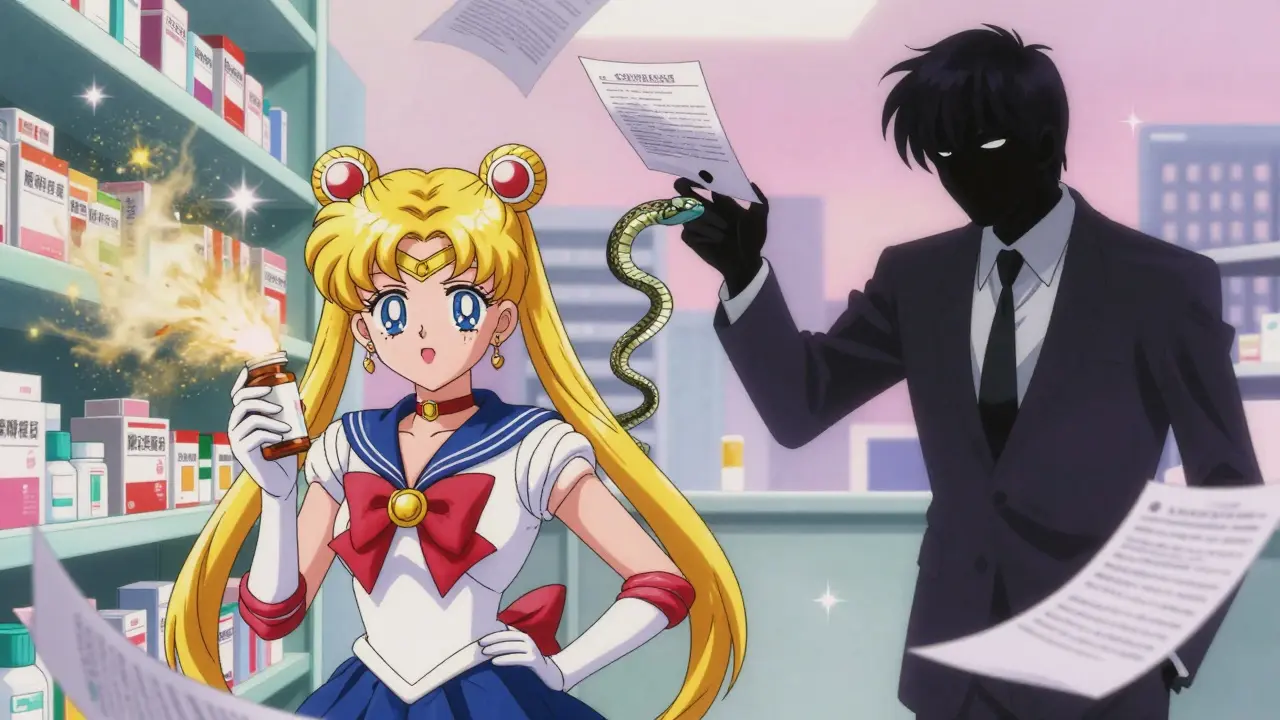
When you walk into a pharmacy with a prescription for a brand-name drug, you might expect the pharmacist to hand you a cheaper generic version-unless the drugmaker has already rigged the system. This isn’t science fiction. It’s happening right now, and it’s costing Americans billions every year. Behind the scenes, big pharmaceutical companies are using legal loopholes and aggressive tactics to stop generic drugs from replacing their expensive brand-name products. These aren’t just business moves-they’re antitrust violations that undermine state laws designed to save patients money.
How Generic Substitution Is Supposed to Work
In the U.S., every state has laws that let pharmacists substitute a generic drug for a brand-name one, as long as it’s bioequivalent. That means the generic has the same active ingredient, works the same way, and is just as safe. These laws exist to cut costs. When a brand-name drug’s patent expires, generics should flood the market, and prices should drop-often by 80% or more. In states with strong substitution rules, generics capture 80 to 90% of prescriptions within months. But here’s the catch: if the original brand-name drug disappears from the market before generics can enter, those laws become useless. That’s where the problem begins.Product Hopping: The Hidden Strategy
One of the most common tactics used by drugmakers is called product hopping. It sounds harmless-just launching a new version of a drug. But it’s not. Companies don’t just improve their product; they deliberately withdraw the old version right before generics are ready to launch. Take the case of Namenda. The original version, Namenda IR (immediate release), was a daily pill for Alzheimer’s. When its patent was about to expire, the maker, Actavis, introduced Namenda XR-a once-daily extended-release version. Then, 30 days before generics could hit the market, they pulled Namenda IR off shelves. Suddenly, doctors couldn’t prescribe the old version. Pharmacists couldn’t substitute generics because there was no original drug left to substitute. The Second Circuit Court of Appeals called this out in 2016. They ruled that Actavis didn’t just innovate-they engineered a monopoly. The court noted that patients rarely go back to generics once they’ve switched to a new formulation. Why? Because switching back means a new prescription, a new doctor visit, and possibly new side effects. The transaction costs are too high. So, by removing the original, Actavis killed the only path generics had to compete: automatic substitution.Why This Is an Antitrust Violation
Antitrust laws exist to stop companies from using their market power to crush competition. In this case, drugmakers aren’t competing on price, quality, or innovation-they’re using legal manipulation to block rivals. The Federal Trade Commission (FTC) laid this out clearly in its 2022 report. They found that product hopping often has no real medical benefit. The new versions-like extended-release pills, chewables, or slightly changed formulations-don’t improve patient outcomes. They just create a new patent. That’s not innovation. It’s a delay tactic. The FTC compared this to a car company that keeps selling the same model for years, then suddenly pulls it off the market the day before a cheaper competitor launches, forcing everyone to buy the new, more expensive model. No one would call that fair competition. Yet that’s exactly what’s happening in pharma.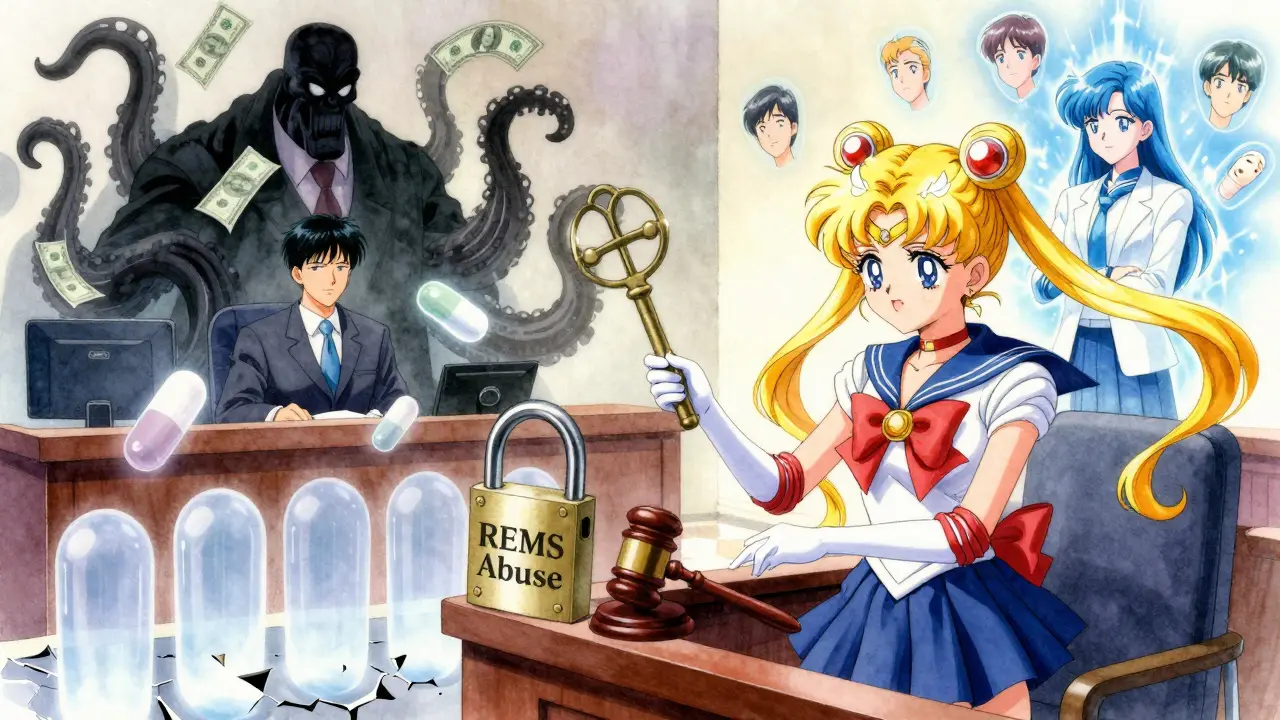
REMS Abuse: Blocking Generic Access
Another tactic is abusing FDA-mandated safety programs called REMS (Risk Evaluation and Mitigation Strategies). These were meant to control dangerous drugs-like those with high addiction risk. But some brand-name companies use them to deny generic manufacturers access to the samples they need to prove their drug is bioequivalent. Without those samples, generics can’t get FDA approval. And without approval, they can’t enter the market. According to legal scholar Michael A. Carrier, more than 100 generic companies have reported being blocked this way. One study found that drugs with restricted access programs cost the system over $5 billion a year in lost savings. This isn’t about safety. It’s about control. If a company can keep generics out for even a few extra months, they can keep charging $10,000 a month instead of $2,000. That’s billions in extra profits.When Courts Said No
Not all courts have bought this strategy. The Namenda case was a turning point. The court didn’t just say it was unethical-they called it illegal. They ordered Actavis to keep selling the old version for 30 days after generic entry so pharmacists could still make substitutions. Another major win came in the Suboxone case. Reckitt Benckiser made a film version of the drug and claimed the original tablet was unsafe. They didn’t have proof. But they pushed doctors and patients to switch anyway. The FTC sued, and the court found that this was coercion. Patients weren’t choosing-they were being pressured. Reckitt settled for millions. These cases matter because they set precedents. They show that courts are starting to see product hopping for what it is: not innovation, but exclusion.When Courts Said Yes
But not all rulings go the same way. In the Nexium case, AstraZeneca switched from Prilosec to Nexium while keeping Prilosec on the market. The court dismissed the antitrust claim, saying offering a new product was procompetitive. The difference? Prilosec was still available. Generics could still be substituted. This inconsistency is a problem. It creates a loophole. If you don’t fully pull the original drug, you’re safe. If you do? You risk a lawsuit. That’s why companies now walk a fine line-pulling drugs just enough to hurt, but not enough to get caught.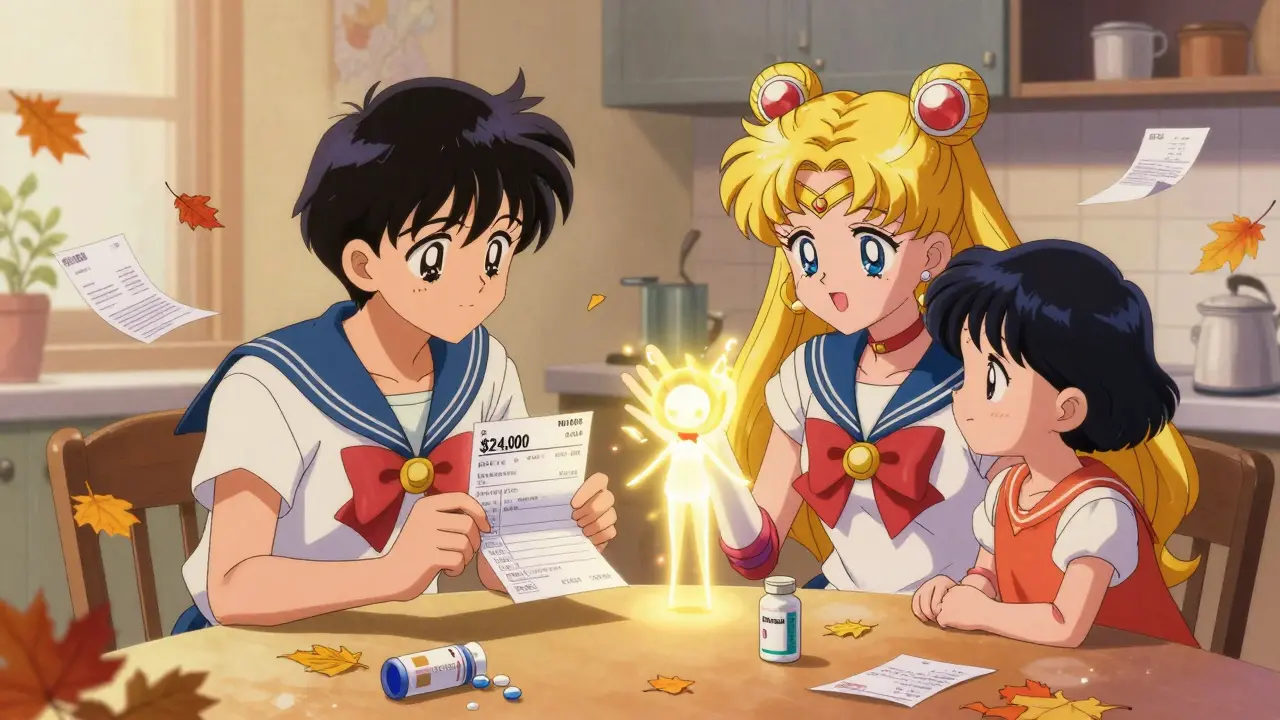
Who Pays the Price?
The cost isn’t just financial. It’s human. Take Revlimid. For 20 years, its price jumped from $6,000 to $24,000 per month. Why? Because every time a patent neared expiration, the maker tweaked the formula and delayed generics. The same thing happened with Humira and Keytruda. A 2023 analysis estimated that just these three drugs cost U.S. patients and insurers $167 billion more than they would have if generics had entered on time. In the EU, where product hopping is blocked and substitution is stronger, generics hit the market faster. Prices drop faster. Patients pay less. In the U.S., we pay more-because the system is rigged.What’s Being Done About It?
The FTC has been pushing back. They’ve filed lawsuits, won injunctions, and pressured state legislatures to strengthen substitution laws. In 2023, the DOJ and FTC held joint hearings focused on blocking barriers to generic competition. The biggest penalty so far? Teva paid $225 million for price-fixing with other generic makers. But that’s not the same as stopping the brand-name companies that block them. Some states are stepping up. New York sued Actavis in 2014 and got an injunction. Others are now considering laws that require drugmakers to keep old versions on the market for a set time after a patent expires.What’s Next?
The fight isn’t over. Courts are still split. Some judges still think “adding a new product” is always good-even if it’s just a minor tweak. The FTC’s 2022 report was a wake-up call, but enforcement is slow. The next big battleground is REMS abuse. More lawsuits are coming. Congress is watching. And patients? They’re getting tired of paying more for the same medicine. If you’ve ever wondered why your prescription is so expensive-even when generics exist-the answer isn’t just patents. It’s product hopping. It’s REMS abuse. It’s companies playing games with the law to keep prices high. The system was built to save you money. But someone rewrote the rules. And now, it’s up to regulators, lawmakers, and patients to fix it.What is product hopping in pharmaceuticals?
Product hopping is when a drugmaker introduces a slightly modified version of a brand-name drug-like a new dosage form or extended-release version-and then withdraws the original version right before generics can enter the market. This blocks pharmacists from substituting cheaper generics because the original drug is no longer available, even though the new version offers no real medical benefit.
Why is product hopping considered an antitrust violation?
It’s an antitrust violation because it uses market power to eliminate competition, not through better products, but by manipulating the system. By removing the original drug, companies prevent generic manufacturers from using state substitution laws-the most cost-effective way for generics to compete. Courts have ruled this is exclusionary conduct, not innovation.
How do REMS programs help drugmakers block generics?
REMS (Risk Evaluation and Mitigation Strategies) are FDA safety programs meant to control dangerous drugs. But some brand-name companies use them to deny generic makers access to drug samples needed to prove bioequivalence. Without samples, generics can’t get FDA approval-so they can’t enter the market. This tactic has blocked over 100 generic companies from launching products.
Have any drugmakers been punished for these practices?
Yes. Actavis was forced by a court to keep selling Namenda IR for 30 days after generics entered. Reckitt Benckiser settled with the FTC after being found guilty of coercing patients away from Suboxone tablets. Teva paid a $225 million criminal fine for price-fixing with other generic makers. These are rare but significant wins.
How much money are patients losing because of these tactics?
An estimated $167 billion has been wasted on just three drugs-Humira, Keytruda, and Revlimid-due to delayed generic entry in the U.S. compared to Europe. In some cases, like Ovcon, product hopping reduced generic market share from 80% to under 20%. The FTC estimates these tactics cost consumers and taxpayers billions every year.
Can pharmacists still substitute generics if the original drug is pulled?
No. State substitution laws only apply if the original brand-name drug is still available. If the manufacturer pulls it from the market, pharmacists can’t legally substitute a generic because there’s no approved reference product left. That’s the entire point of product hopping-to make substitution impossible.
What can patients do about this?
Patients can ask their doctors to prescribe the original drug if it’s still available, or to specify "do not substitute" only if medically necessary. They can also contact their state attorney general or the FTC to report suspected product hopping. Supporting legislation that requires brand-name drugs to stay on the market for a set time after patent expiry helps too.

Tiffany Channell
January 4, 2026 AT 15:01Product hopping isn’t just unethical-it’s a calculated theft of public health. These companies aren’t innovating; they’re gaming a system designed to protect patients. The fact that courts have to step in to stop this proves the market is broken. No one should have to pay $24,000 a month for a pill that’s been around for two decades.
Joy F
January 4, 2026 AT 18:55The structural violence of pharmaceutical monopolies is masked as intellectual property. Product hopping is a legal fiction engineered to extract rent from sick people. REMS abuse? That’s not regulatory compliance-it’s cartel behavior dressed in FDA paperwork. The FTC’s 2022 report is a forensic autopsy of corporate malfeasance, and yet the DOJ still treats it like a footnote.
Haley Parizo
January 6, 2026 AT 01:02Let’s be clear: this isn’t capitalism. This is feudalism with a pharmacy counter. The patent system was meant to incentivize innovation, not to create permanent dynasties of profit. When a company withdraws a drug not because it’s obsolete but because it’s too cheap, they’re not competing-they’re colonizing healthcare. The state substitution laws were our last line of defense, and now they’re being neutered by legal loopholes written by lobbyists in suits. We are not patients. We are consumers in a rigged game.
Angela Fisher
January 7, 2026 AT 10:39They’re not just blocking generics-they’re controlling your body. Think about it. The same companies that make these drugs also own the data, the doctors’ payments, the insurance networks. If you’re on Humira, you’re not just paying for a drug-you’re paying to stay trapped in their system. And the FDA? They’re asleep at the wheel. REMS? It’s a backdoor monopoly. They don’t even need to lie. They just need to make it impossible for you to get the cheaper version. It’s not conspiracy. It’s corporate policy. And they’re laughing all the way to the bank while you skip meals to afford your insulin.
Neela Sharma
January 9, 2026 AT 06:17India knows this game well. We fought for generics for decades. When the West locked patents, we broke them for survival. Now America is doing the same thing to its own people. Why? Because profit is sacred and people are disposable. The law was meant to protect the weak. But now the weak are being punished for being sick. Let’s stop calling it healthcare. It’s a market rigged against the poor.
Shruti Badhwar
January 10, 2026 AT 15:23While the FTC has made progress in high-profile cases like Namenda and Suboxone, systemic reform requires legislative intervention. State-level legislation mandating a minimum 90-day window for original drug availability post-patent expiration would eliminate the ambiguity that allows product hopping to persist. Without codified legal obligations, enforcement remains reactive rather than preventative. The cost-benefit analysis for pharma is clear: fines are a cost of doing business, while monopolistic profits are astronomical.
Michael Burgess
January 11, 2026 AT 23:25Just saw my neighbor’s prescription bill. $1,800 for a drug that’s been generic in Canada for years. She cried. I didn’t say anything. Just hugged her. This isn’t policy. This is cruelty with a corporate logo. We need to stop treating medicine like a luxury item. And yeah, I’m mad. 😔
Liam Tanner
January 12, 2026 AT 20:59There’s a quiet revolution happening in state legislatures. New York, California, and now Oregon are drafting bills to force manufacturers to keep old versions on the market. It’s not perfect, but it’s a start. The real win? Patients are finally talking about this. Not just in forums like this, but at kitchen tables, doctor’s offices, PTA meetings. Awareness is the first dose of medicine we need.
Hank Pannell
January 14, 2026 AT 20:41What’s fascinating is the epistemic dissonance in judicial rulings. Nexium vs. Namenda shows how the same conduct is interpreted differently based on jurisdiction and judicial philosophy. One court sees product hopping as exclusionary; another sees it as procompetitive innovation. This inconsistency creates a regulatory arbitrage environment where firms optimize for legal loopholes rather than patient outcomes. The antitrust framework needs a paradigm shift-from focusing on market share to analyzing the integrity of the substitution mechanism itself. If substitution is the cornerstone of generic competition, then any deliberate sabotage of that mechanism should be per se illegal. We’re not just talking economics here. We’re talking the foundational logic of pharmaceutical access.