

Imagine waking up with a sharp pain in your shoulder that makes it hard to reach for your coffee cup. Or maybe you feel a deep ache in your knee after kneeling on the hardwood floor. You might think it's just a pulled muscle or general stiffness, but if the pain is localized around a specific joint structure, you could be dealing with bursitis or tendinitis. These two conditions are often confused, yet they affect different parts of your body and require distinct treatment approaches. Getting the diagnosis right matters because treating one as if it were the other can delay recovery by weeks or even months.
According to recent data from the American Academy of Orthopaedic Surgeons, tendinitis accounts for roughly 30 million outpatient visits in the U.S. every year, while bursitis sees about 1.7 million physician visits annually. Both are incredibly common, especially among people over 40 who engage in repetitive activities. But why do they happen, and how do you know which one you have? Let’s break down the anatomy, symptoms, and treatments so you can make sense of that nagging joint pain.
What Exactly Are Bursae and Tendons?
To understand these conditions, you first need to know what structures are getting inflamed. Your joints don’t just consist of bones; they’re surrounded by soft tissues that help them move smoothly. Two key players here are bursae and tendons.
Bursae are small, fluid-filled sacs that act like cushions between bones, muscles, and tendons near your joints. Think of them as natural shock absorbers. There are about 160 of these sacs in your body. When one gets irritated, it fills with extra fluid and becomes swollen. This is bursitis, an inflammatory condition affecting the bursa.
Tendons, on the other hand, are thick, fibrous cords that attach muscles to bones. They allow you to pull on your bones to create movement. When a tendon becomes inflamed due to overuse or injury, it’s called tendinitis, inflammation of the tendon tissue. The most commonly affected areas include the rotator cuff in the shoulder, the Achilles tendon in the heel, and the patellar tendon in the knee.
| Feature | Bursitis | Tendinitis |
|---|---|---|
| Structure Affected | Fluid-filled sac (bursa) | Fibrous cord (tendon) |
| Pain Location | Diffuse, around the joint | Follows the path of the tendon |
| Worsening Trigger | Lying on the area, pressure | Specific movements stressing the tendon |
| Common Sites | Shoulder, elbow, hip, knee | Shoulder, ankle, knee, elbow |
| Primary Treatment Focus | Rest, anti-inflammatories, injections | Eccentric strengthening, rehab |
How to Tell Them Apart: Symptoms and Signs
Here’s where it gets tricky. Because bursae and tendons sit right next to each other, their symptoms often overlap. In fact, studies show that in shoulder problems, subacromial bursitis and rotator cuff tendinitis coexist in 65% of cases. So, how do doctors distinguish between them? They look at the quality and location of the pain.
If you have bursitis, the pain tends to be more diffuse, meaning it feels spread out around the joint. A classic sign is that it hurts when you lie directly on the affected area. For example, if you have bursitis in your shoulder, sleeping on that side might be excruciating. You might also notice visible swelling or a lump over the joint.
If you have tendinitis, the pain usually follows the line of the tendon. It’s often most intense during specific movements that stress that particular tendon. For instance, with Achilles tendinitis, you’ll feel the pain when pushing off your toes or walking uphill. With rotator cuff tendinitis, lifting your arm overhead might trigger the discomfort.
Dr. Robert Simkin, a leading rheumatologist at Brigham and Women’s Hospital, points out that this distinction isn’t just academic. “It directly determines whether cortisone injections will help or potentially harm,” he explains. Injecting an inflamed tendon can sometimes weaken it further, whereas injecting a bursa is generally safer and more effective for short-term relief.
Why Do These Conditions Happen?
Most cases of bursitis and tendinitis stem from overuse. If you repeat the same motion day after day-whether you’re typing at a desk, playing tennis, or lifting weights-you put repetitive strain on these soft tissues. Over time, minor micro-tears and irritation build up, leading to inflammation.
Age plays a role too. As we get older, our tendons lose some elasticity and blood supply, making them less resilient. Prevalence peaks between ages 45 and 64. However, it’s not just athletes. Office workers, musicians, and construction laborers are all at risk. According to the Bureau of Labor Statistics, there were nearly 388,000 occupational cases of these conditions in 2022 alone, costing the economy over $2 billion in lost workdays.
Sometimes, though, the cause isn’t mechanical. Infections, autoimmune diseases like rheumatoid arthritis, or gout can also trigger bursitis or tendinitis. If your joint is red, hot, and you have a fever, see a doctor immediately, as this could signal an infection rather than simple overuse.
Diagnosis: More Than Just a Look
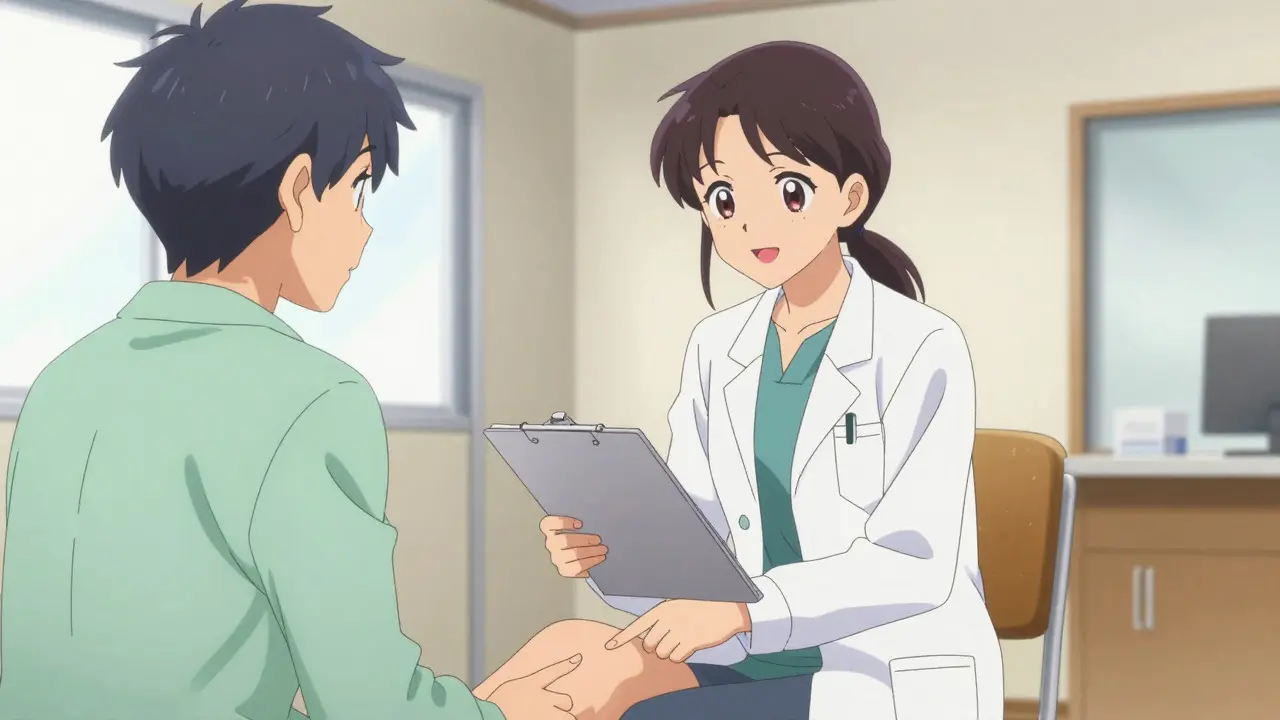
Your doctor will start with a physical exam. They’ll press on the painful area and ask you to move your joint in specific ways. For bursitis, pressing directly on the bursa usually reproduces the pain. For tendinitis, stretching the tendon against resistance often triggers the discomfort.
In many cases, no imaging is needed. However, if symptoms persist or the diagnosis is unclear, your doctor might order an ultrasound or MRI. Ultrasound is particularly good at detecting fluid in bursae and changes in tendon texture. A 2022 meta-analysis found that ultrasound has a 92% sensitivity for diagnosing these conditions, making it a reliable non-invasive tool.
One important caveat: Dr. Laura Robbins from the Hospital for Special Surgery warns against over-relying on imaging. She notes that 40% of asymptomatic adults over 50 show signs of bursitis or tendinitis on MRI without actually having pain. So, a scan showing “inflammation” doesn’t automatically mean it’s the source of your current problem. Clinical correlation is key.
Treatment Options: From Home Care to Procedures
The good news is that both conditions are highly treatable, especially when caught early. The standard approach starts with conservative management.
- Rest and Activity Modification: Avoid the movements that aggravate the pain. But don’t stop moving entirely. Complete rest can lead to stiffness and weakness. Instead, modify your activities. If you have shoulder tendinitis, avoid overhead lifting but keep doing gentle range-of-motion exercises.
- Ice and Compression: Applying ice for 15-20 minutes several times a day helps reduce inflammation. Compression wraps can also limit swelling, particularly for bursitis.
- Medication: Nonsteroidal anti-inflammatory drugs (NSAIDs) like ibuprofen or naproxen can help manage pain and inflammation. Limit use to 10-14 days to avoid stomach issues.
If home care doesn’t work after a few weeks, your doctor might suggest interventions.
- Corticosteroid Injections: These provide powerful anti-inflammatory effects. For bursitis, they work well, with 78% of patients reporting improvement at four weeks. For tendinitis, results are mixed, with only 52% seeing significant benefit. Injections should be limited to 2-3 per year to prevent tissue damage.
- Physical Therapy: This is crucial for tendinitis. Eccentric strengthening exercises-where you slowly lower a weight rather than lift it-are the gold standard. For Achilles tendinitis, the Alfredson protocol involves 180 heel drops daily for 12 weeks. It sounds tedious, but it works. For bursitis, PT focuses on posture correction and strengthening surrounding muscles to take pressure off the bursa.
- Platelet-Rich Plasma (PRP): A newer option for chronic tendinitis. PRP involves injecting your own concentrated platelets into the injured area to stimulate healing. Recent trials show it outperforms cortisone for long-term outcomes, though it’s more expensive ($850 per injection vs. $120 for cortisone).
Surgery is rarely needed, required in fewer than 5% of cases. It’s usually reserved for severe tendon tears or bursae that don’t respond to any other treatment.
Prevention and Long-Term Management
Once you’ve recovered, preventing recurrence is vital. Since overuse is the main culprit, changing how you perform repetitive tasks is essential.
If you work at a computer, ensure your workstation is ergonomic. Keep your shoulders relaxed and your wrists neutral. Take breaks every hour to stretch. Athletes should focus on proper technique and gradual increases in intensity. Sudden spikes in activity volume are a major trigger for tendinitis.
Strengthening the muscles around your joints provides better support and reduces stress on the tendons and bursae. Incorporating flexibility exercises also helps maintain healthy tissue length and function.
Remember, consistency beats intensity. A little bit of maintenance exercise every day is far more effective than a heroic workout once a week. Listen to your body. Mild soreness after exercise is normal, but sharp pain is a signal to back off.
Frequently Asked Questions
Can I have both bursitis and tendinitis at the same time?
Yes, it is very common. Especially in the shoulder, the subacromial bursa and the rotator cuff tendons are neighbors. In about 65% of shoulder pain cases, both structures are inflamed simultaneously. Treating both aspects is often necessary for full recovery.
Is tendinitis permanent?
Not necessarily. Acute tendinitis usually resolves with rest and rehabilitation. However, if left untreated or managed poorly, it can become chronic tendinopathy, where the tendon degenerates rather than just being inflamed. Chronic cases take longer to heal but are still manageable with consistent eccentric exercises and lifestyle changes.
Do I need surgery for bursitis?
Surgery is rare for bursitis. Most cases resolve with rest, ice, anti-inflammatories, and possibly corticosteroid injections. Surgery is only considered if the bursa is infected, extremely large, or causing persistent pain despite months of conservative treatment.
Which is worse: bursitis or tendinitis?
Neither is inherently "worse," but they behave differently. Bursitis often responds quickly to anti-inflammatories and injections. Tendinitis typically requires a longer rehabilitation period, often 12-16 weeks of structured exercise, to achieve lasting results. Misdiagnosing one as the other leads to delayed recovery.
Can heat help with bursitis or tendinitis?
Heat is generally avoided during the acute inflammatory phase (first few days) as it can increase swelling. Ice is preferred initially. Once the acute inflammation subsides and you move into the rehabilitation phase, heat may be used before exercise to loosen stiff tissues, but always consult your physical therapist.
Heat is generally avoided during the acute inflammatory phase (first few days) as it can increase swelling. Ice is preferred initially. Once the acute inflammation subsides and you move into the rehabilitation phase, heat may be used before exercise to loosen stiff tissues, but always consult your physical therapist.
