

Anaphylaxis Response Simulator
Action Required
Administration Protocol
Prepare the Device
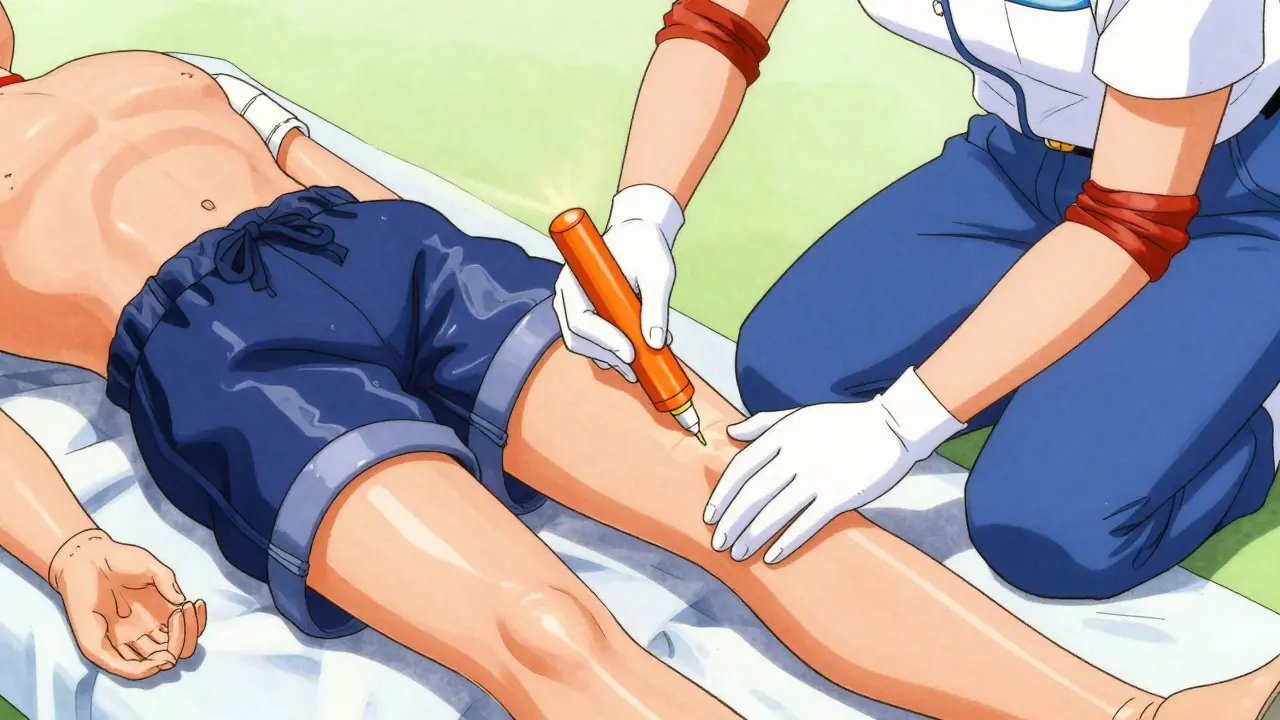
Check if clothing covers the outer thigh. Roll up pants if necessary.
Inject Correctly
Aim at the middle of the outer thigh (lateral aspect). Snap firmly against skin.
Count to Finish
Hold the injector firmly for 3 to 10 seconds to ensure full dosage delivery.
The Critical Five-Minute Window
Every minute counts when someone starts having a severe allergic reaction. Medical experts call it anaphylaxis, and it moves fast. Studies show that epinephrine auto-injector training is often the difference between a scare and a tragedy. The window for effective treatment is incredibly short-ideally within five minutes of symptoms starting. When help arrives late, the risk of severe outcomes jumps significantly. Many people think waiting for an ambulance is the safest bet, but the reality is that paramedics cannot be there instantly. That initial delay often comes down to hesitation or lack of knowledge among teachers, coaches, and parents who are first on the scene.
We see too many preventable deaths because someone didn't know the signs were serious enough to warrant using the device. Up to 83% of fatal cases involve failure to give the shot early enough, usually because the symptoms were mistaken for something mild. Training needs to strip away the guesswork. It turns panic into procedure. When you understand exactly what to do, your brain stops arguing with itself and focuses on saving a life.
Recognizing the Signs Before It's Too Late
Knowing when to pull the trigger is harder than actually pulling it. Most training fails here because it treats all reactions the same. Not every rash means anaphylaxis, but missing the subtle clues can be dangerous. Severe reactions often start with hives, swelling of the lips, or a tight feeling in the throat. However, some reactions manifest internally with no visible marks. Difficulty breathing, wheezing, or sudden drop in blood pressure are red flags that demand immediate action.
Effective programs teach staff to distinguish between mild discomfort and a system-wide collapse. A student itching their arm is different from a student who can't finish a sentence. Decision fatigue plays a huge role here. If you have never seen it before, seeing it happens quickly creates confusion. Drills that simulate realistic scenarios help burn pathways in your brain so that when the real thing happens, muscle memory takes over. Without this practice, trained individuals might freeze or look for permission to act, wasting precious seconds.
Mastering the Technique
Having the device in your hand is half the battle; using it correctly is the rest. There are specific mechanical steps that vary slightly by brand, but the core principle remains the same. You need to inject into the lateral thigh-the outer side of the leg. It sounds simple until you try it in a crisis. One major error involves injecting through clothing. While some models claim you can do this, others absolutely require bare skin. Misunderstanding the manufacturer's instructions can lead to a failed dose.
| Error Type | Consequence | Prevention Strategy |
|---|---|---|
| Injecting through thick clothing | Dose may not enter muscle tissue | Roll up pants or lift skirt before snapping |
| Holding device for insufficient time | Underdosing occurs | Count to 10 loudly after insertion |
| Wrong injection site (front thigh) | Ineffective absorption rate | Practice marking the "mid-outer" zone |
| Misidentifying caps | Safety cap removed incorrectly | Familiarize with color-coding beforehand |
Devices like the AUVI-Q have distinct protocols compared to others. Some require removing a blue safety cap first, then inserting the needle end. Others have a single grip-and-stab mechanism. The hold time is another critical variable. Standard advice often says 3 seconds, but specific device manuals might demand up to 10 seconds to ensure the full dose releases. Rushing this step leaves medication inside the syringe. Trainers often use demonstration devices that snap back or make noise to confirm usage, but relying solely on these props can create false confidence if they don't match the real equipment's weight or resistance.
Bridging the Gap Between Theory and Reality
Lecture-style training has limitations. Reading a manual rarely sticks under pressure. Research indicates that hands-on practice with trainer devices reduces administration errors dramatically compared to passive learning. However, skills fade. Staff retention drops significantly within six months without reinforcement. Many institutions only train once upon hiring. For safety protocols, this is insufficient. Annual refreshers are not just bureaucratic checkboxes; they are necessary recalibration tools.
Virtual reality simulations are emerging as a powerful tool to solve this. They allow staff to experience the stress of an event without risking a child. These immersive modules improve skill retention much longer than video presentations. Furthermore, integrating documentation systems helps track who is certified and when their certification expires. Schools and organizations need robust systems that flag expiring certifications automatically. Relying on paper records leads to gaps where untrained personnel might unknowingly step into a leadership role during an emergency.
Managing Shock and the Second Dose
Administering the injection isn't the final step. Once the patient receives the medication, their body is still vulnerable. Shock can set in quickly as blood pressure drops. Covering the person with a blanket helps maintain body temperature, which stabilizes vital signs while waiting for emergency services. It's a small, low-cost intervention that is frequently omitted in basic protocols. Neglecting thermal stability adds stress to a compromised cardiovascular system.
Another area where people get nervous is the idea of a second dose. If symptoms do not improve, or if they worsen after five minutes, a second dose is required. Guidelines from health authorities consistently recommend having two injectors available for this reason. Waiting for paramedics to arrive for the second shot can cost time. The condition known as biphasic reaction can return hours later, but immediate re-dosing is crucial during the acute phase. Stock availability ensures that if the first stick misses or the reaction is massive, you have a backup option ready to deploy immediately.

Navigating Legal and Liability Concerns
Fear of getting sued prevents many from acting. However, most regions have Good Samaritan laws designed specifically to protect those who act in good faith during emergencies. Despite these protections, anxiety remains high among school staff. Clarifying legal boundaries during training sessions is essential. Documentation of the incident helps protect everyone involved. Records showing that the individual was trained, that the device was used according to protocol, and that EMS was called create a strong defense against negligence claims.
Furthermore, standardized curriculum ensures consistency across different staff members. Whether it's a teacher, a bus driver, or a cafeteria worker, the expectation is uniform. Regulations in various jurisdictions mandate that these written materials be kept for several years. This accountability drives higher quality of training because programs must pass competency tests to be approved. It shifts the culture from "I hope I'm doing this right" to "I am certified to do this."
Frequently Asked Questions
How soon should an epinephrine auto-injector be administered?
Ideally, the injection should be given within the first five minutes of symptom onset. Every minute of delay increases the risk of severe outcomes significantly. Do not wait for symptoms to disappear; administer immediately if multiple body systems are affected.
Where is the correct injection site on the leg?
The injection must go into the middle of the outer thigh (lateral aspect). Aim for bare skin whenever possible. Injecting too close to the front of the leg or through heavy fabric can reduce effectiveness.
Can I use the device through clothing?
This depends on the specific model. Some manufacturers allow injection through thin clothing, while others require direct skin contact. Always follow the specific instructions for the device you are holding to ensure the needle penetrates properly.
What do I do after administering the shot?
Call emergency services immediately. Have the patient lie flat to improve blood flow to the heart. Cover them with a blanket to prevent hypothermia caused by shock. Monitor their airway and breathing closely until help arrives.
Is it safe to give a second dose?
Yes, if symptoms persist or return after five minutes, a second dose is necessary. Keep a second auto-injector on hand for this scenario. Paramedics can administer additional doses en route to the hospital if needed.
How often should training be refreshed?
Annual refreshers are highly recommended. Studies show that skill retention drops below 50% after six months without practice. Regular drills ensure staff members remain confident and competent when an actual emergency occurs.

Ace Kalagui
April 3, 2026 AT 11:59It really speaks volumes about how we handle safety protocols in public spaces when you consider the sheer volume of preventable outcomes mentioned here.
We often rely too heavily on external medical intervention rather than empowering those who are present in the immediate vicinity.
This hesitation is what kills people during these critical windows.
I have seen trainers emphasize muscle memory because that is what bridges the gap between panic and procedure effectively.
Without this repetition, even well-meaning staff members freeze up when faced with the reality of a collapsing patient.
The statistics regarding the failure to administer epinephrine early enough are absolutely staggering in any context.
We must shift our cultural mindset towards proactive emergency response instead of passive waiting.
Parents and coaches need to feel that authority to act without second-guessing themselves constantly.
The training needs to remove the guesswork entirely so that the decision becomes mechanical rather than emotional.
Every second counts and that is not hyperbole in these situations.
I believe organizations should invest heavily in annual refresher courses to maintain high skill retention rates year after year.
Virtual reality could play a significant role in bridging that gap between theory and actual application safely.
It is crucial that we do not let liability fears paralyze potential helpers in these life-or-death scenarios.
Good Samaritan laws exist for a reason and we should lean into them with confidence.
Ultimately saving a life requires a system that supports quick decision making above all else.
Beth LeCours
April 4, 2026 AT 02:20All this training seems like overkill for something that happens so rarely anyway.
angel sharma
April 4, 2026 AT 21:44We have to remember that fear is the enemy of action when dealing with medical emergencies.
It takes immense courage to step forward and intervene in such critical moments.
Training provides the roadmap but confidence fuels the vehicle down that road.
I am convinced that regular drills are the only way to truly embed these skills into your neural pathways.
We should celebrate those who take responsibility to learn how to use these devices correctly.
Being prepared gives everyone peace of mind regardless of whether you ever have to use it.
Your readiness could be the difference between life and death for someone you care about deeply.
Let us support initiatives that bring better resources to schools and community centers nationwide.
This information is vital knowledge that empowers the individual in ways that matter most.
Rob Newton
April 5, 2026 AT 04:02People always overestimate the danger and underestimate their ability to judge a situation properly.
Epinephrine causes heart issues in healthy people sometimes.
Just call the ambulance.
Aysha Hind
April 5, 2026 AT 15:48The pharmaceutical companies push these narratives about immediate administration to sell more units.
They profit off our collective fear of allergies every single day.
Real medicine would involve addressing the root cause of immune sensitivity instead of treating symptoms.
Trust the body to regulate itself if you give it enough time.
I smell money making schemes disguised as public health education initiatives.
Divine Manna
April 5, 2026 AT 21:56Your argument displays a fundamental misunderstanding of medical physiology and pharmacology.
Anaphylactic shock progresses too rapidly for alternative remedies to offer meaningful benefit.
The biphasic nature of the reaction dictates immediate chemical intervention without fail.
Please do not confuse theoretical speculation with established clinical guidelines in this forum.
Lawrence Rimmer
April 5, 2026 AT 23:48Survival is merely a function of luck masked by technical procedure.
Perhaps we are simply delaying the inevitable decay of the human condition.
Dipankar Das
April 7, 2026 AT 19:34It is imperative that every responsible adult acquires this certification immediately.
We cannot afford negligence in our commitment to protecting the vulnerable population.
These protocols are established through rigorous scientific validation and testing procedures.
I urge everyone to attend the next available workshop to secure community safety standards.
Compliance ensures that we remain accountable to higher ethical obligations.
Branden Prunica
April 9, 2026 AT 16:54My heart actually stopped reading about the eighty-three percent statistic mentioned earlier.
How is anyone supposed to sleep knowing that number exists?
It feels like walking on eggshells waiting for the ground to open up beneath us.
I tried to explain this to my family and they got visibly upset.
We need to talk about this more openly before tragedy strikes again.
Joey Petelle
April 10, 2026 AT 19:55Spare me the corporate training manual come to life with that enthusiasm.
Nobody actually reads the manuals anymore except the lawyers trying to avoid lawsuits later.
They want us to think we are heroes when really we are just liability magnets holding needles.
It feels like another layer of performative safety designed to soothe the collective anxiety of administrators.
The Charlotte Moms Blog
April 10, 2026 AT 23:24The lack of school preparedness is absolutely unacceptable!!!
No one seems to hear the parents voice clearly!!!!!
The systemic failures are glaringly obvious!!!
Accountability must be enforced immediately!!!!
Sam Hayes
April 12, 2026 AT 07:24I work in ER and seeing kids come in late happens way too much
Most folks forget to hold the device for ten seconds which makes it useless
Roll up the pant leg first so the needle gets full muscle penetration
Have a backup injector ready just in case the first shot fails
Cover them with blankets while waiting for the paramedics to arrive on scene
Vicki Marinker
April 13, 2026 AT 07:14The cynicism surrounding these events is palpable and exhausting to read about constantly.
Nothing changes because nobody truly cares until they lose someone close to them personally.
Statistics mean little when you are the one crying over a grave site nearby.