
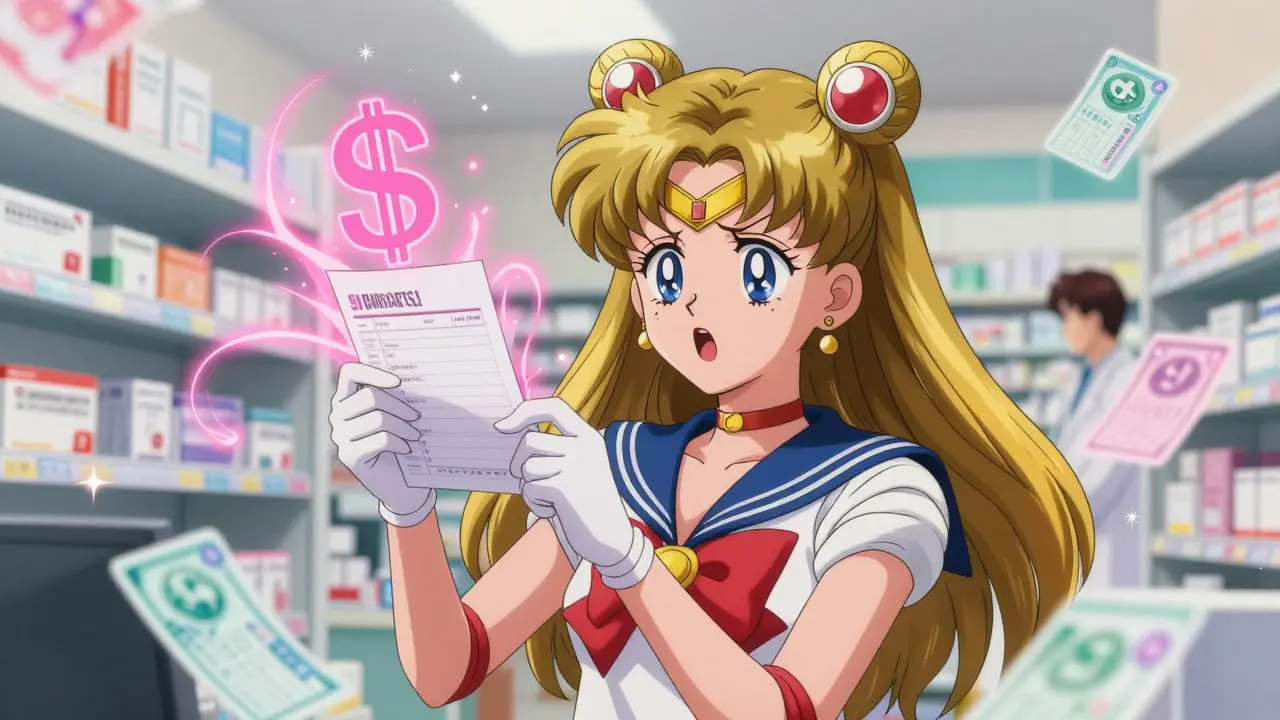
Imagine this: you leave your doctor’s office with a new prescription, excited to start feeling better. But when you get to the pharmacy, the pharmacist tells you the medication costs $450 out-of-pocket. You didn’t know. You didn’t ask. And now you’re stuck choosing between paying for your medicine or your rent. This happens to 22% of people in the U.S. every year. The good news? You can avoid it. Talking about cost before you fill a prescription isn’t just smart-it’s essential.
Why Cost Talks Matter More Than Ever
In 2026, Medicare Part D beneficiaries will pay no more than $2,100 a year out-of-pocket for prescription drugs. That’s a big change from 2024, when the cap was $8,000. But even with this new limit, many people still get hit with surprise bills because they didn’t check their coverage ahead of time. Commercial insurance plans don’t have a cap at all. Some specialty drugs can cost $1,000+ per month, and you could be paying 30% of that as coinsurance-with no upper limit.Studies show that when patients talk about cost with their providers, they’re 37% less likely to skip doses or stop taking their meds. That’s not just about money-it’s about health. Skipping insulin, blood pressure pills, or asthma inhalers leads to ER visits, hospital stays, and worse outcomes. The American Medical Association has been pushing for cost discussions since 2018. Now, it’s part of standard care.
What You Need to Know Before Your Appointment
Don’t wait until the pharmacy counter to ask about cost. Start preparing before your visit. Here’s what to gather:- Your current deductible status (how much you’ve paid so far this year)
- The name and dosage of the medication your doctor plans to prescribe
- Your insurance plan’s formulary (list of covered drugs)
- Any generic or alternative medications you’re open to
You can find your formulary online. Most insurers-whether Medicare, Medicaid, or private-have a searchable tool on their website. For Medicare, use the Medicare Plan Finder. It lets you compare costs for up to 28 specific drugs across different Part D plans. Update it every October, since plans change each year.
If you’re on commercial insurance, log into your member portal. Look for terms like “formulary,” “drug list,” or “coverage details.” If you can’t find it, call your insurer. Ask: “Is [medication name] covered? What’s my copay or coinsurance? Is there a generic version?”
Ask These Five Questions at Your Appointment
When your doctor says, “I’m prescribing this for you,” don’t just say “okay.” Ask:- Is this drug on my insurance’s formulary? If it’s not, your plan won’t cover it at all-or will charge you full price.
- What’s my out-of-pocket cost with this plan? Not the list price. Not the pharmacy’s sticker price. Your actual cost after insurance.
- Is there a generic or lower-cost alternative? Many brand-name drugs have generic versions that work just as well. For example, metformin (generic) costs $4/month; some brand-name diabetes drugs cost $300.
- Can I get this through mail order? Many plans offer 90-day supplies at lower costs. You’ll pay less per pill and avoid monthly trips to the pharmacy.
- Are there patient assistance programs? Drug manufacturers often have programs to help low-income patients. GoodRx, RxSaver, and SingleCare also offer discount cards that work even if you have insurance.
One patient in Seattle, on Medicare, saved $287 a month by switching from a brand-name statin to its generic. She didn’t know the difference until she asked. Her doctor didn’t push back-he said, “I should’ve brought this up first.”

How Insurance Tiers Affect Your Costs
Most insurance plans group drugs into tiers. The higher the tier, the more you pay.| Tier | Type of Drug | Typical Cost (Copay/Coinsurance) |
|---|---|---|
| Tier 1 | Generic drugs | $5-$15 |
| Tier 2 | Preferred brand-name drugs | $25-$50 |
| Tier 3 | Non-preferred brand-name drugs | $50-$100 |
| Tier 4 (Specialty) | High-cost drugs (cancer, MS, rheumatoid arthritis) | 25-33% coinsurance, no cap |
Specialty drugs are the biggest problem. They’re often not on formularies. Even if they are, you might pay hundreds per month. That’s why prior authorization matters. Your doctor might need to submit paperwork to prove the drug is medically necessary. If you’re prescribed a specialty drug, ask: “Will you help me with prior authorization? How long does it usually take?”
Use Real-Time Tools Before You Leave the Office
Many clinics now use Real-Time Prescription Benefit (RTPB) tools built into electronic health records. If your provider’s office uses Epic, Cerner, or Athenahealth, they can check your exact cost right then and there. Ask: “Can you check my coverage for this drug before I leave?”If they say no, ask for the NDC (National Drug Code) number-the 11-digit barcode on the drug label. Then call your insurer. Most have 24/7 phone lines. Have your member ID ready. Say: “I need the exact out-of-pocket cost for [NDC number] at [pharmacy name].”
Pro tip: Don’t rely on online estimates. They’re often wrong. A 2023 CMS survey found that 18% of Part D complaints came from patients who were told one price online and paid another at the pharmacy.
What to Do If You Can’t Afford It
If the cost is still too high, don’t leave empty-handed. Ask your doctor:- Can I get a 30-day trial? Sometimes, you can get a small supply to test if the drug works before paying full price.
- Can I switch to a different drug in the same class? For example, if one blood pressure med is too expensive, another might cost half as much.
- Can you write a letter for prior authorization? Many plans will approve coverage if your doctor explains why you need this specific drug.
- Are there patient assistance programs? Companies like NeedyMeds and Partnership for Prescription Assistance help people get free or low-cost meds.
Medicare beneficiaries on insulin pay no more than $35 per month. That’s thanks to the Inflation Reduction Act. But if you’re on commercial insurance, you might still pay $100+ per month. That’s why using GoodRx or SingleCare cards-even with insurance-can slash your bill. One user in Seattle saved $287 on her blood pressure med by showing the pharmacist a GoodRx price lower than her insurance copay.

Timing Matters: When Costs Change
If you’re on a high-deductible plan, your out-of-pocket costs are highest in January and February. You haven’t met your deductible yet. By July, you might’ve paid $1,000 already, and now your copays kick in. Plan ahead. If you know you’ll need a new prescription in March, ask your doctor to prescribe it in December. That way, it counts toward your deductible.Also, don’t wait until the last minute to enroll in Medicare Part D. Open enrollment runs from October 15 to December 7. If you miss it, you might pay a late fee and go without coverage for months.
Pharmacists Are Your Allies
Don’t treat your pharmacist like a vending machine operator. They know your plan’s formulary better than your doctor does. When you pick up a script, ask: “Is this the lowest price I can get today? Can I use a discount card? Is there a generic?”Many pharmacies now offer automatic savings. CVS Caremark, Walgreens, and Rite Aid have apps that show real-time prices. Some even let you compare prices at nearby stores. One woman in Tacoma saved $140 on her antidepressant by switching from her local pharmacy to a CVS 10 miles away.
Final Checklist Before You Leave the Office
Use this quick checklist before your appointment ends:- ✅ I know the exact name and dose of the medication.
- ✅ I checked my insurance’s formulary online.
- ✅ I asked if there’s a cheaper generic or alternative.
- ✅ I asked about mail-order options and 90-day supplies.
- ✅ I asked if prior authorization is needed.
- ✅ I got the NDC number in case I need to call my insurer.
- ✅ I noted the expected out-of-pocket cost.
If you do this every time, you’ll never get blindsided by a $500 bill again. It takes five minutes. It might save you hundreds-or even your health.
What if my insurance doesn’t cover my medication at all?
If your drug isn’t on the formulary, your plan won’t pay anything. Talk to your doctor about switching to a covered alternative. If that’s not possible, ask for a prior authorization request. Your provider can submit paperwork explaining why you need this specific drug. If denied, contact your insurer’s appeals department. You can also use patient assistance programs from drug manufacturers or nonprofits like NeedyMeds. Some pharmacies offer discount cards that work even if insurance doesn’t cover the drug.
Can I use GoodRx if I have Medicare?
Yes, but only if the GoodRx price is lower than your Medicare copay. Medicare Part D doesn’t let you use discount cards at the same time as your plan benefits. So, you have to choose: use your insurance, or pay cash with GoodRx. Always compare both prices at the pharmacy counter. Many people save money by paying cash, especially for generic drugs. For example, a $120 insulin brand might cost $35 with Medicare-but $25 with GoodRx. Always ask the pharmacist to check both.
Why do I pay more at some pharmacies than others?
Pharmacies negotiate different prices with insurers. A drug might cost $40 at CVS but $75 at a small independent pharmacy-even with the same insurance. This is because insurers have contracts with specific chains. Use apps like GoodRx or SingleCare to compare prices at nearby pharmacies. You can often save 30-50% by switching locations. Some pharmacies even offer loyalty discounts or cash prices that beat insurance.
Does the Inflation Reduction Act help people with private insurance?
The $2,000 out-of-pocket cap and $35 insulin limit only apply to Medicare Part D. Private insurance isn’t required to follow these rules. But some insurers have adopted similar policies voluntarily. Check your plan documents or call customer service. Even if you’re not on Medicare, ask your doctor about lower-cost alternatives. Generic drugs, mail-order options, and discount cards still work for you.
What if my doctor refuses to discuss cost?
If your provider dismisses your concerns, ask for a referral to a patient advocate or social worker at the clinic. Many hospitals have financial counselors who help with medication costs. You can also contact the Patient Advocate Foundation (800-532-5274) for free help. Your health matters more than your doctor’s schedule. If you feel ignored, consider switching providers. There are many doctors who prioritize affordability and will work with you.

Sanjana Rajan
March 20, 2026 AT 05:50Kyle Young
March 20, 2026 AT 11:32Aileen Nasywa Shabira
March 21, 2026 AT 14:38Kendrick Heyward
March 23, 2026 AT 13:10lawanna major
March 24, 2026 AT 19:25Ryan Voeltner
March 26, 2026 AT 07:06Linda Olsson
March 28, 2026 AT 02:19Ayan Khan
March 28, 2026 AT 03:37Emily Hager
March 28, 2026 AT 05:44Lauren Volpi
March 29, 2026 AT 17:50Kal Lambert
March 30, 2026 AT 01:40Melissa Stansbury
March 30, 2026 AT 11:57