
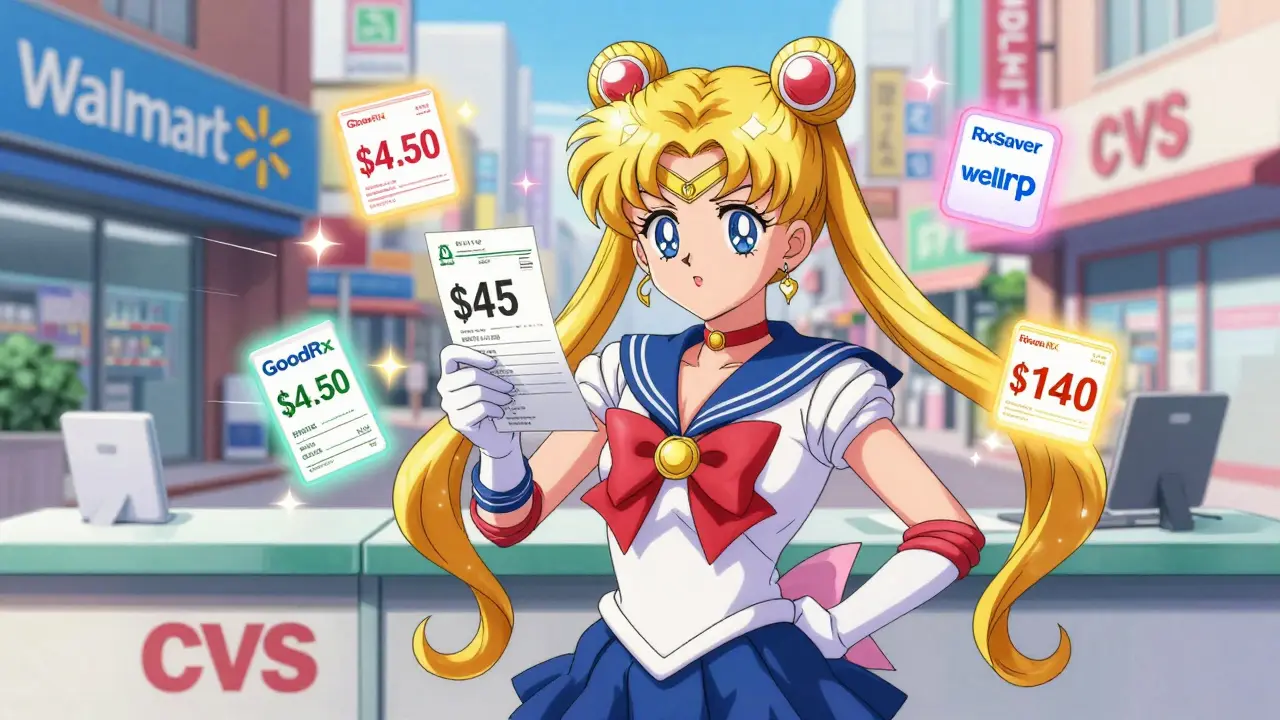
Buying medication out of pocket can feel like playing a game where the rules change every time you walk into a new store. One pharmacy charges $45 for your generic metformin. The next one down the street asks for $12. The one at the mall? $68. It’s not a scam. It’s not a glitch. It’s how the system works - and you can use it to your advantage.
If you’re paying cash for prescriptions, you’re not stuck with whatever price the pharmacy gives you first. In fact, the cash price for the same medication can vary by more than 300% across pharmacies in the same city. A 2021 NIH study found that Atorvastatin (generic Lipitor) ranged from $4.50 to $140 in a single ZIP code. That’s not an outlier. It’s the norm.
Why Do Cash Prices Vary So Much?
Pharmacies don’t set prices randomly. They’re following contracts with Pharmacy Benefit Managers (PBMs) and manufacturers. PBMs negotiate discounts behind the scenes - but those discounts rarely reach you unless you ask for them. The undiscounted price you see on your receipt? That’s the list price. The price they charge insurance companies? That’s negotiated. The price they charge you cash? That’s often somewhere in between - and sometimes way lower.
Independent pharmacies, supermarkets, and mass merchandisers like Costco or Walmart often have lower overhead and different pricing models. National chains like CVS or Walgreens tend to have higher cash prices because they’re designed to profit more from insurance billing. But here’s the twist: when you pay cash, they sometimes have better deals than insurance - because they’re trying to get you in the door.
According to a 2023 UnityPoint Health report, generic cardiovascular drugs cost an average of $64.42 at national chains, but only $28.17 at supermarkets when using a discount coupon. That’s more than half off. And for some medications, the cash price with a coupon can be cheaper than your insurance copay.
Use Discount Tools - But Don’t Rely on Just One
GoodRx is the most popular tool, and for good reason. It’s been around since 2011 and now serves over 200 million users. But it’s not magic. GoodRx doesn’t set prices - it aggregates them from over 70,000 pharmacies. And sometimes, the price it shows is outdated or wrong. A 2022 Consumer Reports study found that 12.7% of GoodRx prices were inaccurate at the time of purchase.
That’s why you need to cross-check. Always compare at least three platforms:
- GoodRx - Best for generics, strong brand-name discounts
- RxSaver - Often has lower prices at Walmart and Kroger
- WellRX - Strong in the Midwest and South, good for Medicare users
Don’t just pick the lowest number. Check the pharmacy location. Some apps show prices for a pharmacy 10 miles away - but you can’t get there today. Always verify the price at the exact store you plan to visit. Call ahead. Ask: “What’s the cash price for [medication] with this coupon?”
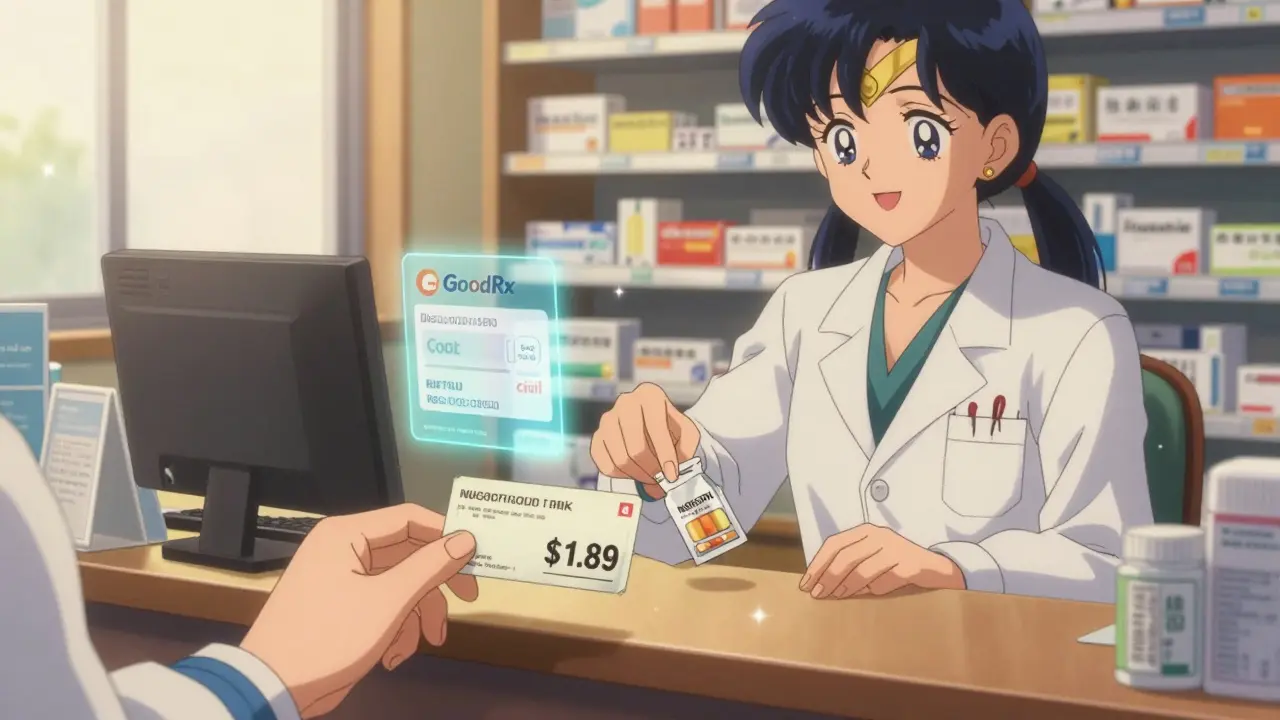
Users on Reddit’s r/personalfinance report saving $112 on Synthroid at Walmart using GoodRx - while their insurance copay was $145. Another user paid $1.89 for metformin at an independent pharmacy with a GoodRx coupon, versus $15.99 at a national chain. That’s not luck. That’s strategy.
Know What Works - and What Doesn’t
Generic drugs are where the real savings happen. The NIH study showed that GoodRx discounts cut generic CV drug prices by 56.3% at supermarkets compared to national chains. But for brand-name drugs? Not so much. GoodRx discounts on brand-name medications like Humira or Humalog often save less than 10%. In some cases, they save nothing.
If you’re on a brand-name drug, ask your doctor if a generic is available. Sometimes, the brand has a generic version you didn’t know about. Other times, there’s a therapeutically equivalent drug that works just as well - and costs a fraction. A 2023 HealthUnlocked forum user shared that GoodRx saved them $75 on the generic version of their medication, but offered no discount on the brand. They switched - and saved $900 a year.
For insulin, the difference can be life-changing. A 2023 report from a Chicago resident showed insulin prices ranging from $98 to $345 across four pharmacies within two miles. The lowest price? A local independent pharmacy using a manufacturer coupon. The highest? A national chain with no discount program.
Check Independent Pharmacies - Even If They Look Inconvenient
Most people assume independent pharmacies are expensive. They’re not. A 2018 study by Aurora et al. found that independent pharmacies often offered the lowest cash prices - even without coupons. Why? Because they rely on customer loyalty, not insurance contracts. They’ll cut you a deal if you’re a regular.
UnityPoint Health reported in 2023 that 38% of independent pharmacies offer unadvertised discounts to loyal customers. Just ask: “Do you have a cash discount for regular patients?” Or: “Can you match a GoodRx price?” Many will. Some even give you 10-20% off if you pay in cash.
Don’t rule out small-town pharmacies. They often have better deals than big-city chains. And they’re more likely to know your name - and your medication history.
Use Mail-Order for Long-Term Medications
If you take the same medication every month - like metformin, lisinopril, or levothyroxine - consider mail-order. RXOutreach.com is a non-profit that provides generic medications at deeply discounted rates to people with household incomes at or below 300% of the federal poverty level ($45,000 for one person in 2023). You don’t need insurance. You just need to fill out a simple form.
Even if you have Medicare, mail-order can be cheaper. Medicare Part D plans often have higher copays for retail pickups. But if you order a 90-day supply through mail-order, your cost per pill drops significantly. Some plans cut your copay by 30-40% for mail-order.
Always Ask for the Cash Price First - Before Insurance
This is the #1 mistake people make. They hand over their insurance card without asking. But here’s the truth: your insurance might not cover the drug at all. Or it might have a high deductible. Or the pharmacy might not be in-network.
Always say: “What’s the cash price for this?” Then say: “Can I use this coupon?” Then say: “What’s my copay with insurance?” Compare all three. Sometimes, the cash price with a coupon is lower than your insurance copay. And if you’re on a high-deductible plan, that cash price might be your only affordable option.
LifeCare Advocates found in their 2023 guide that 63% of patients who asked for the cash price first ended up paying less than their insurance copay. That’s not a fluke. That’s data.
Medicare Users: Don’t Wait for Open Enrollment
If you’re on Medicare, you have more tools than you think. Medicare Part D plans change every year. Your plan might cover your drug at $10 this year - but $35 next year. During open enrollment (October 15 to December 7), use Medicare’s Plan Finder tool to compare plans. Look for plans with low copays on your specific drugs.
Also, check if your plan has a preferred pharmacy network. Some plans offer 15-25% lower prices at certain pharmacies. CVS, Walmart, and Kroger are often in-network. But not always. Verify before you assume.
Watch for New Programs - They’re Growing Fast
Kroger, Walmart, and Target now have $4/$9 generic drug programs. Kroger’s program includes over 100 generics - from antibiotics to blood pressure meds - for just $4 for a 30-day supply. Walmart’s program is similar. These aren’t coupons. These are fixed prices. No sign-up. No membership. Just walk in.
California passed a law in 2022 banning pharmacy price gouging. Other states are following. The FDA’s 2023 Generic Drug User Fee Amendments (GDUFA III) is speeding up approval of new generics - which means more competition, lower prices, and more options.
And starting in 2025, Medicare will cap out-of-pocket drug costs at $2,000 per year. But experts warn: without price shopping, you’ll still overpay. One user on Health Affairs Blog calculated that by not comparing prices, Medicare beneficiaries were paying $600 extra per year on just three medications.
Start Small. Save Big.
You don’t need to compare every drug every week. Start with one medication you take regularly. Compare the cash price at three places: your usual pharmacy, a supermarket, and a local independent. Use GoodRx, RxSaver, and WellRX. Call ahead. Ask questions.
It takes 10 to 15 minutes. And it could save you hundreds - or even thousands - a year.
People think pharmacy pricing is broken. It’s not. It’s just complex. And complexity is your advantage. The people who save the most aren’t the ones with the best insurance. They’re the ones who know how to shop.
Can I really save money by paying cash instead of using insurance?
Yes - especially if you’re on a high-deductible plan or your insurance doesn’t cover the drug. A 2021 NIH study found that for generic medications, the cash price with a GoodRx coupon was often 50-90% cheaper than the insurance copay. Some people pay less cash than their insurance would charge.
Why is the same drug cheaper at Walmart than at CVS?
Walmart, Costco, and Kroger have lower overhead and use pharmacy sales as a way to drive foot traffic. They often negotiate bulk deals with manufacturers and pass savings directly to cash-paying customers. CVS and Walgreens rely more on insurance billing, so their cash prices are often higher to make up for lower insurance reimbursements.
Do discount apps like GoodRx work for brand-name drugs?
Sometimes. GoodRx can save 10-40% on brand-name drugs, but often less than $10 per prescription. For expensive brand-name drugs like Humira or Humalog, the biggest savings come from manufacturer coupons - not discount apps. Always check the drugmaker’s website directly.
Are independent pharmacies more expensive?
Not usually. Independent pharmacies often offer the lowest cash prices - even without coupons. They rely on customer loyalty and may offer unadvertised discounts if you ask. They’re also more likely to match a GoodRx price or offer a loyalty discount.
What if I can’t afford my medication even after shopping around?
Check RXOutreach.com - a nonprofit that provides generic medications at low cost to people with household incomes at or below 300% of the federal poverty level ($45,000 for one person in 2023). You don’t need insurance. Also, ask your doctor about patient assistance programs from drug manufacturers. Many offer free or low-cost drugs to qualifying patients.

Sabrina Sanches
March 12, 2026 AT 19:53Alex MC
March 13, 2026 AT 09:09Leah Dobbin
March 15, 2026 AT 01:28Noluthando Devour Mamabolo
March 16, 2026 AT 15:15rakesh sabharwal
March 17, 2026 AT 12:34Aaron Leib
March 18, 2026 AT 11:38Rosemary Chude-Sokei
March 19, 2026 AT 17:46Sabrina Sanches
March 19, 2026 AT 23:37