
But here is the catch: biosimilars are not generics. If you've ever swapped a brand-name pill for a generic version, you know they are identical. Biosimilars are different. Because they are made from living cells, they are far too complex to be exact copies. This creates a unique set of hurdles for doctors and patients, from regulatory red tape to the psychological fear of switching a medication that currently keeps them alive.
Why Biosimilars Aren't Just "Generics"
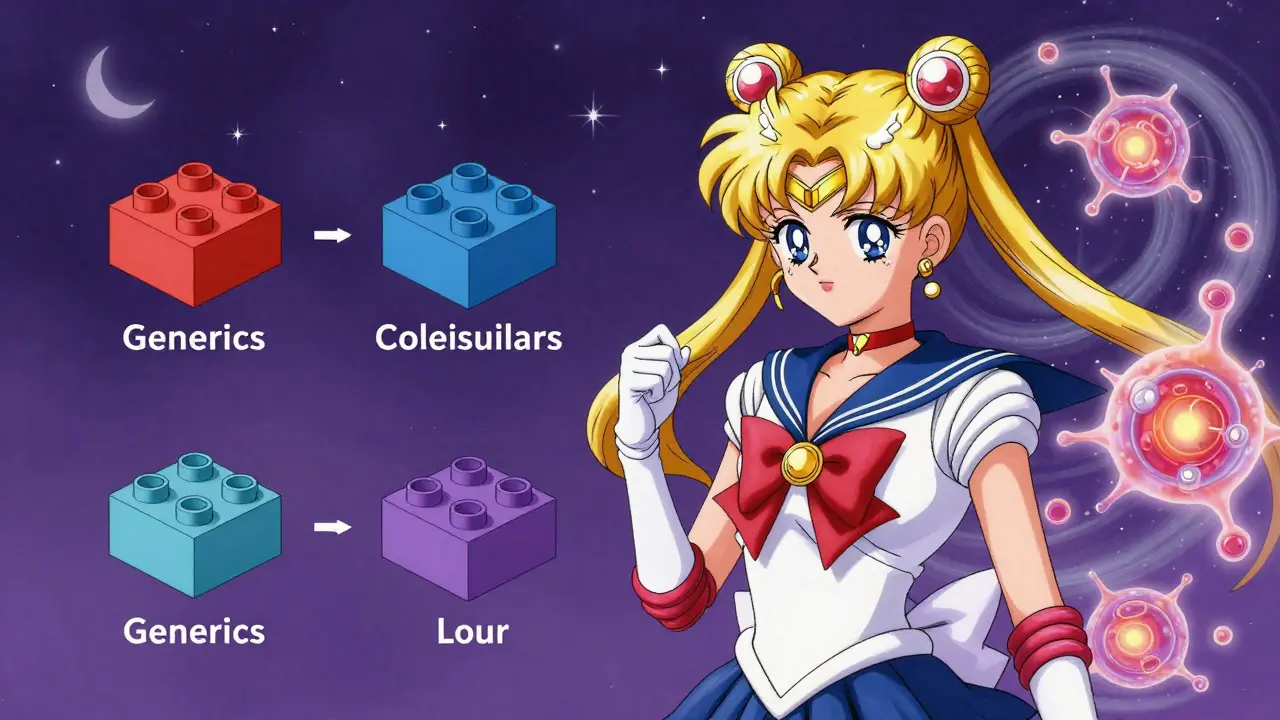
When we talk about Generic Drugs, we are talking about chemical copies. They are simple molecules created in a lab that are identical to the original. If the original is a Lego set, the generic is the exact same set from the same mold.
Insulin, however, is a biological product. It is grown in living cells, making it a massive, complex molecule. Because of this, it is impossible to make an identical copy. Instead, scientists create a biosimilar that is "highly similar." It has the same structure and performs the same function in the body, but it isn't a mirror image. This is why they require rigorous analytical and clinical testing to prove they don't cause different immune responses or varying levels of efficacy.
| Feature | Generic Insulin (Human) | Insulin Biosimilar (Analog) |
|---|---|---|
| Molecular Structure | Simple, chemically identical | Complex, highly similar |
| Manufacturing | Chemical synthesis | Living cell cultures |
| Approval Path | Bioequivalence testing | Comparative clinical trials |
| Consistency | Exact copy | Clinically equivalent |
The Market Landscape and Real-World Examples
The shift toward these alternatives is accelerating. The global insulin biosimilar market is projected to grow from USD 3.2 billion in 2025 to USD 5.8 billion by 2035. While the European Union has been ahead of the curve since 2014, the U.S. is now seeing a surge in adoption as patents expire.
Take Semglee, for example. Developed by Biocon in partnership with Viatris, it is a biosimilar to the well-known long-acting insulin Lantus. For patients, this means a choice: stay with the brand-name originator or switch to a version that provides the same glycemic control at a fraction of the price. In some emerging markets, like India, these options have slashed costs by 60-70%, making insulin accessible to millions who previously struggled to afford it.
However, adoption isn't happening overnight. In oncology, biosimilars often capture 80% of the market within five years. In the insulin world, that number is closer to 26%. Why? Because insulin is a "maintenance" drug. Patients are terrified of a switch that might cause a sudden drop in blood sugar (hypoglycemia) or a spike in A1C.
Special Considerations for Switching
If you or your doctor are considering a switch, it isn't as simple as picking up a different box at the pharmacy. There are clinical and regulatory nuances you need to know.
First, there is the interchangeability debate. In Europe, the European Medicines Agency (EMA) generally considers approved biosimilars interchangeable with their reference products. In the U.S., the Food and Drug Administration (FDA) is more cautious. They have a specific "interchangeable" designation that requires additional data to prove that switching back and forth between the biosimilar and the original doesn't impact safety or efficacy.
From a clinical standpoint, the American Association of Clinical Endocrinologists suggests a 3-6 month transition period. During this time, close glucose monitoring is vital. While 68% of patients report no difference in efficacy, about 22% find they need minor dosing adjustments. A sudden switch without medical supervision can lead to the "frequent lows" reported by some users in online communities, which is why a gradual transition is the gold standard.
The Financial Ripple Effect
The cost savings aren't just for the patient; they impact the entire healthcare system. In the U.S., CMS has adjusted reimbursement to the Average Selling Price (ASP) plus 8% of the originator's ASP. This creates a financial incentive for providers to move toward biosimilars.
We are seeing a diversification of product types. It's not just about long-acting insulins. The market now includes:
- Rapid-acting insulin analogs: For immediate mealtime coverage.
- NPH human insulin: Intermediate-acting options for steady basal levels.
- Pre-mixed insulins: Combining different types for convenience.
As more players like Eli Lilly, Sanofi, and Mylan enter the fray, the competition is driving prices down further. By 2030, experts predict that biosimilars will capture 60-65% of the market in emerging economies, fundamentally changing how diabetes is managed on a global scale.
Looking Ahead: The 2026 Horizon
The next couple of years will be pivotal. We are anticipating the launch of biosimilars for other long-acting analogs like Toujeo and Tresiba, which have historically enjoyed limited competition. This will likely trigger another wave of price drops.
Moreover, the industry is moving beyond the liquid in the vial. About 78% of manufacturers are now investing in next-generation delivery devices. The goal is to combine the cost-savings of a biosimilar with a more user-friendly pen or pump, removing the friction of the switching process.
Are insulin biosimilars as safe as brand-name insulins?
Yes. To be approved, biosimilars must undergo rigorous testing to prove there are no clinically meaningful differences in safety, purity, or potency. While there is a theoretical risk of immunogenicity (the body reacting to the protein), in practice, this is minimal and comparable to the reference product.
Can my pharmacist switch my insulin to a biosimilar automatically?
It depends on where you live. In the U.S., pharmacy-level substitution is governed by state law. As of early 2025, only about 17 states allow pharmacists to substitute insulin biosimilars without a specific doctor's order. Always check with your provider before changing your insulin source.
Will I notice a difference in my blood sugar levels after switching?
Most patients (around 68%) report no significant difference. However, a minority may experience slight variations in how the insulin is absorbed. This is why endocrinologists recommend a 3-6 month window of close glucose monitoring during the transition to tweak doses if necessary.
Why are biosimilars more expensive than typical generics?
The cost is higher because the manufacturing process is incredibly complex. Unlike a chemical pill, biosimilars are grown in living cells, requiring expensive bioreactors and stringent quality control to ensure the protein folds correctly every single time.
What is the difference between a biosimilar and an "interchangeable" biosimilar?
A biosimilar is proven to be highly similar to the original. An "interchangeable" biosimilar has gone a step further, providing data to show that switching between the two does not result in any change in effectivity or safety. This higher standard is particularly emphasized by the FDA in the United States.

Srikanth Makineni
April 8, 2026 AT 19:18massive price drop in india makes life way easier for families
Alexander Idle
April 9, 2026 AT 01:46Absolute tragedy that we even have to debate the safety of life-saving meds just because some corporate giant wants their cut. It is honestly a nightmare that the US is so far behind Europe in this. Why are we still paying a premium for the same result? It is a complete joke and a disaster for anyone actually struggling to survive
jack hunter
April 9, 2026 AT 20:43probs just another way for big pharma to keep us hooked on differnt brands lol. the whole idea of "highly similar" is basically just a fancy way to say "we hope this works but we didnt actually copy it" typical corporate speak to trick us into thinking its safe when its just cheper and riskier
Nathan Kreider
April 10, 2026 AT 03:34It is really great to see more affordable options coming out. I can only imagine how much stress this takes off people who have been worrying about their monthly bills. Just a little bit of patience during the transition and it sounds like most people do just fine. We are moving in a good direction here
shelley wales
April 11, 2026 AT 21:20For anyone feeling nervous about the switch, remember that you are not alone and your doctor is there to help you through the process. It can be scary to change a routine that works, but the potential for saving hundreds of dollars a month is a huge win for the community. Just take it one day at a time and keep those logs updated
Timothy Burroughs
April 12, 2026 AT 16:14america should just lead the way and force these prices down without all the red tape
the fda is way too soft and we need to just push these biosimilars through so we can stop wasting money on overpriced brands that dont care about our patients
Laurie Iten
April 14, 2026 AT 08:40the distinction between a chemical copy and a biological similarity is an interesting reflection of nature vs industry. we try to replicate life and find that it resists perfect duplication. its a reminder that our bodies are complex systems and not just machines we can swap parts in
Dhriti Chhabra
April 16, 2026 AT 01:24It is heartening to observe the expansion of these healthcare initiatives. The reduction of costs in emerging markets demonstrates a commitment to global health equity and ensures that life-saving treatment is no longer a privilege of the wealthy but a right for all patients
charles mcbride
April 16, 2026 AT 20:14This is such a wonderful development for the future of healthcare. The fact that the market is projected to grow so significantly suggests that more people will get the help they need without breaking the bank. It is truly inspiring to see science and economics aligning to save lives and improve the quality of living for millions. I believe that by 2030 we will look back at these high prices as a distant memory. The move toward user-friendly delivery devices is also a huge plus for accessibility. Everything seems to be heading toward a more inclusive and supportive system for diabetes management. It is a bright horizon for patients everywhere. Let us keep pushing for these advancements to reach every corner of the globe. The progress in Europe has already proven it can be done. Now the rest of the world is catching up. This brings so much hope to those who felt trapped by medical costs. Truly a win for humanity