

Every day, pharmacists and prescribers face the same frustrating bottleneck: a patient needs a brand-name medication, but the insurance company says no-unless they first try a cheaper generic version. This isn’t just bureaucracy. It’s a system designed to cut costs, but it often slows down care, confuses patients, and burns out providers. As of 2026, generic alternatives are at the center of nearly two-thirds of all prior authorization requests in the U.S., and the rules keep changing. If you’re a pharmacist, clinician, or even a patient trying to get your medication, understanding how this system works isn’t optional-it’s essential.
What Exactly Is Prior Authorization for Generic Alternatives?
Prior authorization (PA) is when your insurer requires approval before covering a drug. When it comes to generic alternatives, the insurer is essentially saying: "We won’t pay for the brand-name version unless you’ve tried-and failed-the cheaper generic first." This is called step therapy. It’s not new. The Medicare Modernization Act of 2003 gave insurers the green light to use it, and since then, nearly every major payer has adopted some version of it.
But here’s the catch: the generic isn’t just a cheaper version. It’s supposed to be therapeutically equivalent. The FDA gives drugs an AB rating to confirm this. If a generic has an AB rating, it’s legally and clinically interchangeable with the brand. Yet, insurers still make you jump through hoops. Why? Because they’re not just looking at clinical equivalence-they’re looking at cost savings. A 2023 CMS report showed commercial insurers require prior authorization for 32.4% of brand-name prescriptions when a generic exists, compared to just 18.7% for Medicare Part D plans. That’s a big gap.
The Seven-Step Process-And Why It Often Fails
The system works like this:
- Your provider picks a medication that needs PA because it’s brand-name and a generic is available.
- You or your provider gathers clinical proof: medical history, lab results, previous treatment attempts.
- The request is submitted-electronically, by fax, or phone.
- A clinical pharmacist or medical director at the insurer reviews it against their internal rules.
- You get a decision: approved, denied, or asked for more info.
- If denied, you can appeal.
- If approved, you get the drug.
Simple? Not really. A 2024 study in the Journal of Managed Care & Specialty Pharmacy found that 63% of initial denials happen because the documentation doesn’t clearly prove the generic failed. Vague notes like "patient didn’t respond" won’t cut it. You need specifics: "Patient took 800 mg ibuprofen daily for 6 weeks; pain score decreased by 15% (baseline was 8/10, now 7/10)." That kind of detail increases approval rates from 42% to 87%.
And timing matters. Submitting the day before the prescription is due? That’s a recipe for delay. The American Medical Association recommends submitting at least 14 days in advance. For urgent cases-like a patient with uncontrolled diabetes or severe migraines-expedited requests are allowed, but they still take 72 hours under new Medicaid rules effective January 2026.
How Insurers Differ-And Why It Matters
Not all insurers play by the same rules. UnitedHealthcare requires a 30-day trial of two different generics before approving a brand-name diabetes drug. Aetna? Only 14 days, and they require an HbA1c test to prove the generic didn’t work. Cigna’s timeline is 5-10 business days. Medicaid, thanks to the 2026 MACPAC update, must respond in 7 calendar days for standard requests and 72 hours for urgent ones.
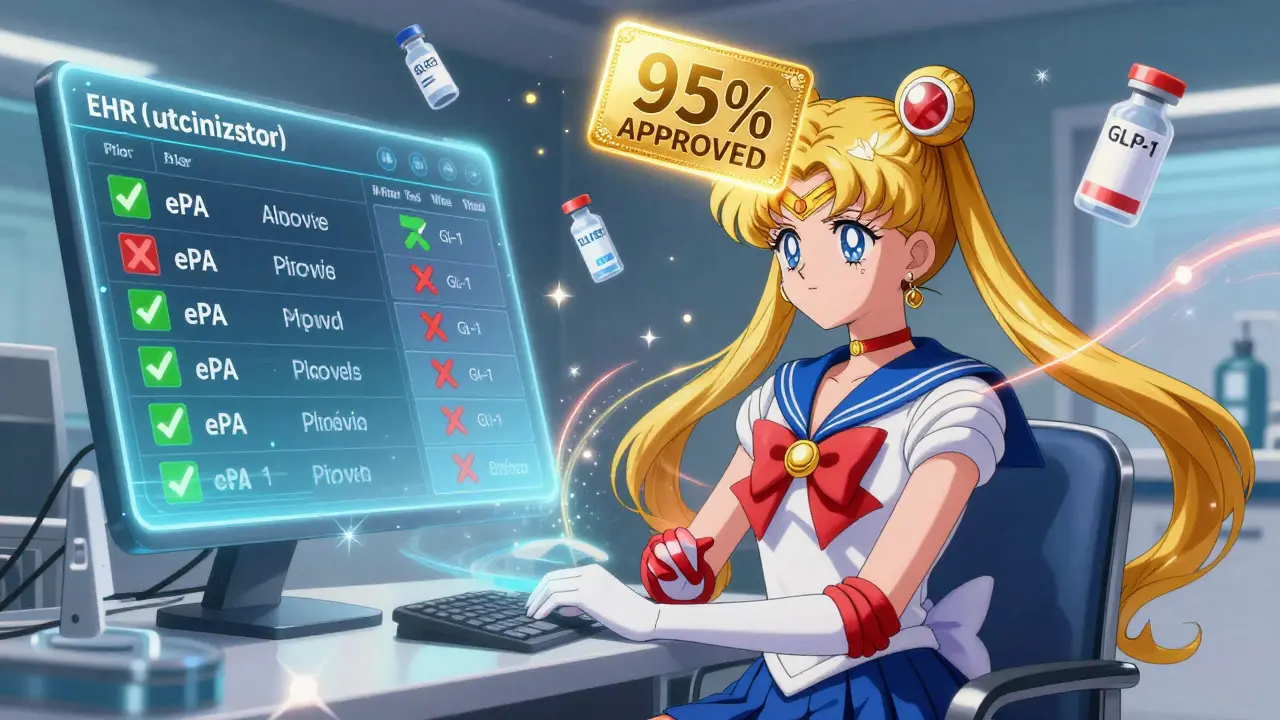
And then there’s the "gold carding" system. If a provider gets 95% or more of their prior authorizations approved over time, some insurers automatically approve future requests for that provider-no paperwork needed. Sounds great, right? But only 29% of eligible providers even know they’ve been gold-carded, according to the Medical Group Management Association. That’s wasted time and missed efficiency.
Specialty drugs are even tougher. In oncology, 94% of brand-name treatments require prior authorization when biosimilars (the generic version of biologics) are available. For a patient with metastatic breast cancer, waiting weeks for approval can mean the difference between treatment success and disease progression.
The Hidden Cost: Time, Stress, and Abandoned Care
Behind every denied PA is a human story. A 2024 JAMA Internal Medicine study estimated that providers waste $13.4 billion a year just filling out prior authorization forms. That’s 43 requests per physician per week-and 68% of those are for generic alternatives. One physician on Sermo reported spending 14.6 hours a week just on PA paperwork.
Patients pay the price too. Patients Rising found that 67% of people abandon their medication when prior authorization delays stretch beyond two weeks. Mental health drugs, insulin, and GLP-1 agonists like Wegovy are the most common culprits. On Reddit, a thread about Wegovy PA got over 1,200 comments-most people said they had to submit the same paperwork three or four times.
And it’s not just frustration. The CMS Office of Inspector General found that 17.3% of prior authorization denials for brand-name drugs were medically inappropriate. That means over a million Medicare patients were denied drugs they needed because of a paperwork error. That’s not cost-saving-it’s harm.
What Works: Real Strategies That Get Results
So how do you beat the system? Here’s what frontline providers are doing:
- Use payer-specific templates. Each insurer has its own form. Using the right one cuts denials by 37%.
- Go electronic. Electronic prior authorization (ePA) gets approved 78% of the time within the same week. Fax? Only 34%.
- Designate a PA specialist. Clinics that assign one person to handle all prior authorizations cut processing time by 52%.
- Track everything. Automated tracking systems reduce lost requests by 89%.
- Know your gold card status. If you’re eligible, ask your payer. You might be getting approved automatically and not even know it.
At the University of Pittsburgh Medical Center, they automated their PA workflow. Result? Approval time dropped from 9.2 days to 2.1 days. First-pass approval jumped from 58% to 89%. That’s not magic-it’s system design.
The Future: AI, Real-Time Tools, and Faster Approval
The landscape is shifting fast. By 2026, CMS will require all insurers to show prior authorization requirements at the point of prescribing through real-time benefit tools. That means your EHR will pop up a message: "This drug requires step therapy. Generic alternatives: metformin, glipizide. Approval needed." No more guessing.
AI is stepping in too. Large health systems are testing natural language processing tools that auto-fill PA forms from clinical notes. Early results show a 44% reduction in submission time. Blockchain pilots at Mayo Clinic and other academic centers are proving that secure, tamper-proof documentation can boost approval rates to 92% for exceptions.
And the biggest game-changer? The HL7 Da Vinci Project. By 2027, all major payers must use FHIR-based APIs to exchange PA data in real time. That could mean approval in under 24 hours for routine generic cases. No more fax machines. No more waiting days for a phone call.
What You Can Do Today
Whether you’re a pharmacist, prescriber, or patient:
- Always ask: "Is there a generic with an AB rating?" If yes, expect PA.
- Document failure clearly: time, dose, symptom change, lab values.
- Submit electronically. Never fax if you can help it.
- Start the process early-14 days before the script is due.
- If denied, appeal. You have the right.
- Ask your provider if they’re gold-carded. If not, ask how to get there.
Insurance companies aren’t going to stop requiring prior authorization. But they’re being forced to make it faster, fairer, and less broken. The tools are here. The data is clear. The question isn’t whether the system can be fixed-it’s whether we’ll use the tools we already have to fix it.
Why do insurers require trying generics before brand-name drugs?
Insurers require this to control costs. Generic drugs are typically 80-85% cheaper than brand-name versions and are FDA-approved as therapeutically equivalent. By mandating a trial of the cheaper option first, insurers aim to reduce overall spending on prescriptions. This is called step therapy, and it’s required by nearly all commercial insurers and Medicaid plans as of 2026.
What happens if a generic doesn’t work for me?
If a generic fails, your provider must document why. This means showing specific evidence-like lab results, symptom scores, or side effects-that the generic didn’t work. For example, if you’re on a generic statin and your LDL cholesterol didn’t drop below 100 after 8 weeks, that’s documentation. Once that’s submitted, the insurer must review it and either approve the brand-name drug or deny it with a clear reason. You can appeal if denied.
How long does prior authorization take for generics?
Standard requests take 5-14 days depending on the insurer. As of January 1, 2026, Medicaid plans must respond within 7 calendar days for standard requests and 72 hours for urgent cases. Commercial insurers like Cigna and UnitedHealthcare have their own timelines, but electronic submissions (ePA) often get decisions in 24-48 hours. Fax or paper requests can take over a week.
Can I get my brand-name drug without trying generics?
Yes, but only under specific conditions called "exceptions." These include medical necessity, intolerance to the generic (like severe side effects), or if the generic isn’t covered at all. Your provider must submit clinical documentation proving the exception. Some insurers also have automatic approvals for certain drugs if you’ve had prior authorization approved before.
What’s the difference between a generic and a biosimilar?
Generics are exact copies of small-molecule drugs (like metformin or lisinopril). Biosimilars are highly similar-but not identical-to complex biologic drugs (like insulin or Humira). They’re not called generics because they’re made from living cells, not chemicals. Biosimilars still require prior authorization when used instead of brand-name biologics, and insurers often require step therapy with them too.
How can pharmacists help patients with prior authorization?
Pharmacists can flag potential PA issues before the prescription is even filled. They can alert prescribers about payer requirements, suggest alternatives that may not need PA, and help patients understand why delays happen. Many pharmacies now have dedicated staff who call insurers, track PA status, and even pre-fill forms. This reduces patient no-shows and improves adherence.
Final Thoughts: The System Is Broken, But Fixable
Prior authorization for generic alternatives was meant to save money and improve care. But right now, it’s doing more harm than good. The administrative burden is crushing providers. Patients are dropping out of treatment. And too many denials are based on paperwork errors, not medical need.
The good news? The tools to fix it exist. Electronic systems, AI, real-time benefit tools, and standardized APIs are already in use. The question isn’t whether we can do better-it’s whether we’ll choose to. For pharmacists, this isn’t just about filling prescriptions. It’s about being the bridge between a broken system and a patient who needs their medication today.

Sarah Mailloux
January 16, 2026 AT 05:32Jami Reynolds
January 17, 2026 AT 03:50Frank Geurts
January 18, 2026 AT 02:50Mike Berrange
January 18, 2026 AT 06:06Dan Mack
January 18, 2026 AT 11:11Amy Vickberg
January 18, 2026 AT 20:01Nishant Garg
January 19, 2026 AT 13:02Nicholas Urmaza
January 20, 2026 AT 06:19Niki Van den Bossche
January 20, 2026 AT 09:16ellen adamina
January 22, 2026 AT 05:03Gloria Montero Puertas
January 22, 2026 AT 16:03