
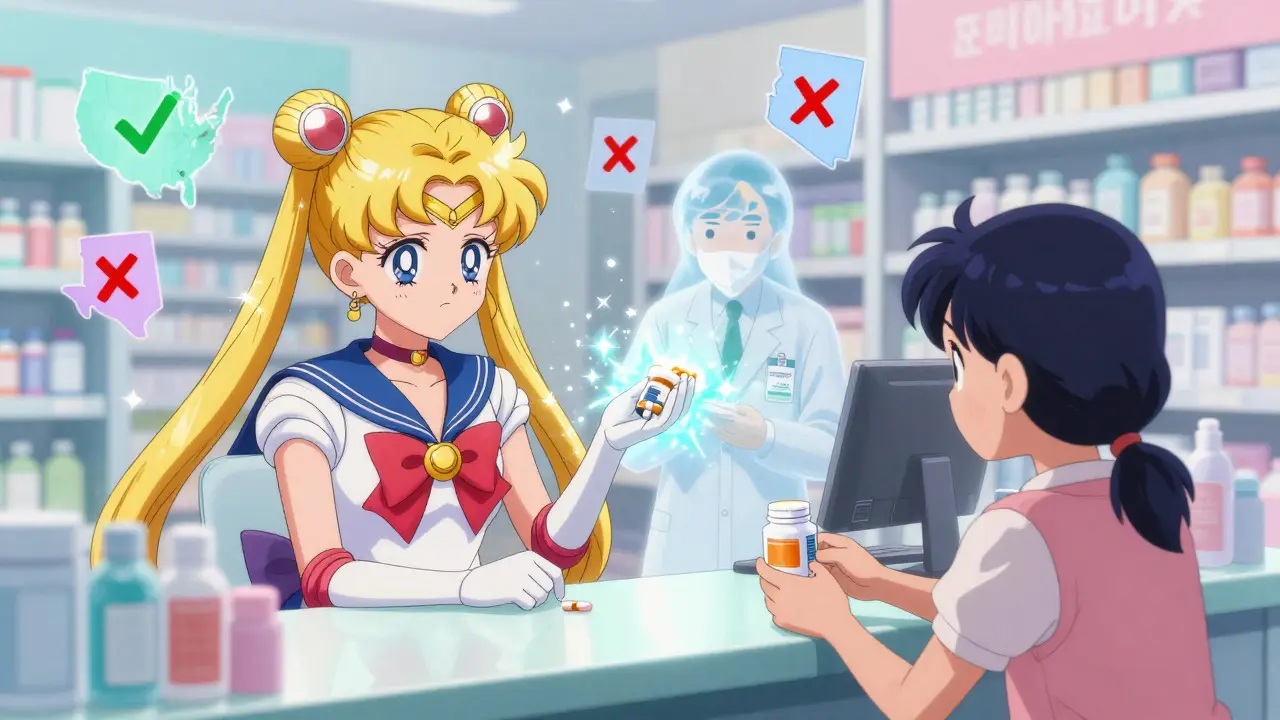
Medicaid covers generic drugs - but not the same way in every state
If you're on Medicaid and need a generic medication, you might assume it’s always covered, cheap, and easy to get. But that’s not true everywhere. In 2026, how easily you get your generic pills - whether it’s blood pressure medicine, diabetes drugs, or antibiotics - depends entirely on which state you live in. Some states make it simple: pharmacists swap brand names for generics automatically, with no extra steps. Others require doctors to jump through hoops just to get you the cheapest version of a drug you’ve been taking for years.
The federal government sets the baseline: all states must cover outpatient prescription drugs for most Medicaid enrollees. But beyond that? Each state builds its own rules. And those rules affect your wallet, your time, and even your health.
Who gets generic drugs under Medicaid - and who doesn’t?
Every state covers generics for nearly all Medicaid beneficiaries. That’s not optional. But there are exceptions. Federal law blocks Medicaid from paying for certain types of drugs - like those for weight loss, fertility, or erectile dysfunction - no matter what state you’re in. So if your doctor prescribes a weight-loss drug, even if it’s generic, Medicaid won’t pay for it.
But here’s where things get messy. Some states have their own hidden exclusions. For example, Colorado’s Health First Colorado program explicitly bans coverage for cosmetic drugs, even if they’re generic. Other states might deny coverage for a generic version of a drug if they consider it “not medically necessary” - even if it’s the same active ingredient as the brand name.
The real question isn’t whether you can get a generic. It’s whether you can get the specific generic your doctor recommends - or if you’re forced to switch to one the state prefers.
Automatic generic substitution: Where it’s required - and where it’s not
At least 41 states have laws that require pharmacists to substitute a generic drug when it’s available - unless the doctor says no. This is called automatic generic substitution. In states like New York, Ohio, and Illinois, the pharmacist can swap the brand name for the generic without calling your doctor first. The law assumes the two drugs are equally safe and effective.
But not all states do this. In Texas, Arizona, and a few others, the pharmacist must check with your doctor before switching - even if the generic is identical. That means extra phone calls, delays, and sometimes you don’t get your medicine until the next day.
Colorado goes even further. Its law says the generic must be prescribed unless the brand name is cheaper - yes, that’s right - or if you’ve been stable on the brand for months. So if your doctor prescribes a brand-name drug, and the generic costs less, the pharmacy is legally required to push the cheaper option unless you or your doctor object.
Formularies and tiers: Why your generic might not be covered
Every state uses a formulary - a list of approved drugs. But these lists aren’t simple. They’re split into tiers, like a pricing ladder. Tier 1 is usually the cheapest generics. Tier 2 is brand names. Tier 3? Sometimes it’s newer generics that cost more.
Here’s the catch: just because a drug is generic doesn’t mean it’s on Tier 1. Some states put certain generics in Tier 2 or 3 - meaning higher copays. For example, a common generic for high cholesterol might be covered, but only if you pay $8 instead of $3. That’s allowed under federal rules for people earning below 150% of the poverty line.
States like California keep their formularies broad and simple. Most generics are on Tier 1. But states like Georgia and Alabama have tightly managed formularies. They only cover a handful of generics for each drug class - the ones they’ve negotiated the best price on. If your doctor prescribes a generic that’s not on the list, you’re out of luck unless you get prior authorization.
Prior authorization: The hidden barrier
Prior authorization is when your doctor has to prove to the state - or the insurance company managing your benefits - that you need a specific drug. For brand-name drugs, this is common. But increasingly, states are requiring it for generics too.
In Colorado, if you need a generic that’s not on their Preferred Drug List, your doctor must submit paperwork explaining why. For opioids, even generics, they require a 7-day limit on initial prescriptions and no more than 8 doses per day. In Michigan, you might need to try two other generics first before they’ll cover the one your doctor picked.
Meanwhile, in states like Washington and Oregon, most generics skip prior authorization entirely. The difference? It’s not about medical need. It’s about cost control. States with higher rates of prior authorization for generics are trying to cut spending - even if it slows down care.
Doctors spend an average of 15 minutes per patient just filling out these forms. That’s $8,200 a year in lost time per physician. And for you? It could mean waiting days to refill a chronic medication.
Copays and out-of-pocket costs: What you actually pay
Medicaid can charge you copays for generics - but only up to $8 per prescription for people earning under 150% of the federal poverty level. Most states charge less: $1 to $3. But some states don’t charge anything at all.
Here’s the twist: your copay can change depending on the tier. In Florida, a Tier 1 generic might cost $2. A Tier 2 generic - even if it’s the same drug - could cost $7. And if the state doesn’t cover your chosen generic at all? You pay full price - which can be hundreds of dollars.
Some states are experimenting with $0 copays for generics. Maryland and Vermont have piloted programs that remove all out-of-pocket costs for Tier 1 generics. Early results show better adherence - especially for diabetes and high blood pressure meds. But most states haven’t followed suit.
Therapeutic interchange: When your doctor doesn’t get a say
Some states let pharmacists swap not just the brand for a generic - but one generic for another. This is called therapeutic interchange. It’s legal in 17 states. In New Jersey, if your doctor prescribes one generic for depression, the pharmacist can switch you to another generic - even if your doctor didn’t recommend it - if the state says they’re clinically equivalent and the price difference is over $10.
But here’s the problem: not all generics are the same. Some have different fillers, release times, or absorption rates. A 2024 University of Pennsylvania study found that when Medicaid patients were switched between generics without their doctor’s input, hospital admissions rose by 12.7%.
States that allow therapeutic interchange rarely require doctors to be notified. So you might get a different pill - same name, different shape, different side effects - and never know why.

Who’s managing your drug benefits - and why it matters
Most states don’t run their own pharmacy programs. They hire private companies called Pharmacy Benefit Managers (PBMs). CVS Caremark, Express Scripts, and OptumRx manage Medicaid drug benefits in 37 states. That means your coverage rules might be set by a corporate pharmacy manager in Minnesota - not your state’s health department.
PBMs negotiate prices with drug makers. They create formularies. They decide which generics get preferred status. And they often get a cut of the savings. Critics say this creates a conflict: the PBM wants to cut costs, but your doctor wants the best drug for you. And sometimes, the cheapest option isn’t the safest.
States with direct control over their formularies - like Minnesota and Massachusetts - tend to have higher provider satisfaction. States that outsource to PBMs? Lower ratings. In 2024, Massachusetts scored 4.6 out of 5 for formulary clarity. Mississippi? 2.8.
What’s changing in 2026 - and what’s next
Big changes are coming. In late 2025, the federal government proposed a rule that could force all Medicaid programs to cover anti-obesity drugs - including generics like semaglutide. That would affect nearly 5 million people. But it’s not clear if states will get enough funding to pay for it.
Another looming issue: a bill in Congress would remove inflation rebates for most generic drugs under Medicaid. That could cost states $1.2 billion a year. If it passes, expect more restrictions - higher copays, stricter formularies, more prior authorizations.
At the same time, more states are testing $0 copay programs for essential generics. Pilot data from three states showed an 18.4% boost in medication adherence. That’s fewer ER visits, fewer hospital stays, and better health outcomes.
And then there’s supply. In 2024, 17 generic drugs covered by Medicaid were on the FDA’s shortage list. That means even if your state covers a drug, it might not be available. You could be stuck waiting - or forced to switch to a different one.
What you can do if your generic isn’t covered
If your Medicaid claim for a generic drug is denied, you have rights. Every state has an appeals process. Start by asking your pharmacist for the reason. Was it prior authorization? Tier placement? Formulary exclusion?
Then talk to your doctor. They can write a letter explaining why that specific drug matters - not just for cost, but for your health. Some states require a “medical necessity” letter. Others accept a simple note.
Don’t give up. In many cases, appeals are approved - especially for chronic conditions. And if you’re in a state with strict rules, consider switching to a different Medicaid managed care plan. Some plans have better formularies than others.
Finally, keep track. Know your state’s Preferred Drug List. Check if your drug is on it. Know your copay. Know your rights. Because in Medicaid, coverage isn’t guaranteed - it’s negotiated, one state at a time.
Does Medicaid cover all generic drugs?
Medicaid covers most generic drugs, but not all. Federal law blocks coverage for certain types, like weight-loss, fertility, and cosmetic drugs. Beyond that, each state decides which generics are on its formulary. Some states cover only a limited number of generics per drug class, and others require prior authorization even for generics. So while generics are widely covered, you may not get the specific one your doctor prescribes.
Can my pharmacist switch my brand-name drug to a generic without asking?
In 41 states, yes - pharmacists can automatically substitute a generic for a brand-name drug if it’s therapeutically equivalent. But in states like Texas and Arizona, they must call your doctor first. Colorado goes further: the law requires the generic to be prescribed unless the brand is cheaper or you’re already stable on it. Always check your state’s substitution laws - they vary widely.
Why do I have to pay $8 for a generic drug?
Medicaid allows states to charge up to $8 in copays for non-preferred generics if your income is below 150% of the federal poverty level. Many states charge less - $1 to $3 - but some place certain generics on higher tiers, making them more expensive. If your drug is not on the preferred list, you may pay more. Some states, like Vermont and Maryland, have eliminated copays for essential generics to improve adherence.
What is prior authorization, and why do I need it for a generic?
Prior authorization is when your doctor must get approval from Medicaid before you can get a drug - even if it’s generic. States use it to control costs. For example, Colorado requires it for any drug not on their Preferred Drug List. In some states, you need to try other generics first. This can delay your treatment by days or weeks. The process is often handled by private pharmacy benefit managers, not state officials.
Can my pharmacist switch me from one generic to another without telling me?
Yes - in 17 states, pharmacists can swap one generic for another without your doctor’s approval, as long as they’re considered clinically equivalent and the price difference is over $10. This is called therapeutic interchange. But different generics can have different inactive ingredients, which may affect how your body responds. You might not know you’ve been switched unless you check the pill’s shape or color. Always ask your pharmacist if your medication changed.
How do I find out what generics my state covers?
Each state publishes a Preferred Drug List (PDL) or formulary online. Search for “[Your State] Medicaid Preferred Drug List” or visit your state’s Medicaid website. You can also ask your pharmacist or call your Medicaid managed care plan. Some states, like Massachusetts, make their lists easy to navigate. Others, like Mississippi, are harder to use. If you’re unsure, ask your doctor’s office - they often have access to the latest formulary updates.
What happens if my generic drug is on shortage?
If your generic drug is on the FDA’s shortage list, your pharmacy may not have it in stock - even if your state covers it. In that case, you might be switched to a different generic or brand-name version. Your doctor can request an exception if the alternative isn’t suitable. Keep a backup list of alternatives with your doctor. Supply chain issues are growing: in 2024, 17 Medicaid-covered generics were in short supply, including antibiotics and heart medications.

phara don
February 2, 2026 AT 08:32Ellie Norris
February 3, 2026 AT 17:07Marc Durocher
February 4, 2026 AT 22:04larry keenan
February 6, 2026 AT 18:04Nick Flake
February 7, 2026 AT 01:46Akhona Myeki
February 7, 2026 AT 13:05Chinmoy Kumar
February 9, 2026 AT 07:05Vatsal Srivastava
February 10, 2026 AT 19:22Brittany Marioni
February 11, 2026 AT 10:27Ansley Mayson
February 13, 2026 AT 01:42Eli Kiseop
February 14, 2026 AT 22:46Becky M.
February 15, 2026 AT 11:11clarissa sulio
February 16, 2026 AT 17:03Monica Slypig
February 16, 2026 AT 21:02