
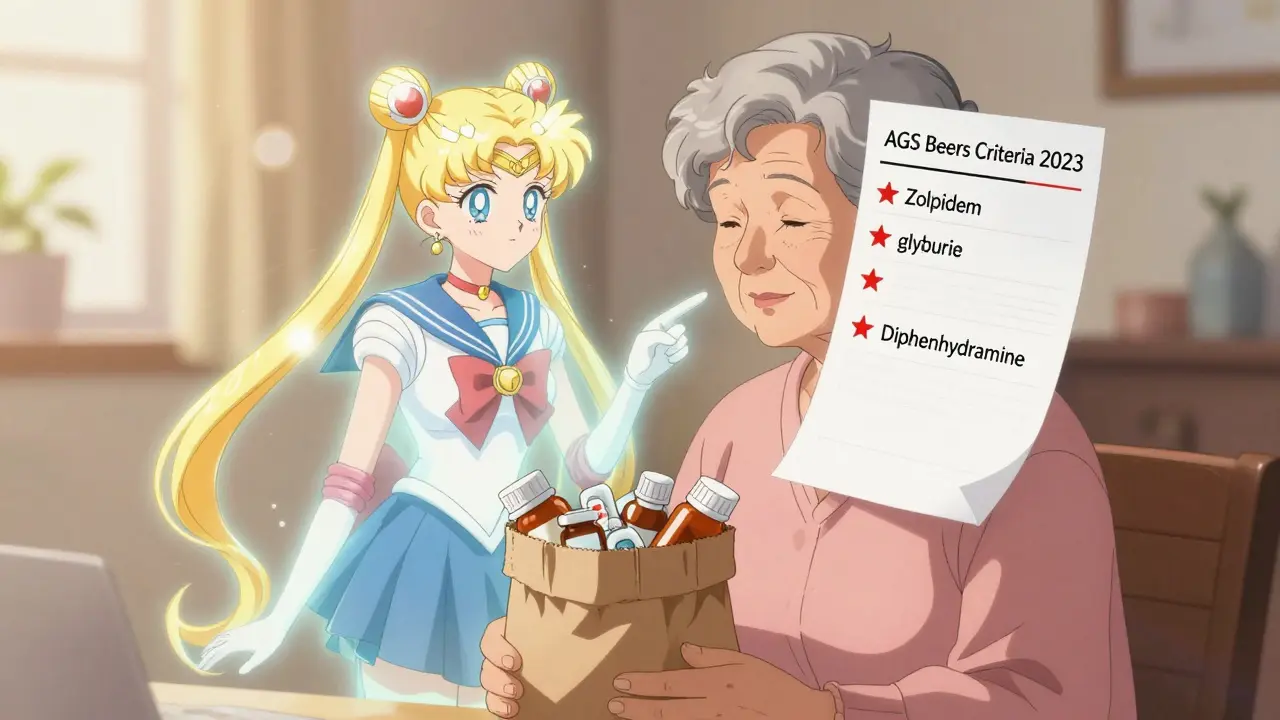
Every year, thousands of seniors end up in the hospital-not because of a fall, heart attack, or infection, but because of a medication they were told was safe. The truth is, some drugs that work fine for younger adults can be dangerous for older bodies. Aging changes how your body processes medicine. Your liver slows down. Your kidneys don’t filter as well. Your brain becomes more sensitive to sedatives. What was once a harmless pill can become a silent threat.
Why Seniors Are at Higher Risk
People over 65 are more likely to take five or more medications at once. That’s called polypharmacy. And with each added pill, the risk of bad reactions goes up. One drug can interfere with another. A mild side effect can turn into a fall, a broken hip, or confusion that looks like dementia. The AGS Beers Criteria is the gold standard doctors use to spot these dangers. First created in 1991 and updated every two years, it lists medications that are more likely to cause harm than benefit in older adults. In 2023, the list was expanded to include five new high-risk drugs and removed three others based on new evidence.The Centers for Disease Control and Prevention (CDC) says about 40% of seniors take five or more prescriptions. That’s not unusual-it’s the norm. But here’s the problem: many of these drugs were never tested on people over 70. Most clinical trials include younger, healthier volunteers. So when a doctor prescribes a drug based on those studies, they’re guessing how it will affect an 80-year-old with kidney trouble and three other conditions.
Top 5 High-Risk Medications for Seniors
- Zolpidem (Ambien®) - This sleep aid might help you fall asleep, but it doesn’t let your brain wake up fully. Residual drowsiness can last up to 11 hours. Seniors who take it are 2.5 times more likely to fall and break a hip. Many report sleepwalking, confusion, or memory gaps the next day. In one study, 22% of users had falls serious enough to need medical care.
- Glyburide (Diabeta®) - Used for type 2 diabetes, this drug can cause dangerously low blood sugar. For seniors, the risk is nearly double compared to newer options like glipizide. About 29% of elderly patients on glyburide experience hypoglycemia severe enough to land them in the ER. The FDA added a boxed warning in 2023, calling it especially risky for those over 65.
- Diphenhydramine (Benadryl®) - Found in sleep aids, allergy pills, and even some cold medicines, this antihistamine has a high Anticholinergic Cognitive Burden (ACB) score of 3. That means it blocks a brain chemical called acetylcholine, which is critical for memory and focus. Long-term use increases dementia risk by 54%. Even one pill a day for over three years can cause lasting cognitive decline.
- Nitrofurantoin (Macrobid®) - A common antibiotic for urinary tract infections, but it’s risky if your kidneys aren’t working well. For seniors with an eGFR below 60, this drug can cause serious lung damage. Studies show an 12.8-fold increase in pulmonary toxicity, with mortality rates as high as 18.3% in severe cases.
- Promethazine (Phenergan®) - Often used for nausea or allergies, this drug can trigger tremors, stiffness, and even seizures in seniors, especially those with Parkinson’s or epilepsy. Many family members report extreme drowsiness lasting over 24 hours. Reddit communities filled with caregivers consistently recommend switching to ondansetron instead.
What Else to Watch Out For
Some drugs aren’t dangerous on their own-but become risky when combined. For example:- Ciprofloxacin + Warfarin - This combo can spike your INR levels by 47%, leading to uncontrolled bleeding. The risk jumps 3.8 times in seniors over 70.
- Alpha-blockers (Doxazosin, Terazosin) - Used for high blood pressure or prostate issues, these cause sudden drops in blood pressure when standing. Seniors over 75 are 3.2 times more likely to faint than those on other blood pressure meds.
- Benzodiazepines (Lorazepam, Diazepam) - These are linked to a 50% higher risk of death over five years when used for sleep. They also increase car crash risk by 48% in drivers over 75.
Even something as simple as an over-the-counter sleep aid can be a hidden danger. Many seniors don’t realize that Benadryl, Unisom, or NyQuil all contain diphenhydramine. And if they’re already taking another anticholinergic drug-like an antidepressant or bladder medication-the effects multiply.
What’s Safer Instead?
The good news? There are often better choices.- For sleep: Try trazodone (a low-dose antidepressant) or cognitive behavioral therapy for insomnia (CBT-I). Studies show CBT-I works better than sleeping pills long-term and has no physical side effects.
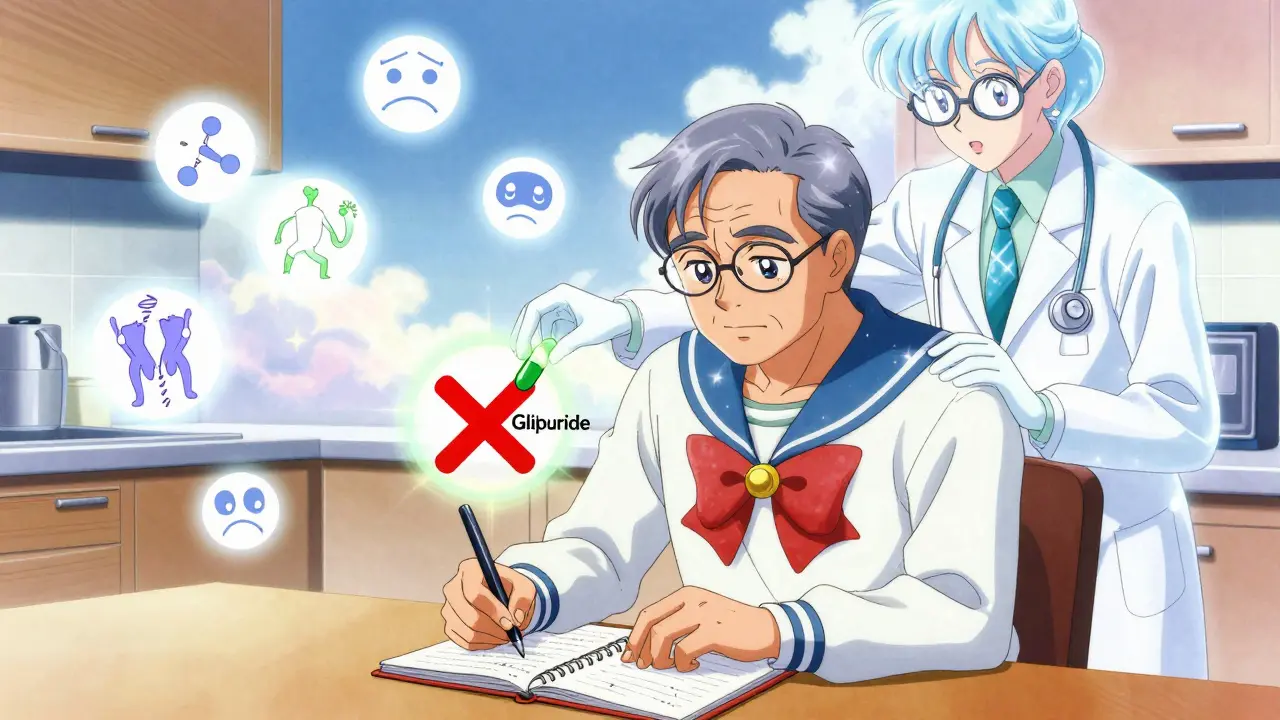
- For diabetes: Switch from glyburide to glipizide or metformin. Glipizide has a shorter half-life, so it’s less likely to cause low blood sugar overnight.
- For allergies or nausea: Replace promethazine with ondansetron or cetirizine. Both have minimal anticholinergic effects.
- For UTIs: Use nitrofurantoin only if kidney function is normal. Otherwise, fosfomycin or cephalexin are safer options.
- For anxiety or agitation: Avoid benzodiazepines. Try sertraline or escitalopram instead. They’re less sedating and don’t increase fall risk.
One patient, 78, was on glyburide and kept fainting. After switching to glipizide, her energy returned. She stopped falling. Her doctor told her, “You’re not just safer-you’re more alive.” That’s the difference.
How to Review Your Meds
You don’t need to wait for a crisis. Start now.- Do a brown bag review. Take all your pills-prescription, over-the-counter, vitamins, supplements-to your doctor or pharmacist. Don’t just list them. Bring the actual bottles.
- Ask: “Is this still necessary?” Many drugs are prescribed for short-term use but kept for years. Ask if you can stop one at a time.
- Check the anticholinergic burden. Use the Anticholinergic Risk Scale. If your total score is 3 or higher, talk to your doctor. Even one high-score drug can be enough to cause problems.
- Use the Beers Criteria. Search “AGS Beers Criteria 2023” online. It’s free. Print the list. Bring it to your appointment.
- Ask about alternatives. Don’t settle for “This is what we’ve always used.” Ask: “Is there a safer option for someone my age?”
Medicare requires annual medication reviews for beneficiaries enrolled in Part D. But only 32% of seniors say their doctor actually talked to them about risks. Don’t wait for them to bring it up. Be the one to ask.

What to Do If You’re Already Taking a High-Risk Drug
Don’t stop cold turkey. That can be dangerous. Instead:- Work with your pharmacist. Clinical pharmacists specialize in medication safety. They can help you taper off safely and suggest alternatives.
- Monitor symptoms. Keep a journal. Note dizziness, confusion, constipation, or unusual fatigue. These are early warning signs.
- Ask for a medication therapy management (MTM) session. Medicare offers free consultations with pharmacists for people taking multiple drugs. Call your Part D plan to schedule one.
- Use tech tools. Apps like Surescripts and pharmacy systems now flag high-risk prescriptions in real time. If your pharmacist hesitates, ask why.
One study found that when pharmacists led medication reviews, high-risk drug use dropped by 35% in just six months. That’s not magic-it’s smart management.
The Bigger Picture
This isn’t just about pills. It’s about quality of life. A senior who stops a risky sleep aid might sleep better and stay independent. One who switches from glyburide might avoid an ER trip and keep driving. Another who drops diphenhydramine might remember names, follow recipes, and enjoy time with grandkids again.The system is catching up. Electronic health records now auto-alert doctors when they try to prescribe a Beers Criteria drug to someone over 65. Medicare Advantage plans deny coverage for some of these drugs unless special approval is given. But technology doesn’t replace conversation. Only you can speak up for your health.
If you’re caring for an older parent or loved one, sit with them. Go through their meds. Ask questions. Don’t assume the doctor knows best. The truth is, doctors are busy. They might not know every drug on the Beers list by heart. But you can. And that makes you their most powerful ally.
What are the most dangerous medications for seniors?
The most dangerous medications for seniors include zolpidem (for sleep), glyburide (for diabetes), diphenhydramine (in allergy and sleep aids), nitrofurantoin (for UTIs), and promethazine (for nausea). These drugs increase risks of falls, confusion, low blood sugar, lung damage, and seizures. The AGS Beers Criteria 2023 identifies these and 25 other high-risk medications based on clinical evidence.
Can seniors take Benadryl safely?
No, Benadryl (diphenhydramine) is not considered safe for long-term use in seniors. It has a high anticholinergic burden (ACB=3), which can cause memory loss, constipation, urinary retention, and confusion. Studies show it increases dementia risk by 54% with long-term use. Safer alternatives include cetirizine or loratadine for allergies, and non-medication approaches like sleep hygiene for insomnia.
Why is glyburide risky for older adults?
Glyburide stays in the body longer in seniors due to slower metabolism and reduced kidney function. This leads to prolonged low blood sugar episodes-sometimes lasting 24 hours or more. It causes hypoglycemia in nearly 30% of elderly users, compared to just 13% with glipizide. The FDA now requires a boxed warning on glyburide labels for patients over 65.
How often should seniors review their medications?
Seniors should review all medications at least once a year-and every time they see a new doctor or get a new prescription. Those taking five or more drugs should do a full “brown bag” review every three to six months. Medicare offers free Medication Therapy Management (MTM) sessions for eligible beneficiaries.
Can I stop a high-risk medication on my own?
No. Stopping certain medications suddenly-like benzodiazepines, antidepressants, or blood pressure drugs-can cause withdrawal, rebound symptoms, or dangerous spikes in blood pressure or seizures. Always work with your doctor or pharmacist to taper off safely. They can help you switch to a safer alternative without risking your health.
What is the Beers Criteria?
The Beers Criteria is a list of medications that are potentially inappropriate for older adults, developed by the American Geriatrics Society. Updated every two years, it identifies drugs with high risks of side effects like falls, confusion, kidney damage, or low blood sugar in seniors. It’s used by doctors, pharmacists, and Medicare plans to guide safer prescribing. The 2023 version includes 30 drug classes and 14 individual drugs flagged as high-risk.

Dayanara Villafuerte
January 18, 2026 AT 04:31So let me get this straight-we’re giving 80-year-olds drugs that were tested on 25-year-old gym bros and calling it medicine? 🤦♀️ I swear, if I see one more grandma on Benadryl because ‘it’s just an OTC sleep aid,’ I’m gonna scream into a pillow. Also, why is glyburide still on the market? It’s like prescribing a landmine for diabetes. 💊☠️
Andrew Qu
January 19, 2026 AT 04:04I’ve been a pharmacist for 22 years, and this post? Spot on. I see this every week. A sweet 82-year-old comes in with 14 meds, half of them on the Beers list. We gently taper, swap out the diphenhydramine for cetirizine, ditch the nitrofurantoin if eGFR is low-and suddenly, they’re walking better, remembering names, cooking again. It’s not magic. It’s just stopping the stuff that’s hurting them. Take the brown bag. Do it now.
Zoe Brooks
January 19, 2026 AT 23:57It’s wild how we treat aging like a glitch to be fixed with pills instead of a natural process that needs gentle care. We give seniors drugs to sleep, then drugs to wake them up, then drugs to fix the constipation from the sleep drugs, then drugs to fix the confusion from the constipation drugs… and we call it healthcare. 🤔 Maybe we just need more tea, more walks, and less chemical clutter. I’ve seen people come alive after ditching 4 meds. Not because they were cured-but because they were finally allowed to just be.
Kristin Dailey
January 20, 2026 AT 13:31Medicare pays for this mess. Stop letting Big Pharma poison our grandparents. Ban these drugs. Now.
Aysha Siera
January 20, 2026 AT 17:22They don't want you to know this but the FDA and pharma are in cahoots. The Beers Criteria was created by shadow groups to control the elderly population. Diphenhydramine? It's not dangerous-it's a mind-clearing agent they fear because seniors remember too much. They want you docile. Wake up. The pills are the opiate of the aged.
Robert Davis
January 22, 2026 AT 09:04I read this whole thing. Twice. And I have to say-this is the most comprehensive, well-researched, and quietly devastating breakdown of geriatric pharmaceutical negligence I’ve ever seen. I’m not one to get emotional about meds, but… wow. I showed this to my mom’s doctor last week. He actually paused. Then he said, ‘I didn’t realize how many of these I still prescribe.’ So… thanks? I guess? This should be mandatory reading for every med student.
Nishant Sonuley
January 23, 2026 AT 11:07Hey everyone, I’m from India and I’ve seen this exact thing happen with my 76-year-old uncle-he was on glyburide, benadryl, and a benzodiazepine, all at once. His family thought he was just ‘getting forgetful.’ Turned out he was just drugged to the gills. We switched him to metformin, cetirizine, and melatonin, added daily walks and chai with no sugar, and now he’s teaching yoga to the neighborhood kids. Point is: it’s not just Western medicine that’s broken-it’s the global assumption that pills = care. We need to rethink aging as a community project, not a pharmacy receipt.
Robert Cassidy
January 25, 2026 AT 05:28Oh here we go. Another liberal pill-pushing guilt trip. You want to ban these drugs? Fine. Then what? Let old people die in the streets because they can’t sleep? Or have diabetes? Or get UTIs? The real problem is not the meds-it’s the fact that we’ve turned aging into a medical crisis instead of a natural end. These drugs keep people alive longer. Maybe that’s not a bad thing. Stop pretending your ‘natural living’ blog is better than science. I’ve seen people on ‘risky’ meds live to 95. You’re just mad because you can’t control how others live.
Naomi Keyes
January 26, 2026 AT 11:19While I appreciate the intent of this article, I must emphasize that the use of colloquial language and emoticons undermines the clinical gravity of the subject matter. Furthermore, the reliance on anecdotal evidence-such as ‘one patient’ improvements-lacks statistical validity. The AGS Beers Criteria, while useful, is not a binding regulatory framework, and its adoption varies across institutions. I recommend that readers consult peer-reviewed meta-analyses from the Journal of the American Geriatrics Society, and ensure that any medication changes are coordinated through a certified geriatric pharmacist, not Reddit commenters.
Jodi Harding
January 27, 2026 AT 11:14My grandma took zolpidem for 7 years. One day she woke up in the garage at 3 a.m. wearing her nightgown and slippers, holding a wrench, convinced she was fixing a spaceship. She didn’t remember it. We stopped it. She slept better without it. No pills needed. Just quiet. And a dog. 🐶