
Methadone QT Risk & Interaction Estimator
Patient Parameters
Risk Assessment
Enter your details and click "Assess Risk Profile" to see recommendations based on ASAM guidelines.
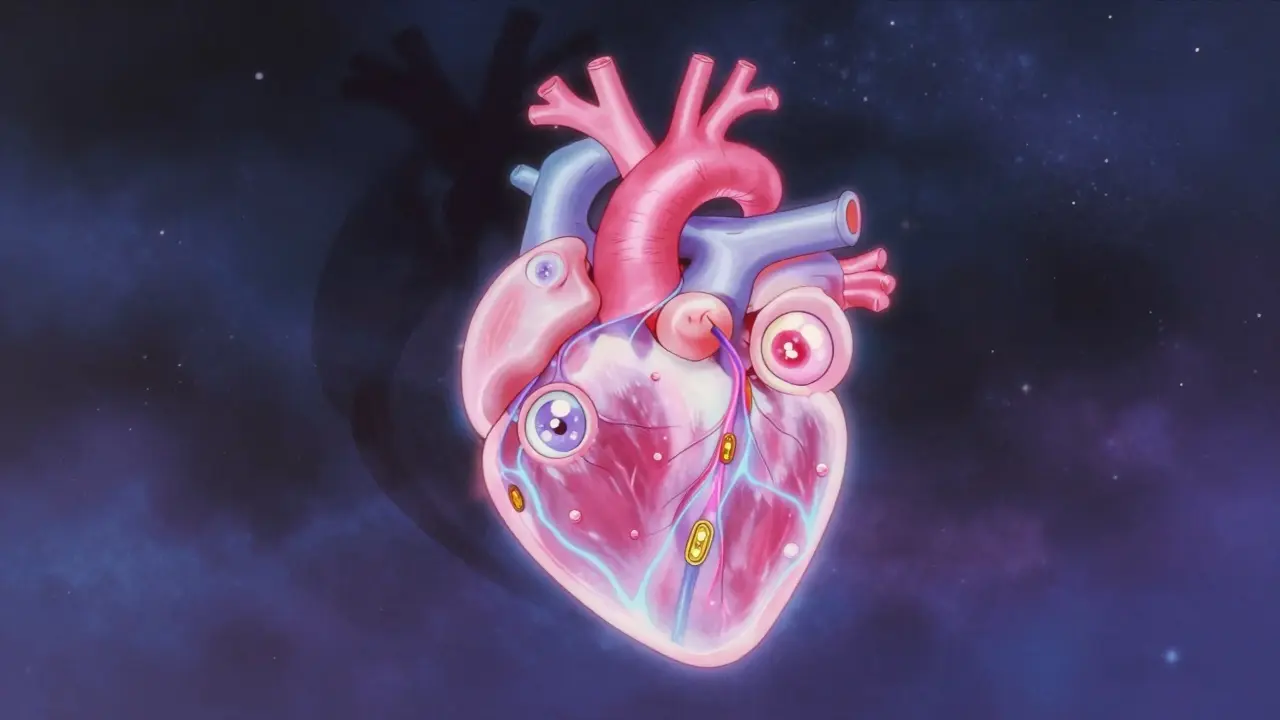
Imagine taking a medication that saves your life but carries a hidden card-shuffling risk in your heart’s electrical system. That is the reality for many patients on Methadone, a synthetic opioid used globally for pain management and opioid use disorder treatment. While it stabilizes lives by reducing cravings and withdrawal symptoms, methadone does something else inside the body: it blocks specific potassium channels in the heart known as hERG channels. This blockage slows down the heart's electrical reset, stretching out the QT interval on an electrocardiogram (ECG). When this interval gets too long, it can trigger a dangerous arrhythmia called Torsade de Pointes (TdP), which can be fatal if not caught early.
The danger isn't just about the dose of methadone you take. It’s heavily influenced by how your liver processes the drug through cytochrome P-450 (CYP) enzymes. These enzymes act like traffic cops, breaking down medications so they don’t build up to toxic levels. But when other drugs step in to slow these cops down-known as CYP inhibitors-methadone levels in your blood can spike unexpectedly. This combination creates a perfect storm for cardiac risk, making understanding these interactions critical for patient safety.
How Methadone Metabolism Works
To understand why interactions happen, you need to look at the liver’s processing line. Methadone is primarily metabolized by two major enzyme families: CYP3A4 and CYP2B6. Think of these as the main highways for clearing methadone from your system. Minor routes include CYP2C19, CYP2D6, and CYP2C9. Because CYP3A4 handles such a large portion of the breakdown, any drug that inhibits this enzyme can cause a significant backup.
When CYP3A4 is inhibited, studies show methadone serum concentrations can jump by 30% to 50%. This isn't a small fluctuation; it’s enough to push a stable patient into a high-risk zone for QT prolongation. Additionally, methadone is a substrate for P-glycoprotein, another transporter protein that moves drugs out of cells. Inhibiting this adds another layer of complexity, potentially keeping more methadone active in the bloodstream longer than intended.
| Enzyme | Role in Methadone Processing | Clinical Significance |
|---|---|---|
| CYP3A4 | Primary metabolic pathway | Inhibition causes significant serum level spikes |
| CYP2B6 | Major secondary pathway | Genetic variations here affect individual risk |
| CYP2C19 / 2D6 | Minor pathways | Less impact on overall clearance but relevant in polypharmacy |
High-Risk Drug Interactions
Not all medications are created equal when it comes to interacting with methadone. Some drugs are notorious for slamming the brakes on CYP enzymes. A landmark study published in JAMA Internal Medicine in 2007 highlighted several common culprits found in patients with prolonged QT intervals. The most frequent offenders included fluoxetine (an antidepressant), clarithromycin (an antibiotic), fluconazole (an antifungal), and valproate (a mood stabilizer).
If you are prescribed one of these while on methadone, the interaction isn't immediate-it builds up over days because methadone has a long half-life ranging from 8 to 59 hours. This means even if you stop the interacting drug, the elevated methadone levels can linger. For example, starting ritonavir (often used in HIV treatment or as part of Paxlovid for COVID-19) can dramatically increase methadone exposure due to potent CYP3A4 inhibition. Clinicians must review every new prescription against this list to prevent accidental toxicity.
- Fluoxetine: Commonly prescribed for depression, it inhibits CYP2D6 and CYP3A4, raising methadone levels.
- Clarithromycin: An antibiotic often used for respiratory infections, strongly inhibits CYP3A4.
- Fluconazole: Used for fungal infections, it blocks multiple CYP enzymes including 2C9 and 3A4.
- Ritonavir: A powerful CYP3A4 inhibitor found in some antiviral regimens.
Understanding QT Prolongation and Cardiac Risk
The QT interval represents the time it takes for the heart’s ventricles to electrically charge and discharge. A normal corrected QT interval (QTc) is generally ≤430 milliseconds for men and ≤450 milliseconds for women. When this number climbs above 450 ms in men or 470 ms in women, we consider it prolonged. The real danger zone starts at ≥500 ms, where the risk of sudden cardiac death increases fourfold.
Methadone doesn’t just prolong the QT interval linearly with dose. Some patients on low doses see no change, while others on moderate doses experience significant delays. This unpredictability stems from genetic differences in CYP enzymes and individual sensitivity to hERG channel blockade. In the aforementioned JAMA study, nearly 30% of methadone patients had a QTc ≥0.46 seconds, compared to only 10% of controls. More alarmingly, 16.2% had intervals ≥0.50 seconds, placing them in the high-risk category for Torsade de Pointes.
It’s also important to note that women naturally have longer baseline QT intervals than men, making them inherently more susceptible to drug-induced prolongation. Age, electrolyte imbalances (especially low potassium or magnesium), and pre-existing heart disease further compound this risk. A 2018 case review found that 38.1% of patients experiencing methadone-associated TdP had underlying heart disease, and 33.3% had electrolyte abnormalities.
Monitoring Protocols and Clinical Guidelines
Because the risk is real but unpredictable, monitoring is non-negotiable. The American Society of Addiction Medicine (ASAM) updated its national practice guidelines in 2023, recommending routine ECG monitoring for all patients on methadone doses greater than 50 mg/day. This is a significant shift from previous thresholds of 100 mg/day, acknowledging that serious QT prolongation can occur at lower doses, especially when interacting medications are present.
Here is what a robust monitoring plan looks like:
- Baseline ECG: Before starting methadone, get a baseline ECG to establish your normal QTc interval.
- Dose Stabilization Check: Repeat the ECG after reaching a stable daily dose, typically within 2-4 weeks.
- Interaction Alerts: Perform an ECG whenever a new medication that affects CYP enzymes is added or removed.
- Electrolyte Management: Regularly check potassium and magnesium levels, correcting deficiencies promptly.
- Ongoing Surveillance: Annual ECGs for stable patients, or more frequently if risk factors change.
Calculating the QTc correctly matters. Most clinicians use the Bazett formula, which adjusts the raw QT interval based on heart rate. However, this formula can overcorrect at high heart rates. If your heart rate is very fast or very slow, discuss alternative correction methods with your cardiologist to ensure accuracy.

Alternatives and Mitigation Strategies
If a patient cannot tolerate methadone due to persistent QT prolongation despite dose adjustments, alternatives exist. Buprenorphine, another medication for opioid use disorder, has a much safer cardiac profile. Studies consistently show minimal effect on the QT interval, even at higher doses. Buprenorphine prescriptions have grown significantly, partly driven by this safety advantage. Switching from methadone to buprenorphine is a viable strategy for patients with unmanageable cardiac risks, though it requires careful tapering and cross-titration to avoid withdrawal.
Another mitigation strategy involves adjusting the timing of interacting medications. If a short-term antibiotic like clarithromycin is necessary, some clinicians may temporarily reduce the methadone dose during the antibiotic course and monitor closely. However, this is complex and should only be done under strict medical supervision due to methadone’s long half-life. Never adjust your dose without consulting your provider.
Patient education is equally vital. Patients should know the signs of arrhythmia: palpitations, dizziness, fainting, or sudden shortness of breath. They should carry a list of their current medications and share it with any new healthcare provider. Simple steps like maintaining adequate hydration and eating potassium-rich foods (bananas, avocados, spinach) can help support healthy electrolyte balance.
The Future of Methadone Safety
Research is ongoing to refine our ability to predict who is at risk. The National Institute on Drug Abuse (NIDA) is funding studies to develop algorithms that incorporate genetic data, particularly polymorphisms in CYP2B6, alongside demographic and medication variables. Preliminary results suggest that genetic testing could eventually allow for personalized dosing strategies, minimizing trial-and-error in clinical settings.
Regulatory bodies continue to tighten requirements. The FDA mandated specific warnings about QT prolongation in methadone labeling back in 2006, and the European Medicines Agency implemented stricter monitoring rules in 2015. As awareness grows, insurance coverage for regular ECG monitoring is becoming more standard, ensuring that financial barriers don’t compromise safety.
What is the biggest risk of taking methadone?
The most significant acute risk is respiratory depression, especially when combined with other sedatives like benzodiazepines or alcohol. However, the unique long-term risk specific to methadone is QT prolongation, which can lead to dangerous heart rhythms like Torsade de Pointes.
Which antibiotics interact dangerously with methadone?
Macrolide antibiotics like clarithromycin and erythromycin are strong CYP3A4 inhibitors and can significantly raise methadone levels. Fluoroquinolones like ciprofloxacin also carry some risk. Always inform your doctor you are on methadone before starting any antibiotic.
Is buprenorphine safer for the heart than methadone?
Yes, buprenorphine has a much lower risk of QT prolongation. It acts as a partial opioid agonist and does not block hERG channels to the same extent as methadone, making it a preferred option for patients with existing cardiac conditions or those who develop QT issues on methadone.
How often should I get an ECG if I am on methadone?
Guidelines recommend a baseline ECG before starting, another after dose stabilization, and annual checks thereafter. However, if you are on doses >50mg/day, take interacting medications, or have heart history, your doctor may request more frequent monitoring.
Can food affect methadone levels?
Food generally does not significantly alter methadone absorption. However, grapefruit juice contains compounds that inhibit CYP3A4 in the gut and liver, potentially increasing methadone levels. It is best to avoid regular consumption of grapefruit juice while on this medication.
