

Medication Risk Checker for Orthostatic Hypotension
This tool helps you understand your risk of medication-induced dizziness when standing
Based on clinical data from studies showing how certain medications affect blood pressure regulation. Not a medical diagnosis.
Your Risk Assessment
Based on clinical data showing increased risk with specific medications and polypharmacy
Standing up and feeling lightheaded isn’t just a quick spin of the head-it’s your body struggling to keep blood flowing to your brain. This is orthostatic hypotension, and when it’s caused by medications, it’s more common than most people realize. You might think it’s just aging or being out of shape, but if you’ve noticed dizziness, blurred vision, or even fainting when you stand up, it could be your meds. And the good news? It’s often fixable.
What Exactly Is Orthostatic Hypotension?
Orthostatic hypotension means your blood pressure drops too much when you stand. The medical definition is clear: a drop of 20 mm Hg in systolic pressure (the top number) or 10 mm Hg in diastolic (the bottom number) within three minutes of standing. That’s not a small blip-it’s enough to starve your brain of oxygen, which is why you feel dizzy, foggy, or like you’re about to pass out. It’s not just a nuisance. Studies show people with this condition have a 15-30% higher risk of falling. Falls in older adults can lead to broken hips, brain injuries, and long-term disability. Worse, research from Rivasi et al. (2020) found a 24-32% higher risk of death over 10 years in people with untreated orthostatic hypotension. That’s why this isn’t something to brush off.Which Medications Cause Dizziness When You Stand?
Not all drugs cause this-but many do. The biggest culprits are medications that lower blood pressure, affect your nervous system, or pull fluid out of your body. Here are the top offenders, backed by clinical data:- Antihypertensives: Drugs like lisinopril, losartan, and amlodipine are meant to lower blood pressure-but sometimes they lower it too much when you stand.
- Diuretics: Hydrochlorothiazide and furosemide drain fluid from your body. Less fluid means less blood volume, which makes it harder for your body to maintain pressure when upright.
- Alpha-blockers: Used for prostate issues and high blood pressure, drugs like doxazosin and terazosin relax blood vessels. That’s helpful for blood pressure, but dangerous when standing. Studies show they raise OH risk by 2.8 times.
- Tricyclic antidepressants: Amitriptyline and nortriptyline interfere with nerve signals that control blood pressure. One study found they triple the risk of orthostatic hypotension.
- Antipsychotics: Clozapine, quetiapine, and chlorpromazine are especially risky. Up to 40% of patients on these drugs report dizziness on standing. Quetiapine alone has been linked to BP drops from 128/82 to 92/61 within minutes.
- Opioids: Morphine, oxycodone, and hydrocodone depress the nervous system and dilate blood vessels. When combined with alcohol or benzodiazepines, the risk jumps 2.3 times.
- Levodopa: Used for Parkinson’s, this drug causes orthostatic hypotension in 30-50% of users. It’s one of the most common reasons older adults with Parkinson’s fall.
What’s scary is that many people are on multiple drugs at once. If you’re taking four or more medications, your risk of orthostatic hypotension goes up 5.7 times. That’s not rare-it’s the norm for many older adults.
Why Does This Happen?
When you stand, gravity pulls blood down into your legs. Normally, your body reacts instantly: your heart beats faster, your blood vessels tighten, and your blood pressure stays steady. This is called the baroreceptor reflex. But medications can break that reflex. Alpha-blockers stop blood vessels from tightening. Diuretics reduce total blood volume. Antidepressants and antipsychotics mess with the brain signals that tell your heart and vessels what to do. Opioids slow down your nervous system so it can’t respond fast enough. It’s not just the drug-it’s how your body handles it. Age plays a huge role. After 70, your baroreceptors don’t work as well. Your blood vessels stiffen. Your heart doesn’t pump as quickly. So even a small drug effect can tip you over the edge into dizziness.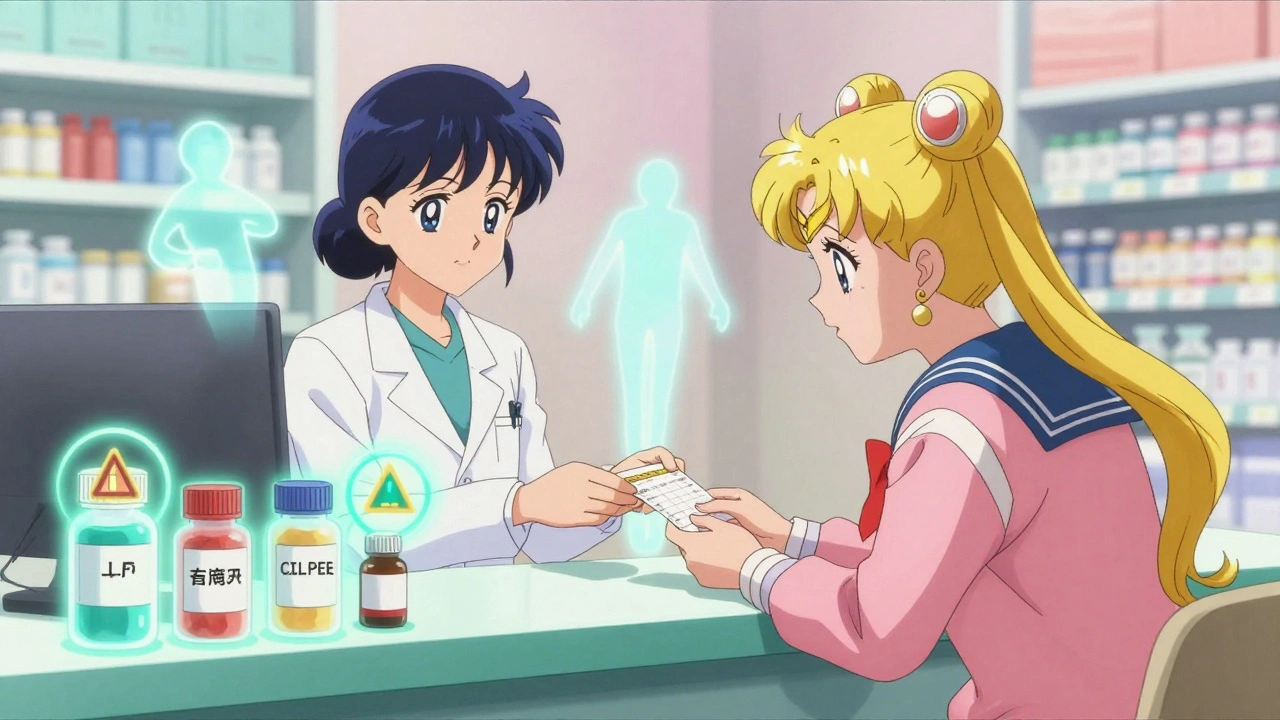
How Do You Know It’s Your Meds?
You can’t guess this. You need to measure it. The only way to confirm orthostatic hypotension is to check your blood pressure in two positions:- Rest quietly for five minutes while lying down.
- Stand up. Measure your BP at 1, 2, and 3 minutes after standing.
If your systolic pressure drops by 20 or more, or your diastolic drops by 10 or more, and you feel dizzy at the same time-you’ve got drug-induced orthostatic hypotension.
Here’s the catch: up to 40% of people with this condition don’t even notice symptoms. They just fall more often, get confused, or feel tired. That’s why doctors should check for it in anyone over 65, especially if they’re on multiple meds.
What Can You Do About It?
The best part? Medication-induced orthostatic hypotension is often reversible. In 65-80% of cases, symptoms improve after adjusting the meds. Here’s what works:- Review your meds: Talk to your doctor or pharmacist. Ask: "Could any of these be causing my dizziness?" Don’t stop anything on your own-but do ask if any can be lowered, switched, or stopped.
- Change how you stand: Sit on the edge of the bed for a full minute before standing. Rise slowly. Use a handrail. Don’t stand still for long periods.
- Drink more water: Aim for 2-2.5 liters a day. Fluids increase blood volume. Dehydration makes OH worse.
- Wear compression stockings: These help push blood back up from your legs. They’re simple, cheap, and surprisingly effective.
- Avoid alcohol and hot showers: Both dilate blood vessels and make dizziness worse.
- Don’t eat big meals: Digestion pulls blood to your gut. If you eat a large meal and then stand, you’re more likely to feel faint.
One patient story from Cleveland Clinic’s forums tells it all: a 78-year-old woman was falling repeatedly. She was on six meds, including hydrochlorothiazide and lisinopril. After removing the diuretic, her dizziness vanished in 72 hours.
When Medication Adjustment Isn’t Enough
If lifestyle changes don’t help, your doctor might consider adding a drug to raise your blood pressure. Midodrine is the most common choice-it tightens blood vessels and helps maintain pressure when standing. Clinical trials show it reduces symptoms by 65% in people who don’t respond to other methods. But it’s not for everyone. It can raise blood pressure too much when lying down, so it’s only used when you’re upright. Other options like fludrocortisone (a salt-retaining steroid) or pyridostigmine (a nerve-enhancing drug) are sometimes used, but with more side effects.
Why This Matters More Than You Think
Orthostatic hypotension isn’t just about dizziness. It’s a red flag for bigger problems. Falls are the leading cause of injury-related death in older adults. In 2022, Medicare spent $31 billion on fall-related care-and 30-40% of those falls were tied to medication-induced low blood pressure. The American Geriatrics Society now lists 12 high-risk medications for orthostatic hypotension in their Beers Criteria. Since 2020, the FDA requires drug labels to warn about OH risk if it happens in more than 5% of trial participants. In 2023, 82% of geriatric clinics in the U.S. now screen for this condition. That’s progress. But many people still go months-or years-without knowing why they keep feeling faint.What to Ask Your Doctor
If you’re on any of the medications listed above and feel dizzy when standing, here’s what to say:- "Could any of my medications be causing me to feel lightheaded when I stand up?"
- "Can we check my blood pressure lying down and then standing?"
- "Is there a safer alternative to this drug that won’t make me dizzy?"
- "Could I reduce the dose or stop one of these meds safely?"
Don’t wait for your next appointment. Write down when the dizziness happens, how often, and what you were doing. Bring a list of every pill, supplement, and over-the-counter drug you take. That’s the best way to get help.
Bottom Line
Feeling dizzy when you stand isn’t normal. It’s not just "getting older." It’s your body telling you something’s off-and often, it’s your medications. The good news? This isn’t a life sentence. With the right checks and adjustments, most people feel better within days or weeks. Don’t ignore it. Talk to your doctor. Get your blood pressure checked properly. And don’t let dizziness become a fall.Can orthostatic hypotension go away on its own?
Yes, if it’s caused by medication, it often improves once the drug is adjusted or stopped. Many patients see improvement within a few days to weeks after changing their regimen. But if it’s due to nerve damage or chronic disease, it’s less likely to resolve without treatment. Always confirm the cause with your doctor before assuming it will fix itself.
Is orthostatic hypotension dangerous?
It can be. While the dizziness itself isn’t life-threatening, the resulting falls are. Studies show people with orthostatic hypotension have up to a 30% higher risk of falling and a 24-32% higher risk of death over 10 years. It’s also linked to cognitive decline and heart problems. Ignoring it increases your risk of serious injury.
What’s the difference between orthostatic hypotension and just feeling lightheaded?
Feeling lightheaded can happen for many reasons-dehydration, low blood sugar, anxiety. Orthostatic hypotension is specific: it’s a measurable drop in blood pressure (20/10 mm Hg or more) within three minutes of standing, and it’s directly tied to your position. If your dizziness only happens when you stand and you can measure the BP drop, it’s orthostatic hypotension.
Can drinking more water help with dizziness on standing?
Yes. Increasing fluid intake to 2-2.5 liters per day can increase blood volume, helping your body maintain pressure when you stand. This is one of the most effective, low-risk ways to reduce symptoms-especially if you’re on diuretics or in hot weather.
Are there any foods or supplements that make orthostatic hypotension worse?
Large meals can worsen it because digestion redirects blood to your gut, lowering pressure elsewhere. Alcohol and caffeine in large amounts can also make it worse. Some supplements like garlic, fish oil, and magnesium can have mild blood pressure-lowering effects-so if you’re already on blood pressure meds, talk to your doctor before taking them.
Should I avoid standing up quickly even if I don’t have symptoms?
If you’re over 65 or on multiple medications, yes. Even if you’ve never felt dizzy, your body’s ability to regulate blood pressure declines with age. Slow, deliberate movements can prevent a first fall-and that’s often the most dangerous one.

Emily Haworth
December 11, 2025 AT 17:42Tom Zerkoff
December 13, 2025 AT 09:24Yatendra S
December 14, 2025 AT 17:15Himmat Singh
December 16, 2025 AT 04:22kevin moranga
December 17, 2025 AT 05:27Lara Tobin
December 19, 2025 AT 02:27Scott Butler
December 20, 2025 AT 12:05Emma Sbarge
December 21, 2025 AT 17:32