
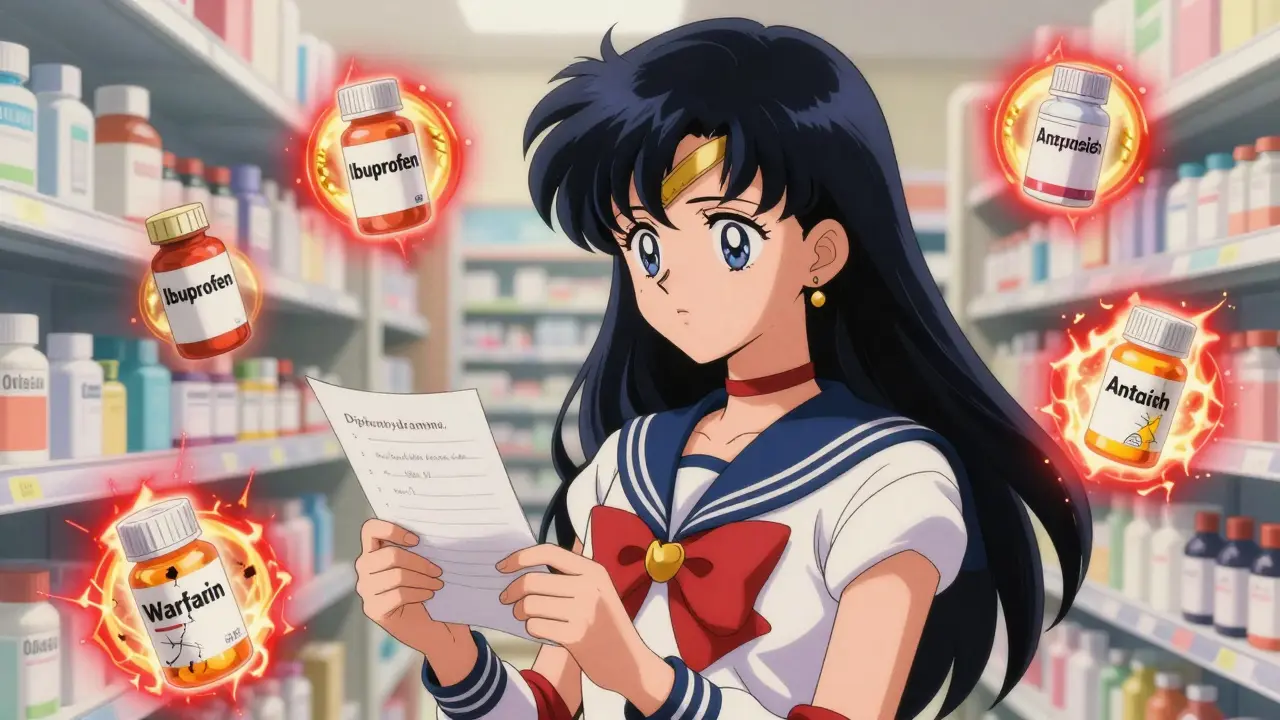
Every year, millions of people take over-the-counter (OTC) medications without thinking twice. A headache? Grab some ibuprofen. Trouble sleeping? Reach for diphenhydramine. Stomach upset? Antacids are right there on the shelf. But here’s the thing: OTC medications aren’t harmless. They can mess with your prescription drugs in ways you never expected - sometimes with serious, even life-threatening, results.
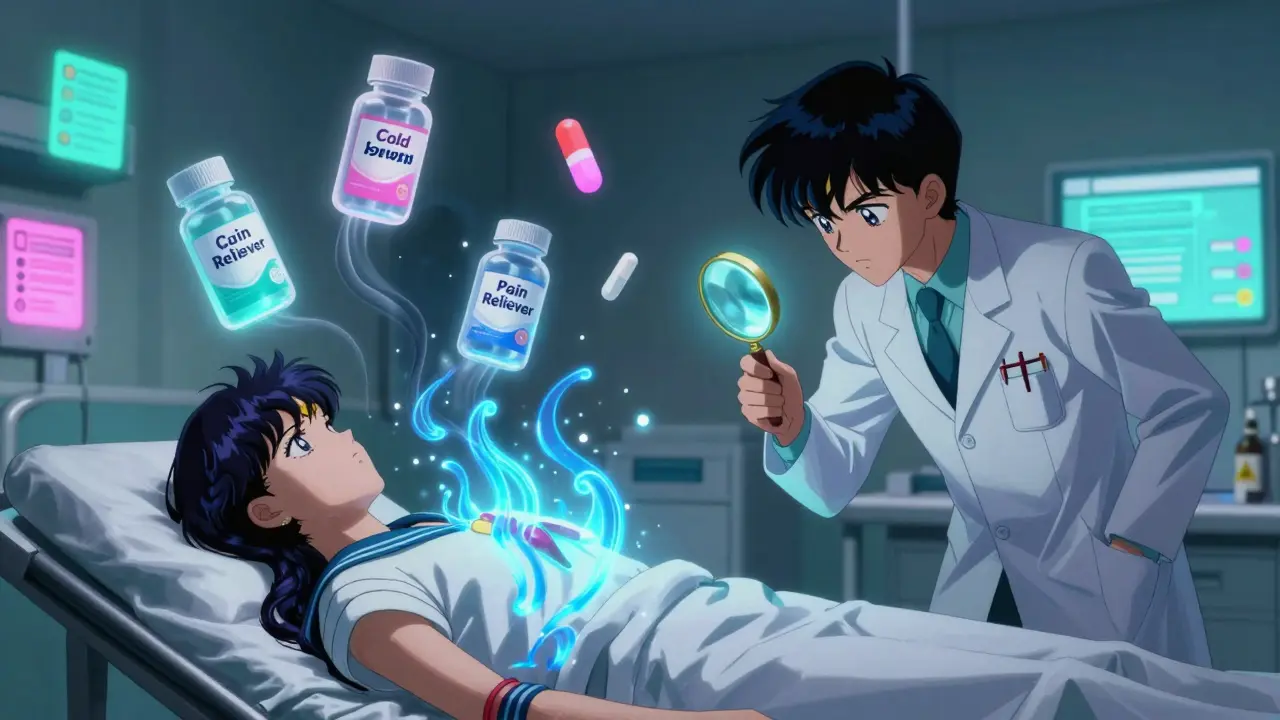
You might not realize it, but combining an OTC pain reliever with your blood thinner could put you at risk for internal bleeding. Or mixing a cold medicine with your antidepressant might push your serotonin levels into dangerous territory. The problem isn’t that these drugs are bad. It’s that people don’t know what they’re mixing.
Why OTC Medications Are Riskier Than You Think
OTC drugs are sold without a prescription because they’re generally safe when used correctly. But "generally safe" doesn’t mean "always safe." The real danger comes from how often people use them without telling their doctor or pharmacist.
A WebMD survey found that 67% of patients never mention their OTC medication use to their healthcare provider. That’s a huge blind spot. Your doctor knows about your blood pressure pill, your diabetes medicine, and your heart medication. But if you’re also taking a nighttime cold tablet every few days, they have no idea. And that’s when things go wrong.
OTC medications don’t just interact with prescriptions - they can also clash with each other. Ever taken a cold medicine and a pain reliever at the same time? You might be doubling up on acetaminophen without realizing it. One tablet has 325mg. Another has 500mg. Add a third product with 650mg? You’ve just hit 1,475mg in a single dose. Do that twice a day for a week? You’re over the 4,000mg daily limit. And that’s how liver failure starts.
Top 5 Dangerous OTC-Prescription Interactions
Some combinations are so risky they show up in emergency rooms regularly. Here are five of the most dangerous:
- NSAIDs (ibuprofen, naproxen) + Blood Thinners (warfarin, clopidogrel) - NSAIDs thin the blood on their own. When you add them to a prescription anticoagulant, your bleeding risk can jump 2 to 4 times. This isn’t theoretical. People end up in the ER with internal bleeding after taking Advil for a backache while on warfarin.
- SSRIs (like sertraline) + NSAIDs or Dextromethorphan - SSRIs raise serotonin levels. So do dextromethorphan (in cough syrups), tramadol, and even some herbal supplements. Combine them, and you risk serotonin syndrome - a condition that causes confusion, rapid heartbeat, high fever, and seizures. It can kill.
- Acetaminophen + Multiple Medications - Acetaminophen is in more than 600 products: cold medicines, sleep aids, migraine pills, even some prescription painkillers. Taking two or three at once? Easy to do. Exceeding 4,000mg in a day? Easy to do. Liver damage? Not so easy to recover from.
- Antacids (aluminum/magnesium) + Thyroid Medication (levothyroxine) - Antacids block absorption. If you take Tums or Maalox within two hours of your thyroid pill, your body might absorb only half the dose. That means your hypothyroidism stays under control - or gets worse.
- Proton Pump Inhibitors (omeprazole) + Clopidogrel - Omeprazole (Prilosec) is common for heartburn. But it blocks an enzyme your body needs to activate clopidogrel, the blood thinner used after stents or heart attacks. Studies show this combo cuts clopidogrel’s effectiveness by 30-50%. That’s like taking a blood thinner that doesn’t work.
Who’s at Highest Risk?
It’s not just seniors. Though older adults are more likely to take five or more medications a day, younger people aren’t immune. Here are the groups most vulnerable:
- People over 65 - On average, they take 5-7 prescription drugs and 2-3 OTCs. Their kidneys and liver don’t process drugs as fast, so interactions last longer.
- People with kidney or liver disease - These organs break down drugs. If they’re damaged, even small doses can build up to toxic levels.
- Those with heart disease, high blood pressure, or diabetes - Many OTC meds raise blood pressure or interfere with glucose control. Cold medicines with pseudoephedrine? Big red flag.
- People taking antidepressants or seizure meds - These drugs are easily disrupted by OTC sleep aids, cough syrups, or herbal products like St. John’s Wort.
What You Should Do - Step by Step
You don’t need to avoid OTC meds. You just need to be smarter about them.
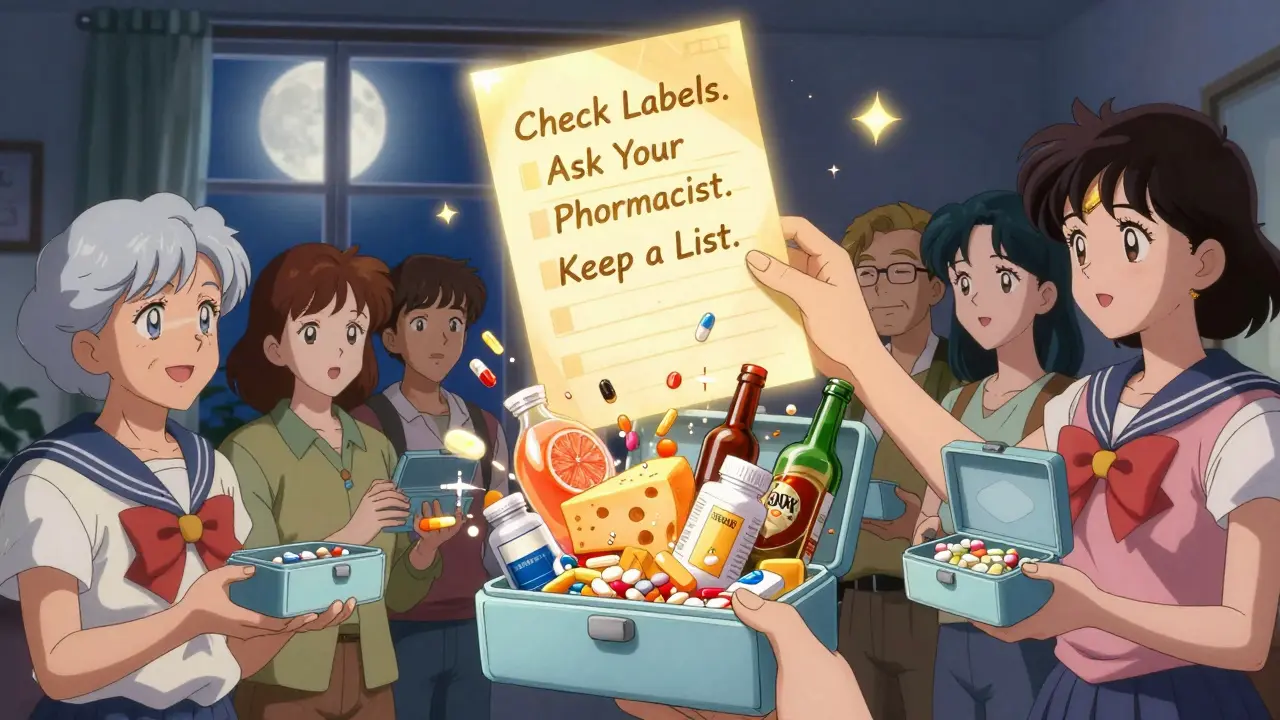
- Keep a written list - Write down every pill, liquid, patch, or supplement you take - even if you only use it once a month. Include the brand name, active ingredient, dose, and why you take it. Update it every time you add or drop something.
- Check labels like a detective - Look for the "Active Ingredients" section. If two products say "acetaminophen," don’t take them together. If one says "ibuprofen" and another says "NSAID," that’s the same thing.
- Ask your pharmacist - Pharmacists are trained to catch interactions. When you pick up a new prescription, ask: "Does this mix with anything I’m already taking?" Bring your list. They’ll check it in seconds.
- Use the WebMD Drug Interaction Checker - It’s free. Type in your prescription and OTC meds. It’ll tell you if there’s a conflict. Don’t skip this - it’s faster than calling your doctor.
- Never assume "natural" means safe - Herbal supplements like St. John’s Wort, ginkgo, or garlic can interfere with blood thinners, birth control, and antidepressants. Just because it’s sold in a health food store doesn’t mean it’s harmless.
Food and Drink Can Be Dangerous Too
It’s not just pills. What you eat and drink can change how your meds work.
- Grapefruit juice - Blocks enzymes that break down statins, blood pressure drugs, and some antidepressants. One glass can make your dose dangerously high.
- Alcohol - Makes sedatives, painkillers, and antidepressants stronger. It can cause dizziness, falls, or breathing problems.
- High-sodium foods - Can undo the effect of blood pressure meds. If you’re on lisinopril or losartan, skip the processed snacks.
- Aged cheeses, cured meats, soy sauce - If you’re taking an MAO inhibitor for depression, these can trigger a sudden spike in blood pressure. It’s rare, but it’s deadly.
What to Do If You’ve Already Mixed Something
If you’ve accidentally combined medications and feel off - dizziness, nausea, confusion, unusual bruising, or a racing heart - don’t wait. Call your doctor. Or go to urgent care. Or call 911 if symptoms are severe.
Don’t panic. But don’t ignore it either. Many people think, "I’ve taken this combo before, nothing happened." But that doesn’t mean it won’t happen next time. Your body changes. Your other meds change. Your liver might be tired. One day, the interaction hits harder.
Final Thought: You’re Not Alone - But You’re Responsible
More than 40 billion dollars are spent on OTC drugs every year. That’s how common they are. But the FDA estimates drug interactions cause nearly 7% of all hospital admissions. A huge chunk of that? OTC meds.
You don’t need to stop using them. You just need to stop guessing. Talk to your pharmacist. Keep a list. Read labels. Ask questions. The more you know, the safer you are.
Can I take ibuprofen with my blood pressure medicine?
It depends. Ibuprofen and other NSAIDs can raise blood pressure by 5-15 mmHg and reduce the effectiveness of drugs like lisinopril, metoprolol, or losartan. If you have high blood pressure or heart disease, avoid regular use. For occasional pain, acetaminophen is usually safer. Always check with your pharmacist first.
Is it safe to take Tylenol with my antidepressant?
Acetaminophen (Tylenol) is generally safe with most antidepressants, including SSRIs. Unlike NSAIDs, it doesn’t increase bleeding risk. But if you’re taking multiple products with acetaminophen - like cold medicine or sleep aids - you could overdose. Never exceed 3,000mg daily if you drink alcohol or have liver issues.
Why do OTC labels say "consult your doctor" if I’m on prescription meds?
Because the FDA requires it. OTC manufacturers know these drugs interact with common prescriptions. The warning is there because people often skip telling their doctor about OTC use. That’s why you need to bring your list - even if you think it’s "just a cold medicine."
Can I take antacids with my thyroid pill?
No - not at the same time. Antacids with aluminum or magnesium can block absorption of levothyroxine. Take your thyroid pill on an empty stomach, at least 4 hours before or after any antacid, calcium, iron, or multivitamin.
What should I do if I can’t remember what OTC meds I’ve taken?
Start fresh. Empty your medicine cabinet. Write down everything you find - even expired items. Then, go to your pharmacy and ask them to scan your prescription history. They can tell you what you’ve filled in the past 6-12 months. Use that to build your list.

Kal Lambert
March 20, 2026 AT 01:31Just took my first trip to the pharmacist last week after reading this. She caught that my sleep aid had ibuprofen in it - I had no idea. We got me switched to plain diphenhydramine. Simple fix. Why didn’t I do this sooner?
Melissa Starks
March 21, 2026 AT 13:12I used to think OTC meant "oh, this is totally fine" - until I started taking melatonin with my SSRI and woke up feeling like my brain had been rewired by a Tesla coil. I thought I was just having weird dreams. Turns out, serotonin syndrome isn’t a myth - it’s a silent killer that sneaks in through the cough syrup aisle. I now carry a laminated list in my wallet. No more guessing. No more "it’s just a pill."
My mom died from liver failure at 62 because she took Tylenol for her arthritis while on statins. She didn’t know they were both in the same bottle. I’m not gonna let that happen again. If you’re on more than three meds, you owe it to yourself to sit down with a pharmacist. Not your doctor. Not Google. A pharmacist. They’re the unsung heroes of modern medicine.
And yes, I know people say "natural remedies are safe." Have you ever heard of a man who died after taking St. John’s Wort with his blood thinner? His obituary didn’t mention the herbal tea. It just said "sudden cardiac event."
Stop treating your body like a lab experiment. You wouldn’t mix bleach and ammonia. Why are you mixing NyQuil and Zoloft?
Ayan Khan
March 22, 2026 AT 03:12In many cultures, including mine, herbal remedies are not seen as separate from medicine - they are medicine. But this post reminds me that even wisdom passed down through generations must be examined with modern science. The balance between tradition and safety is not a contradiction - it is a responsibility.
I once advised my cousin not to take turmeric with his warfarin. He laughed. Two weeks later, he had a minor stroke. He now carries a card in his pocket that says: "I take turmeric. Do not give me NSAIDs."
Linda Olsson
March 23, 2026 AT 17:45Of course the FDA doesn’t regulate this properly - they’re too busy letting Big Pharma write the rules. OTC drugs are a loophole designed to keep you dependent while they profit. You think your "little" Advil is harmless? It’s a gateway. Next thing you know, you’re on five prescriptions because your liver’s shot. Welcome to the system.
And don’t get me started on "consult your doctor." Your doctor gets paid per visit. They don’t want to hear about your OTC stuff. They want you to come back next month with a new script. Don’t trust them. Trust your own research. Or better yet - don’t take anything at all.
Emily Hager
March 24, 2026 AT 19:03It is my solemn duty to inform you that the very premise of this article is fundamentally flawed. The notion that individuals are "responsible" for their own health in a system that withholds accessible healthcare, obscures pharmaceutical data, and commodifies wellness is not merely naive - it is morally indefensible. One cannot "consult a pharmacist" when one cannot afford to fill a prescription, let alone purchase a $120 laminated list. This is not a public health guide - it is a neoliberal fantasy dressed in medical jargon.
And yet, here we are. Talking about acetaminophen doses while the system burns.
Lauren Volpi
March 24, 2026 AT 23:05Why are we even talking about this? It’s 2025. We have apps that scan barcodes and tell you if your Tylenol will kill you. Stop reading. Just download PillSafe. Done. Problem solved. No more thinking. No more lists. Just scan. The future is here.
Kal Lambert
March 25, 2026 AT 09:43Actually, PillSafe is great - but it doesn’t know about your grandma’s ginkgo supplement she’s been taking since ‘98. Still need the list.
Amadi Kenneth
March 25, 2026 AT 13:57Wait… so you’re telling me the government knows this… and still sells these drugs? And the FDA approves them? And the doctors don’t warn people? And the pharmacies don’t check? This is a cover-up. They’re poisoning us slowly. Look at the data - hospital admissions from OTC interactions have risen 300% since 2018. Coincidence? Or is Big Pharma paying off regulators? I’ve seen the documents. I’ve seen the emails. They call it "risk mitigation" - I call it mass poisoning. Wake up.
Shameer Ahammad
March 27, 2026 AT 01:48It is with profound regret that I must address the glaring omission in this otherwise commendable exposition: the complete failure to acknowledge the systemic erosion of pharmacological literacy in post-industrial societies. The proliferation of OTC medications is not a symptom of consumer autonomy - it is a consequence of the deliberate dismantling of primary care infrastructure. When physicians are incentivized to see 20 patients per hour, they cannot possibly conduct comprehensive medication reconciliations. The onus is thus unfairly shifted to the layperson - who, lacking formal training in pharmacokinetics, is left to navigate a labyrinth of chemical nomenclature with the precision of a blindfolded child. This is not negligence - it is institutional abandonment.
And yet, the article suggests that "reading labels" is sufficient? Please. The active ingredient on a box of Excedrin reads: "acetaminophen, aspirin, caffeine." But what of the 17 other products in your cabinet that contain acetaminophen? You cannot possibly remember them all. This is not a personal failing - it is a structural catastrophe.
One must ask: if the solution is so simple, why do 7% of hospital admissions stem from this? The answer is obvious: the system is designed to fail you.