
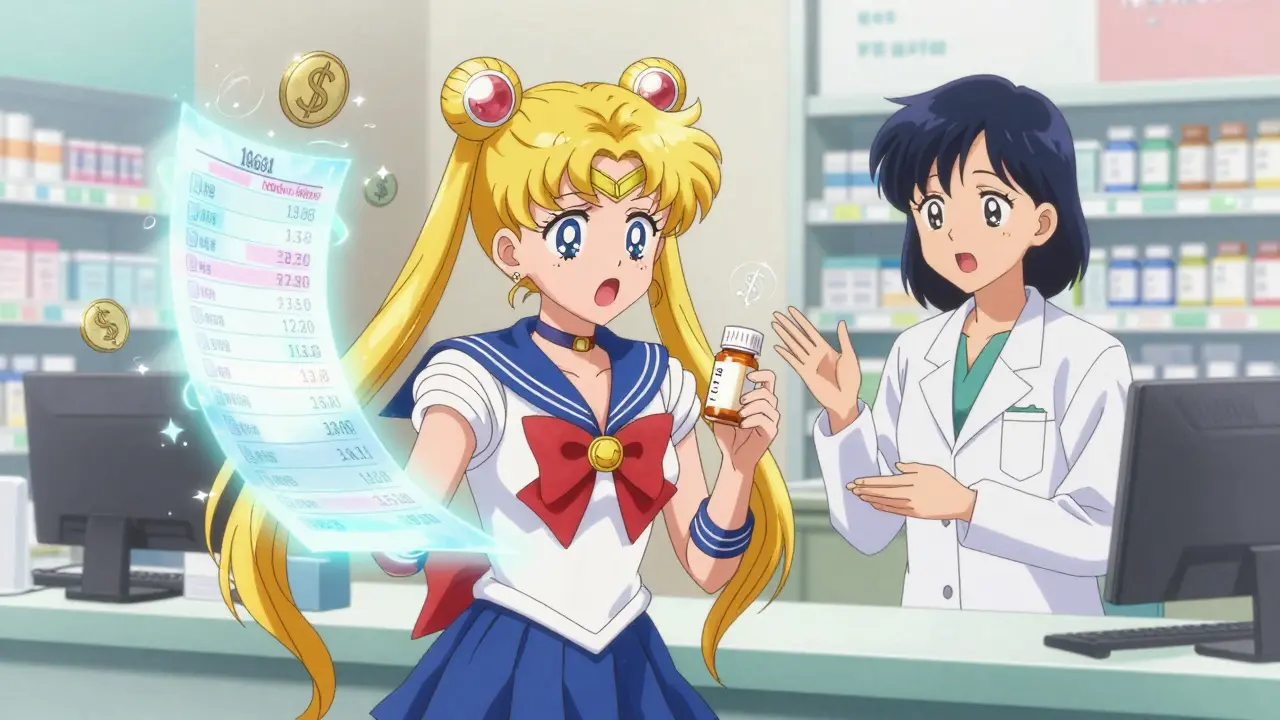
When we talk about insurance formularies is a continually updated list of prescription medications, products, and technologies that a health insurance plan agrees to cover. It isn't just a list of names; it's a financial map that determines how much you pay and how hard it is to get your prescription filled.
How Drug Tiers Dictate Your Wallet
Insurers don't treat all drugs the same. They use a tier system to categorize medications based on their cost and clinical value. If your drug moves from one tier to another, your out-of-pocket costs can jump by 300% to 500% almost overnight.
| Tier | Drug Type | Typical Cost/Copay | Impact on Patient |
|---|---|---|---|
| Tier 1 | Generic Drugs | $10 - $15 | Lowest cost, easiest access |
| Tier 2 | Preferred Brand-Name | $40 - $50 | Moderate cost, approved by insurer |
| Tier 3 | Non-Preferred Brand | $70 - $100 | Higher cost, often requires alternatives |
| Tier 4 | Specialty Drugs | 33% Coinsurance | Highest cost; can reach thousands annually |
For example, if you're using a high-cost specialty medication like Imbruvica, a Tier 4 placement could potentially cost you $15,000 a year. This is why checking your tier placement during open enrollment isn't just a suggestion-it's a way to save an average of $1,200 annually.
The Fine Print: Open, Closed, and Partially Closed Plans
Not every formulary works the same way. Depending on your plan, you might have a lot of freedom or very strict limits.
- Open Formularies: These cover almost all medications. They are great for flexibility but usually come with premiums that are 12-15% higher than closed plans.
- Closed Formularies: These only cover specific drugs on the list. If your drug isn't there, you pay the full retail price. About 65% of Medicare Part D plans use this model.
- Partially Closed Formularies: A middle ground that excludes some drugs based on cost or clinical guidelines but allows more than a strictly closed plan.
Substitution Laws and Therapeutic Interchange
Sometimes, the pharmacy tells you that your insurance won't pay for the specific brand your doctor wrote, but they can give you a "similar" drug. This is known as therapeutic substitution (or therapeutic interchange). Unlike a generic substitution-where the chemical is identical-therapeutic substitution involves replacing a drug with a different one in the same class that the insurer prefers.
This happens in roughly 18% of prescriptions. While this saves money for the insurer, it can be risky for patients with complex conditions. About 5-7% of these patients experience treatment disruptions because the "similar" drug doesn't work the same way for their specific body. Currently, 31 states have laws allowing pharmacists to make these substitutions without a doctor's explicit approval, which is why you should always ask your pharmacist exactly what is being swapped.

Navigating Access Restrictions
Even if a drug is on the formulary, the insurance company might put up "roadblocks" before they pay. You'll likely encounter these three common restrictions:
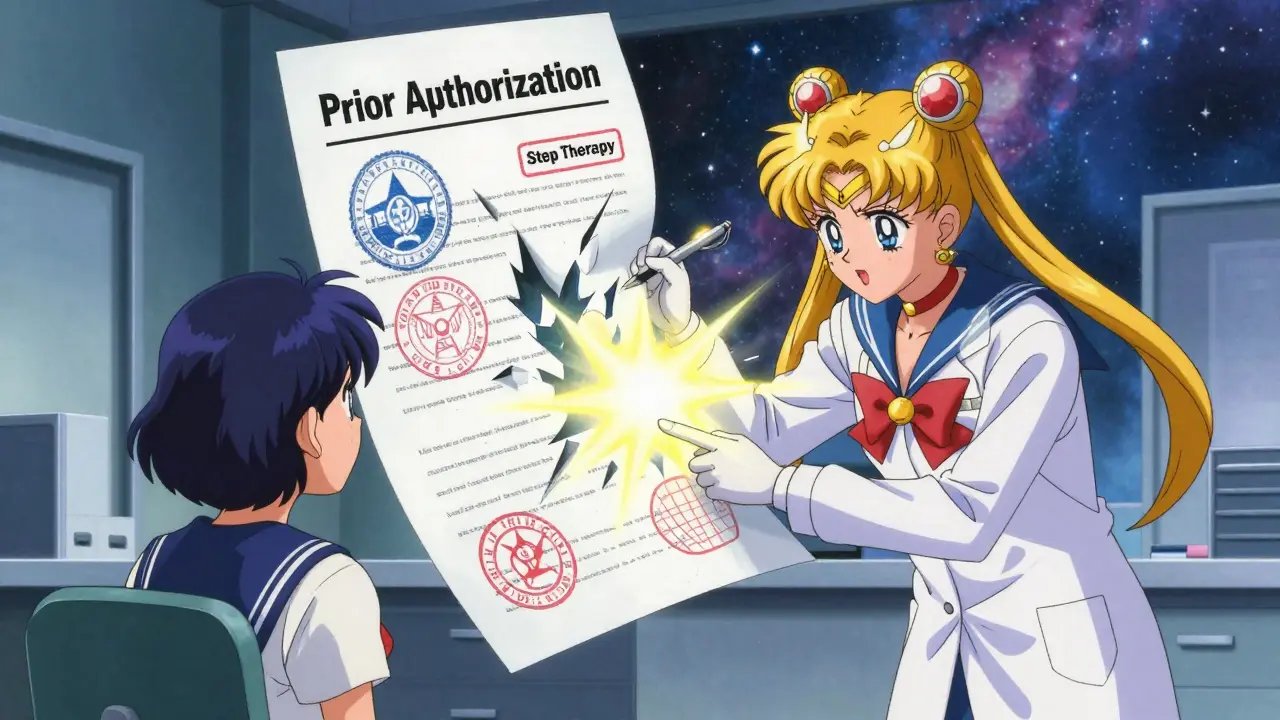
- Prior Authorization: The insurer requires your doctor to prove the medication is medically necessary before they agree to cover it. 82% of physicians report delays here, and in some cases, these delays cause serious adverse health events.
- Step Therapy: Also called "fail first." The insurer forces you to try a cheaper, Tier 1 drug first. Only if that drug fails to work can you "step up" to the more expensive medication you actually want.
- Quantity Limits: A cap on how much of a drug you can get per month. If you need more due to a flare-up, you'll have to fight for an exception.
How to Fight Back: The Exception Process
If your medication isn't covered or is in a tier you can't afford, you can request a formulary exception. This is essentially an appeal where your doctor explains why the formulary's preferred drugs won't work for you.
The odds are actually in your favor: about 73.2% of initial requests for Medicare Part D beneficiaries are approved. However, the process is a grind. Many patients abandon the request because it's too complex. To increase your chances, ensure your doctor submits the documentation within 72 hours. Be aware that while standard requests are often approved, expedited requests for urgent conditions have a much lower success rate, around 38.5%.
Future Changes and What to Watch For
The landscape is shifting. Under the Inflation Reduction Act, a major change is coming on January 1, 2025: a $2,000 annual out-of-pocket cap for Medicare Part D. This will fundamentally change how tiers are calculated because insurers can't just keep charging high coinsurance indefinitely.
We're also seeing the rise of Value-Based Insurance Design. Some plans now lower your copay if the drug actually works (e.g., if a diabetes drug successfully keeps your HbA1c below 7.0%). Additionally, by 2026, CMS will require all Part D plans to provide real-time benefit tools, so you can see the exact cost of a drug at the point of prescribing rather than finding out at the pharmacy counter.
What is the difference between a generic substitution and a therapeutic substitution?
A generic substitution is when a pharmacist replaces a brand-name drug with a generic version that has the exact same active ingredient. A therapeutic substitution is different; it replaces one drug with a different drug entirely, but one that belongs to the same therapeutic class and is expected to have a similar effect. The latter often requires specific insurance policy approval or state-level legal permission.
Can my insurance change its formulary in the middle of the year?
Yes, insurers can and do update their formularies throughout the year. This is why many patients are surprised to find a drug that was covered in January is suddenly non-covered in June. It is recommended to check your plan's online lookup tool every few months, as a significant portion of changes happen without direct notification.
How do I get a drug covered if it's not on the formulary?
You need to file for a formulary exception. Your healthcare provider must submit documentation to your insurance company explaining why the preferred medications on the formulary are clinically inappropriate or would be ineffective for your specific condition. If approved, the insurer will cover the non-formulary drug, often at a preferred tier price.
What is 'Step Therapy' and why is it used?
Step Therapy is a cost-containment tool where the insurer requires you to try a more affordable, first-line medication before they will pay for a more expensive one. The logic is to ensure the most cost-effective treatment is tried first. You can bypass this by having your doctor file a medical necessity exception.
Which Medicare tool helps me find the cheapest formulary plan?
The Medicare Plan Finder tool is the gold standard. By entering your specific medications and dosages, you can compare different Part D plans. Users who compare at least three plans typically save an average of $472 annually compared to those who pick a plan randomly.
Next Steps for Patients
If you are currently managing a chronic condition, don't wait for the pharmacy to tell you there's a problem. Start by using your insurer's real-time formulary lookup tool during your next doctor's visit. If you're in an open enrollment window (typically October to December for Medicare), spend 20 minutes verifying every single one of your prescriptions. If you see a drug has moved to Tier 3 or 4, call your doctor immediately to discuss either a therapeutic alternative or the paperwork needed for an exception.

Brady Davis
April 7, 2026 AT 06:29Oh sure, because nothing says "we care about your health" like a random list decided by a corporate accountant in a skyscraper. Just love how the system makes you play a game of medical roulette every time you refill a script. Pure magic.
Danielle Kelley
April 7, 2026 AT 07:59Wake up people!!! These "tiers" are just a way for big pharma and insurance companies to collude and decide who gets to live and who doesn't. They swap your meds for cheaper ones not because it's "therapeutic" but because they're getting kickbacks from the generic manufacturers to push specific brands! It's a total racket and they're probably tracking your data to see how much they can bleed you for before you collapse!
Del Bourne
April 8, 2026 AT 16:39It is really important to mention that if you are struggling with these costs, many pharmaceutical companies offer patient assistance programs (PAPs) that can provide meds for free or at a deep discount regardless of insurance. I've seen a lot of people overlook these because the application process is a bit tedious, but it's a lifesaver. Also, using tools like GoodRx or Mark Cuban's Cost Plus Drugs can sometimes be cheaper than your actual insurance copay, even for Tier 2 drugs. It is always worth comparing the cash price versus the insurance price because the "preferred" drug isn't always the cheapest option on the market. If your doctor is fighting a prior authorization, suggest they include the specific clinical trial data for your condition to speed things up. The insurance companies usually cave faster when they see peer-reviewed evidence that the preferred drug is clinically inferior for your specific case. Just keep a paper trail of every phone call and every denial letter you receive. Persistence is the only way to win this game.
Christopher Cooper
April 10, 2026 AT 13:04This breakdown is quite useful. I wonder if there is a way to track these formulary changes in real-time across different providers to see if there is a pattern in how they shift drugs between tiers.
Michael Flückiger
April 12, 2026 AT 02:27Totally agree... this is just a nightmare!!! Someone has to fix this system right now!!!
Windy Phillips
April 12, 2026 AT 23:33Typical... another guide telling us to "fight back" as if a tired doctor is actually going to spend three hours on the phone with a corporate drone... It's almost cute that people think the system is actually broken, when it's actually working exactly as intended... for the people at the top... obviously...
Alexander Idle
April 13, 2026 AT 03:35Look, I'm just lounging here but this whole thing is a total circus. Like, who actually has the energy to file a formulary exception? I tried it once and the paperwork was like a novel. Absolutely ridiculous that we live in a world where you need a PhD in bureaucracy just to get a pill.
Daniel Trezub
April 13, 2026 AT 22:15Actually, most people forget that therapeutic substitution isn't always a bad thing. Some of the alternatives the insurance pushes are actually newer and more effective than the old brand names doctors keep prescribing out of habit. It's not all a conspiracy; sometimes the "preferred" drug is actually the better clinical choice, even if the insurer's primary goal is saving a buck.
Rauf Ronald
April 14, 2026 AT 16:13Spot on! If anyone is feeling overwhelmed, just take it one step at a time. Start with the Medicare Plan Finder tool. It's a game changer and really empowers you to take control of your healthcare spending!
Ruth Swansburg
April 15, 2026 AT 01:47You can do this! Please don't give up on your health!
Vivek Hattangadi
April 15, 2026 AT 23:48I really like how this post simplifies everything. I've helped a few family members navigate their Part D plans, and the biggest hurdle is always the fear of the paperwork. If we all support each other and share these tips, we can definitely make the process easier for everyone.
Dhriti Chhabra
April 16, 2026 AT 06:05It is most regrettable that the healthcare system imposes such financial burdens upon the elderly and the infirm. I trust that the upcoming changes in 2025 will provide some measure of relief to those in need.
Rupert McKelvie
April 17, 2026 AT 22:15Glad to see some positive changes coming with the 2025 cap. That should help a lot of people breathe a bit easier.
Sarabjeet Singh
April 19, 2026 AT 07:07Good info. Just keep pushing through the process.
charles mcbride
April 19, 2026 AT 12:24This is great advice. I've always found that being proactive during open enrollment is the best way to avoid those nasty surprises at the pharmacy counter.