

When a brand-name drug company gets FDA approval for a new medicine, it doesn’t mean the door is open for cheaper generics right away. In fact, it can take years-sometimes more than a decade-for a generic version to hit the market. One of the biggest roadblocks? The 30-month stay. It’s not a delay caused by slow paperwork or backlogged labs. It’s a legal pause built into U.S. drug law, triggered by lawsuits, and it’s holding back affordable medications for millions.
What Is the 30-Month Stay?
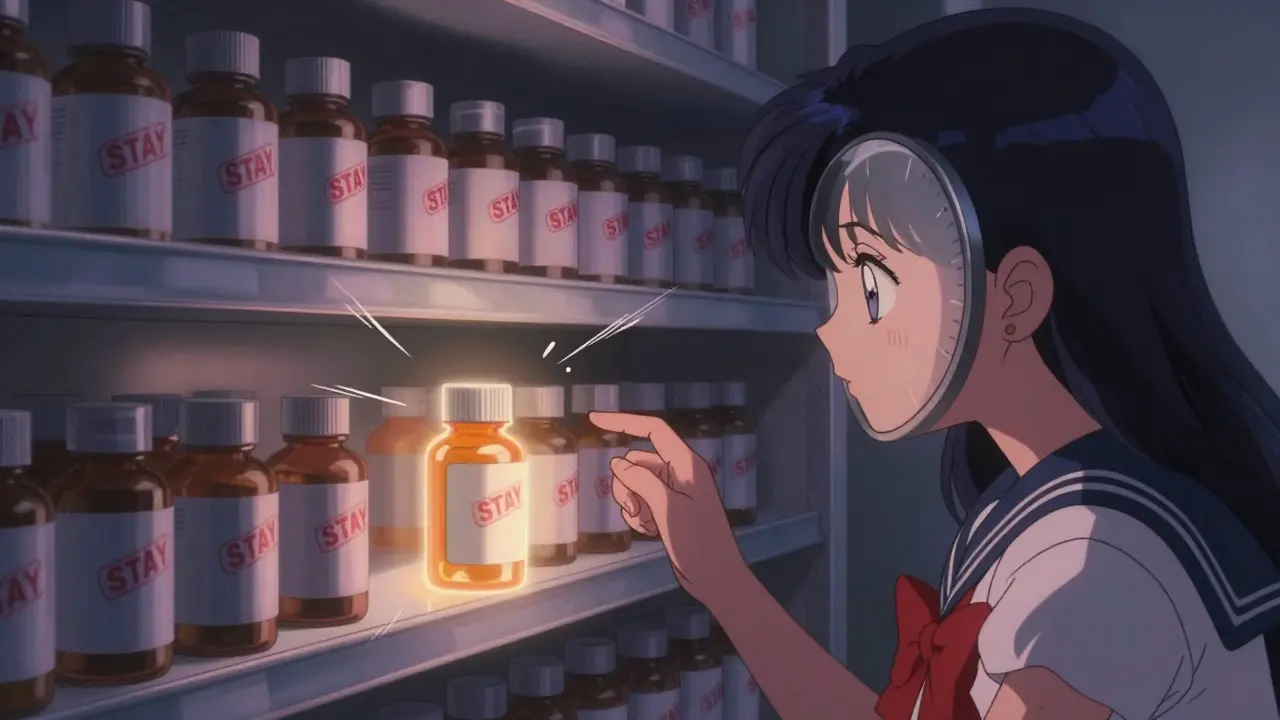
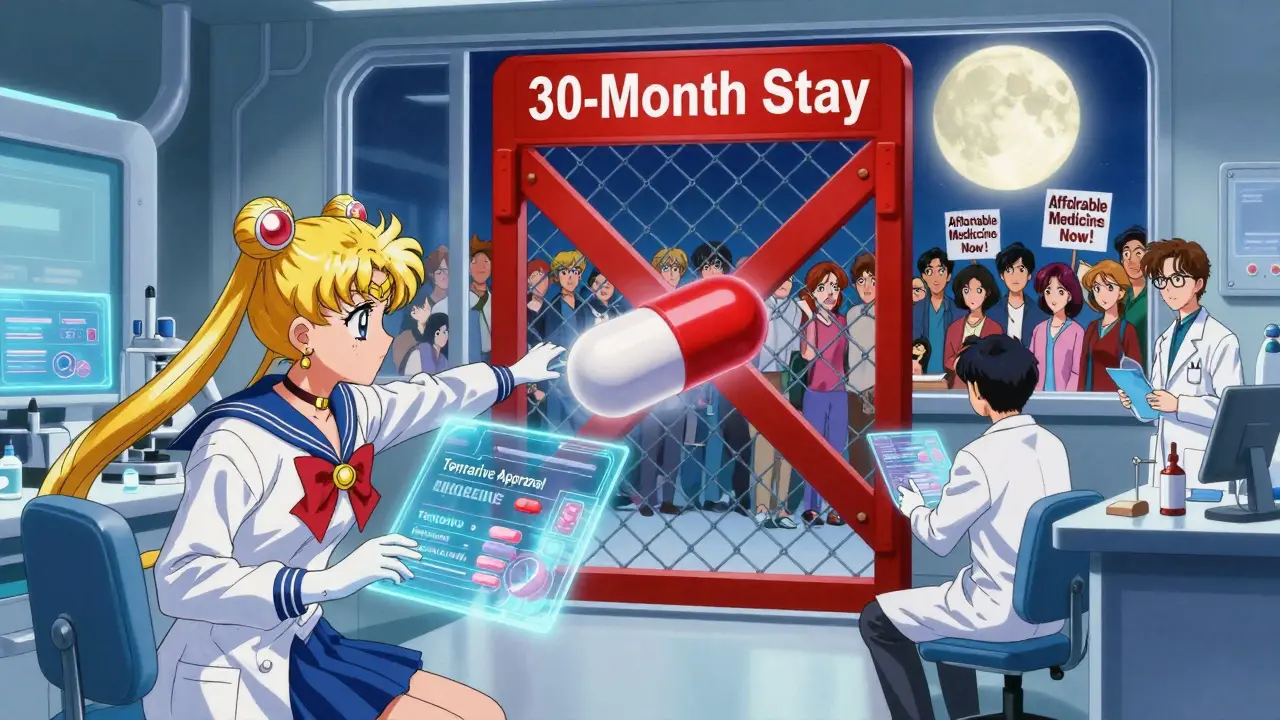
The 30-month stay comes from the Hatch-Waxman Act of 1984, a law designed to balance two goals: letting generic drug makers enter the market faster, while still protecting the patents of original drug developers. Here’s how it works in practice.When a generic company wants to sell a copy of a brand-name drug, they file something called an Abbreviated New Drug Application, or ANDA. If they believe the brand’s patents are invalid or won’t be infringed, they file what’s called a Paragraph IV certification. That’s a legal challenge. Once they do, they must notify the brand company. If the brand company sues for patent infringement within 45 days, the FDA is legally blocked from giving final approval to the generic drug for up to 30 months.
This isn’t a suggestion. It’s a hard stop. The FDA can still review the application, inspect the factory, and even give a “tentative approval.” But they can’t say “yes, you can sell this” until the clock runs out-or the lawsuit ends.
Why Does This Stay Exist?
The idea behind the 30-month stay was simple: give patent holders time to resolve legal disputes without letting generics flood the market mid-litigation. Without it, brand companies argued, they’d have no way to defend their patents before losing billions in sales.It made sense in theory. But in practice, the system has become a tool for delay. The 30-month clock doesn’t start when the patent expires-it starts when the generic company files its challenge. That means a drug could be approved in 2020, and the first generic challenge might not come until 2025. Then, the 30-month stay kicks in, pushing actual market entry to 2028-even if the patent itself expired in 2024.
According to a 2021 study from the University of Southern California and the University of Michigan, the median time between a patent’s expiration and the actual launch of a generic is 3.2 years. That’s not because the generic isn’t ready. It’s because the legal system is still spinning its wheels.
Tentative Approval Doesn’t Mean You Can Sell It
Many people assume that if the FDA approves a generic, it’s ready to go. Not true. The FDA granted tentative approval to 78% of ANDAs in 2022. That means the drug passed all scientific and manufacturing checks. But if a 30-month stay is active, the company can’t sell it.That’s a huge financial burden. Generic manufacturers spend millions preparing for litigation-legal fees, expert witnesses, patent analysis. One 2022 survey found that 63% of generic companies spent between $3 million and $5 million per ANDA just on legal costs. And they do it all before they’ve made a single dollar in sales.
For the brand companies, the stay is a shield. For the generics, it’s a waiting game with no guarantee of winning.
How Companies Stretch the Stay
The system was meant to prevent abuse. But loopholes exist.Before 2003, brand companies could file multiple lawsuits over different patents on the same drug-each one triggering a new 30-month stay. That meant a single drug could be blocked for years. The Medicare Modernization Act of 2003 closed that door. Now, only one 30-month stay is allowed per ANDA filer.
But companies found another way: patent evergreening. That’s when a brand company gets a new patent on a minor change-like a new pill coating, a different dosage form, or a slightly altered release mechanism-and lists it in the FDA’s Orange Book. These patents often have nothing to do with the drug’s effectiveness. But they’re enough to trigger a new lawsuit-and a new 30-month stay.
A 2019 Brookings Institution study found that 67% of patents listed for top-selling drugs were filed after the original drug was approved. These aren’t breakthroughs. They’re legal tactics.
Who Wins? Who Loses?
The first generic company to successfully challenge a patent gets 180 days of exclusive rights to sell the drug before others can join. That’s a huge incentive. In 2022, 72% of drugs faced multiple Paragraph IV challenges-up from 58% in 2018. The race to be first is fierce.But here’s the catch: even when the first filer wins, they don’t always launch right away. Sometimes, they settle with the brand company and delay their own launch. The FTC reported in 2017 that 78% of Paragraph IV lawsuits ended in settlements that pushed generic entry past the patent expiration date.
Meanwhile, patients pay more. The FTC estimates that delays caused by the 30-month stay and related tactics add $13.9 billion to U.S. drug costs every year. That’s money that could have gone to insulin, asthma inhalers, or blood pressure pills-drugs millions rely on.
How Other Countries Handle It
The U.S. is unusual. Most other countries don’t link generic approval to patent litigation at all.In the European Union, generic companies can apply for approval as soon as a drug is on the market. Patents are handled separately in court, but they don’t block FDA-style approval. Canada has a 24-month stay, but it’s shorter and less frequently used. In both places, generics arrive faster.
That’s why the U.S. system draws criticism from economists, patient advocates, and even some former FDA leaders. Dr. Aaron Kesselheim from Harvard Medical School calls the 30-month stay “a tool for systematic delay.” He says it adds an average of 1.8 years to a drug’s monopoly period.
But defenders say it’s necessary. Former FDA Commissioner Scott Gottlieb argues that without the stay, no company would invest in new drugs. He points out that since 1984, over 12,000 generics have been approved-and saved consumers $2.2 trillion.
What’s Changing?
Pressure is building to reform the system.In 2023, Congress introduced the Affordable Prescriptions for Patients Act. It proposes cutting the 30-month stay to 18 months and banning stays for secondary patents. The FTC has also called for reform, noting that brand companies now list an average of 8.3 patents per drug-up from just 1.2 in 1995.
Industry analysts predict that if the stay were eliminated entirely, generic entry for small-molecule drugs would accelerate by 9.2 months on average. That could save consumers $28 billion a year.
But the pharmaceutical industry is pushing back. PhRMA, the main lobbying group for brand companies, warns that reform could reduce R&D investment by $14 billion annually and delay 24 to 36 new drugs over the next decade.
The truth? Both sides have a point. Innovation needs protection. But so does access.
What’s Next for Generic Drugs?
The 30-month stay isn’t going away tomorrow. But it’s under fire. More than 67% of industry executives surveyed in early 2023 expect major changes to Hatch-Waxman within five years.Meanwhile, the FDA is taking small steps. Their 2023 draft guidance asks companies to list patents with more detail-making it harder to sneak in weak or irrelevant patents. They’re also speeding up responses to ANDA inquiries, cutting average review times from 60 days to under 30 for many cases.
But real change will come from Congress. Until then, patients wait. Generics wait. And the clock keeps ticking.
Real-World Impact: A Case in Point
Take a common blood pressure drug, say, amlodipine. It lost its patent in 2007. But because of multiple Paragraph IV challenges and settlements, the first generic didn’t hit shelves until 2010. By then, the brand company had already shifted its marketing focus to a slightly reformulated version-protected by a new patent. That new version? It didn’t get its first generic until 2017.That’s not an anomaly. That’s the pattern. The 30-month stay isn’t just about one drug. It’s about a system that lets one company control the timing of competition-sometimes for years after the patent should have expired.
How Generic Companies Navigate the System
Leading generic manufacturers now have entire teams just for Hatch-Waxman strategy. They hire lawyers who specialize in patent law, regulatory experts who know the FDA inside out, and analysts who track every patent listing in the Orange Book.It’s expensive. The average annual budget for a dedicated Hatch-Waxman team is $2.7 million, according to a 2022 industry survey. Some firms charge $1,800 an hour for counsel. And even then, mistakes happen. In 2022, 23% of Paragraph IV notices were rejected because the generic company missed listing one of the patent holders.
There’s no room for error. One wrong name. One missed deadline. One unfiled patent. And the entire 30-month clock could be invalidated.
What Patients Should Know
If you’re waiting for a generic version of your medication, don’t assume it’s just a matter of time. Ask your pharmacist: “Is there a patent lawsuit holding up the generic?” If the answer is yes, you’re likely stuck with the brand-name price for months-or years-longer than you think.And if you’re on a high-cost drug with no generic yet, you’re not alone. Over $78 billion worth of branded drugs are set to lose patent protection by 2028. If the 30-month stay stays unchanged, most of those won’t get generics for a long time.
But if reform comes-faster, simpler, fairer-millions could save thousands a year.
What triggers a 30-month stay in generic drug approval?
A 30-month stay is triggered when a generic drug manufacturer files a Paragraph IV certification challenging a patent listed in the FDA’s Orange Book, and the brand-name drug company files a patent infringement lawsuit within 45 days of receiving notice. The FDA is then legally barred from granting final approval for up to 30 months.
Can the FDA approve a generic drug during the 30-month stay?
Yes, the FDA can issue a “tentative approval” during the 30-month stay, meaning the generic meets all scientific and manufacturing standards. But final approval-and the ability to sell the drug-is blocked until the stay ends, the patent is invalidated, or the lawsuit is resolved.
Does the 30-month stay apply to all drugs?
No. The 30-month stay only applies to small-molecule drugs regulated under the Hatch-Waxman Act. Biologics, like insulin or monoclonal antibodies, are governed by a different law (BPCIA) with a 12-year exclusivity period and no 30-month stay.
Why do some generics launch years after patent expiration?
Even after a patent expires, generics may be delayed by settlements between brand and generic companies, ongoing litigation, or additional patents filed on minor drug changes. The 30-month stay may expire, but other legal or commercial barriers can still block market entry.
How does the 180-day exclusivity period affect generic entry?
The first generic company to successfully challenge a patent gets 180 days of exclusive marketing rights. This creates intense competition among generics to be first. But sometimes, the first filer settles with the brand company and delays their launch, blocking other generics from entering the market during that window.

Edith Brederode
January 20, 2026 AT 14:28Renee Stringer
January 21, 2026 AT 22:33Nadia Watson
January 22, 2026 AT 10:22Courtney Carra
January 23, 2026 AT 16:59Shane McGriff
January 24, 2026 AT 00:25Paul Barnes
January 24, 2026 AT 14:35pragya mishra
January 24, 2026 AT 18:53Andy Thompson
January 25, 2026 AT 03:40Thomas Varner
January 25, 2026 AT 20:33Art Gar
January 27, 2026 AT 14:34Emily Leigh
January 29, 2026 AT 07:14