

Every year, thousands of seniors with dementia are given antipsychotic drugs to calm agitation, aggression, or hallucinations. It sounds like a simple fix - until you learn the truth. These medications don’t just carry side effects. They double the risk of stroke in older adults with dementia. And yet, they’re still prescribed far too often.
Why Are Antipsychotics Used in Dementia?
Dementia isn’t just memory loss. It can bring aggression, paranoia, wandering, and nighttime yelling. Families and caregivers often feel helpless. When non-drug methods fail, doctors sometimes turn to antipsychotics - drugs like risperidone, olanzapine, or haloperidol - originally designed for schizophrenia. The goal? Quiet the behavior. But this isn’t treatment. It’s chemical restraint.
The FDA issued a black box warning in 2005 - the strongest possible alert - stating that antipsychotics increase the risk of death in seniors with dementia. The data? Seventeen studies showed a 1.6 to 1.7 times higher risk of death compared to placebo. That’s not a small risk. That’s a red flag.
The Stroke Risk Is Real - And It Starts Fast
Many assume the danger only comes with long-term use. That’s wrong. A major 2012 study from the American Heart Association tracked over 100,000 older adults and found that even brief exposure to antipsychotics - as little as a few days - raised stroke risk by 80%. The risk didn’t wait for months. It showed up fast.
How? Antipsychotics mess with your body in several ways:
- They lower blood pressure too sharply when standing up - causing falls and reduced blood flow to the brain.
- They trigger metabolic changes: weight gain, high blood sugar, and cholesterol spikes - all stroke risk factors.
- They block dopamine and serotonin in ways that disrupt how blood vessels in the brain respond.
It’s not just one mechanism. It’s a perfect storm.
Typical vs. Atypical: Which Is Worse?
You’ve probably heard that second-generation (atypical) antipsychotics - like quetiapine or aripiprazole - are safer than first-generation (typical) ones like haloperidol. That’s partly true… but misleading.
Research from Neurology (2023) analyzed five large studies and found something surprising:
- For short-term use (under 90 days), both types carried similar stroke risk.
- For long-term use (over 90 days), typical antipsychotics were linked to a higher risk of stroke and death.
But here’s the catch: even the "safer" atypical drugs still increase stroke risk. A Johns Hopkins study using Medicare data showed stroke partially explains why typical antipsychotics kill more people - but atypicals still cause strokes on their own. There’s no safe choice.
Who’s Most at Risk?
Not all seniors face the same danger. The highest risk group includes:
- Those over 80 years old
- People with existing heart disease, high blood pressure, or diabetes
- Patients with advanced dementia - especially those who are bedridden or have trouble swallowing
- Those on multiple medications (polypharmacy)
One study of nursing home residents found that nearly 1 in 4 dementia patients were on antipsychotics - even though 70% of them had no diagnosis of psychosis. They were just "difficult." That’s not treatment. That’s convenience.
Why Do Doctors Still Prescribe Them?
If the risks are this clear, why are these drugs still in use?
Three reasons:
- Caregiver pressure. Families are exhausted. They beg for something to stop the screaming or aggression.
- Lack of alternatives. Most nursing homes don’t have enough staff for non-drug interventions like music therapy, structured routines, or environmental adjustments.
- Outdated habits. Many doctors learned in medical school that antipsychotics were the go-to for behavioral symptoms. Training hasn’t caught up to the science.
The American Geriatrics Society’s Beers Criteria - the gold standard for safe prescribing in seniors - says avoid antipsychotics entirely for dementia-related behavior. Yet, a 2020 study found that over 30% of U.S. nursing home residents with dementia were still on these drugs.

What Should Be Done Instead?
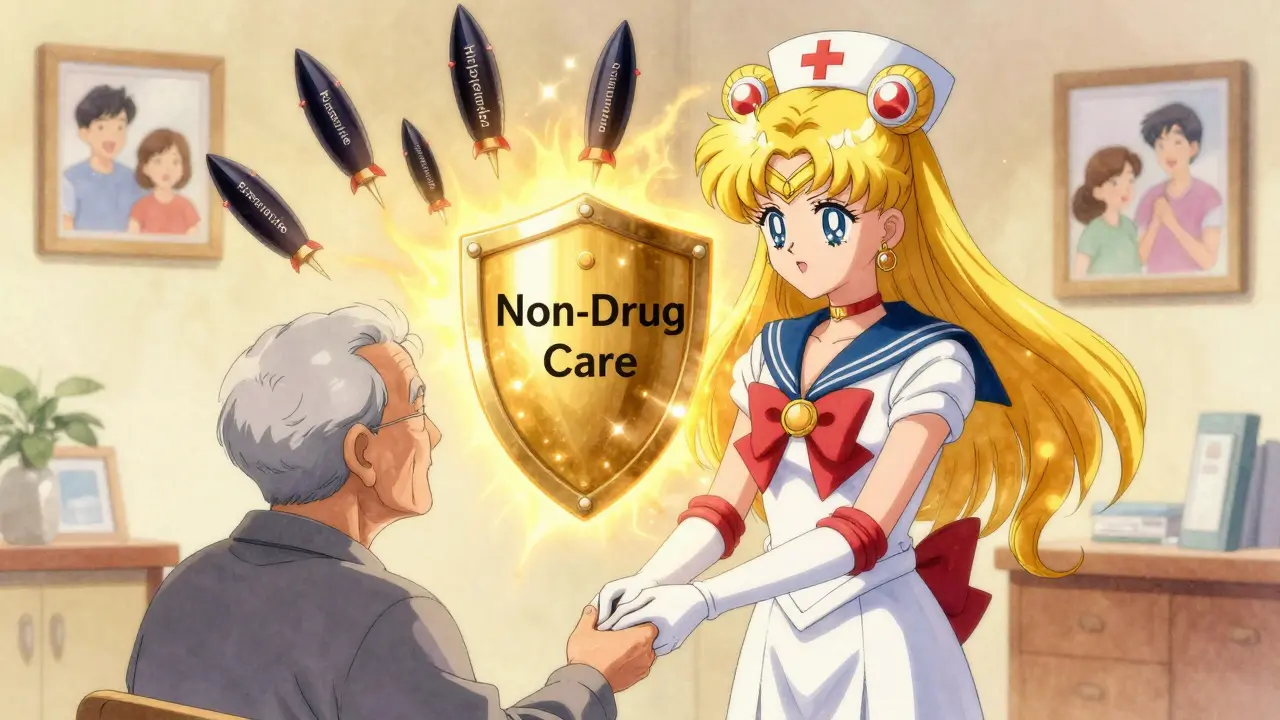
There are effective, safer ways to manage behavioral symptoms - if you have the time and resources.
- Identify the trigger. Is the person in pain? Too hot? Confused by loud noises? A change in environment often fixes the problem.
- Establish routines. Predictable schedules reduce anxiety. Morning walks, afternoon tea, familiar music - these help more than pills.
- Train staff. Dementia care specialists know how to de-escalate without drugs. Simple techniques like calm tone, eye contact, and distraction work.
- Use non-drug therapies. Art therapy, pet interaction, and sensory stimulation have been proven to reduce agitation in multiple clinical trials.
One nursing home in Minnesota cut antipsychotic use by 60% in a year - not by adding more doctors, but by hiring one behavioral specialist and changing shift schedules.
The Bottom Line: Don’t Let Convenience Override Safety
Antipsychotics aren’t a cure. They’re a chemical bandage on a wound that needs real care. The data is overwhelming: these drugs raise stroke risk, increase death rates, and offer little lasting benefit. Even the FDA says so.
If your loved one has dementia and is being offered an antipsychotic, ask:
- What specific behavior is this meant to fix?
- Have we tried non-drug options first?
- How long will they be on this drug?
- What signs should make us stop it immediately?
There’s no shame in saying no. In fact, saying no might save their life.
Are antipsychotics ever safe for seniors with dementia?
No - not really. Even the most cautious experts agree there’s no safe dose. The FDA’s black box warning exists for a reason: every study shows increased stroke and death risk. Antipsychotics should only be considered in rare cases - like severe, life-threatening aggression - and only after all non-drug options have failed. Even then, they should be used at the lowest possible dose for the shortest time.
Do atypical antipsychotics have fewer side effects than typical ones?
They have different side effects, not fewer. Atypical antipsychotics cause more weight gain, diabetes, and high cholesterol - which also raise stroke risk. Typical antipsychotics cause more movement disorders and sudden drops in blood pressure. Neither is safer. Both increase stroke risk. The difference in long-term outcomes is small, and not enough to justify use.
Can antipsychotics make dementia worse?
Yes. Studies show that seniors on antipsychotics decline faster mentally than those not on them. The drugs suppress brain activity in ways that may accelerate cognitive loss. They don’t treat the disease - they mask symptoms while the brain continues to deteriorate.
What are the signs an antipsychotic is causing harm?
Watch for: sudden dizziness or falls, slurred speech, weakness on one side of the body, extreme sleepiness, increased confusion, or trouble swallowing. These can be early signs of stroke. If any appear, stop the drug immediately and get emergency care.
Is there a legal or ethical issue with prescribing antipsychotics for dementia?
Yes. In many cases, antipsychotics are used not because they’re medically necessary, but because staff are overworked. This is chemical restraint - and it’s ethically questionable. In some states, using antipsychotics without proper consent or documentation can be considered elder abuse. Families have the right to refuse these drugs, even if the facility pushes back.
How can I find a facility that avoids antipsychotics?
Ask directly: "What percentage of residents are on antipsychotics?" A facility with less than 5% is likely using better methods. Look for places with certified dementia care specialists, structured daily activities, and trained staff who know how to respond to agitation without drugs. The Alzheimer’s Association can help you find certified memory care homes.
What’s Next?
The fight against unnecessary antipsychotic use is growing. More hospitals are training staff in non-drug dementia care. Medicare is starting to penalize nursing homes that overprescribe. But change moves slowly.
If you’re a family member - don’t wait for the system to fix itself. Ask the hard questions. Push for alternatives. Document everything. And remember: a quiet room doesn’t mean a better life. A calm, engaged, and respected person does.

Jeff Card
March 2, 2026 AT 09:36I’ve seen this firsthand with my mom. They put her on risperidone after she started yelling at night, said the staff were stealing her socks. Within a week, she started stumbling, couldn’t hold her coffee cup. We didn’t know it was the drug - thought it was just dementia getting worse. Turned out, it was the antipsychotic. Took three days to get it out of her system. She’s not ‘cured’ - but she’s back to recognizing my face. That’s worth more than a quiet room.
Matt Alexander
March 2, 2026 AT 17:05Simple truth: antipsychotics don’t treat dementia. They treat caregiver burnout. And that’s the real problem. We don’t fund enough staff. We don’t train them. We don’t pay them enough. So we give pills instead of patience. The FDA warning? It’s been there for nearly 20 years. Why are we still doing this? Because it’s easier than fixing the system.
marjorie arsenault
March 3, 2026 AT 13:22My aunt was on these for six months. We switched her to music therapy and a new daily routine - same staff, same room, just different approach. Within two weeks, she started humming along to old songs. Smiled at me again. No drugs. No sedation. Just human connection. It’s not magic. It’s just care. And it’s possible. We just have to choose it.
Deborah Dennis
March 5, 2026 AT 01:45Shivam Pawa
March 6, 2026 AT 07:15Diane Croft
March 8, 2026 AT 06:42I work in a memory care unit. We cut antipsychotics by 70% last year. Not by magic. By hiring one person whose job was to sit with the most agitated residents - no meds, no rush. Just presence. One woman hadn’t spoken in 18 months. After three weeks of daily piano sessions? She sang ‘Moon River.’ Not because the drug worked. Because someone finally listened.
tatiana verdesoto
March 9, 2026 AT 04:39I’m a nurse. I’ve seen both sides. I used to give these drugs because I was told to. Then I watched a man die after a stroke - he was on olanzapine for ‘restlessness.’ His daughter said he used to dance with her every Sunday. That’s what we’re replacing with silence. We’re not saving time. We’re stealing moments. And those moments? They’re the only thing that matters.
Justin Rodriguez
March 9, 2026 AT 22:59There’s a gap between guidelines and practice. The Beers Criteria says avoid. But in rural clinics, there’s no behavioral specialist. No time. No funding. Doctors are stuck choosing between a sedated patient and a chaotic unit. It’s not malice. It’s scarcity. We need policy change - not just awareness. Real change requires investment in staffing, not just articles like this.
Raman Kapri
March 10, 2026 AT 06:53RacRac Rachel
March 10, 2026 AT 14:21My grandma was on these for 8 months. We pulled her off. Took 3 weeks to stabilize. But the day she recognized my voice again? I cried for an hour. She didn’t need to be quiet. She needed to be seen. And now? She paints. Every morning. Her canvases are wild - colors everywhere. She says it’s how she talks now. No drugs. Just love. And patience. And time.
Jane Ryan Ryder
March 11, 2026 AT 13:56