
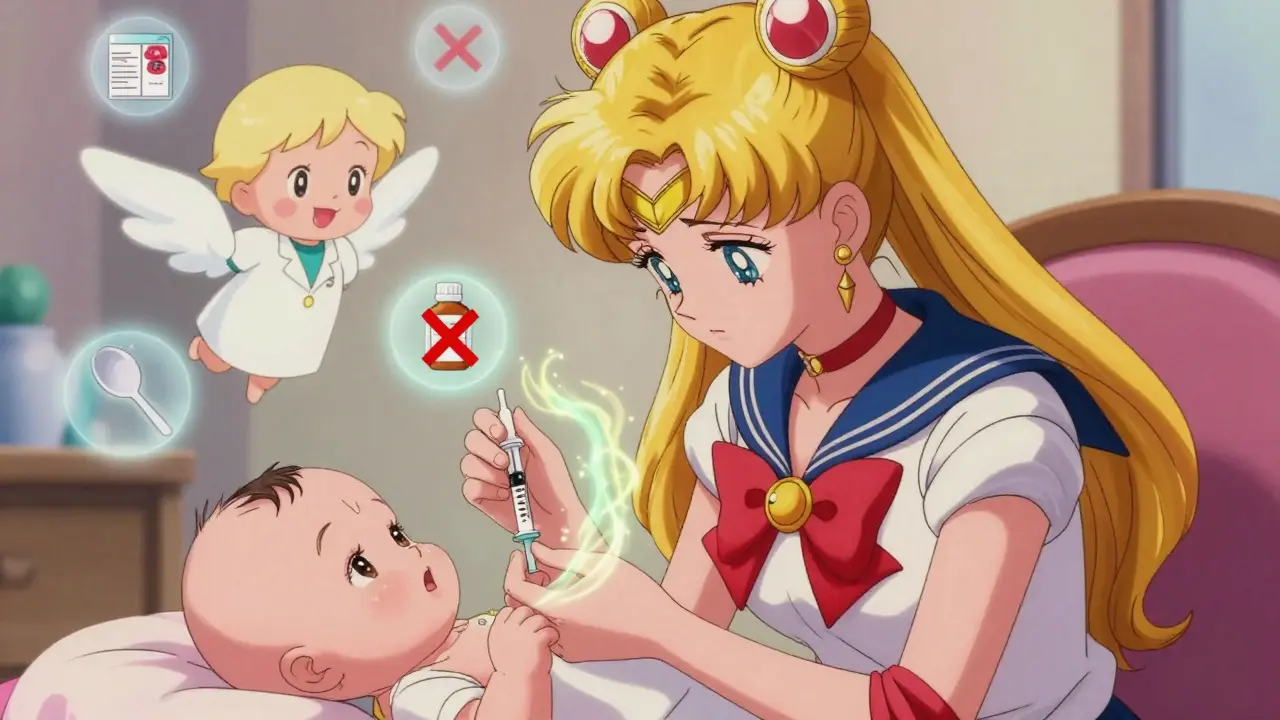
Children's Antihistamine Dosing Calculator
Dosing Calculator
Enter child's information to calculate proper dosage
Important Safety Information
Always consult your pediatrician before giving any antihistamine to your child. Dosing is based on weight, not age. Never use a kitchen spoon for measurement.
Red Flags
Call your doctor immediately if your child experiences extreme drowsiness, fast heartbeat, confusion, difficulty urinating, or unusual behavior after taking antihistamines.
Warning
Do not use Benadryl for sleep. Diphenhydramine is not recommended for children under 2 without doctor's supervision.
Every year, thousands of parents reach for antihistamines when their child breaks out in hives, has a runny nose, or seems to be sneezing nonstop. But here’s the hard truth: not all antihistamines are safe for kids - and giving the wrong one, or the wrong dose, can be dangerous. The good news? There’s a clear, science-backed path forward if you know what to look for.
Not All Antihistamines Are Created Equal
There are two main types of antihistamines: first-generation and second-generation. The difference isn’t just chemical - it’s life-changing for kids.First-generation antihistamines like diphenhydramine (Benadryl) cross the blood-brain barrier easily. That’s why they make adults drowsy. In kids? It’s worse. Studies show 50-60% of children on diphenhydramine become overly sleepy, confused, or even agitated. Some develop dry mouth, fast heartbeat, or trouble urinating. The FDA has warned since 2008 that diphenhydramine should not be used in children under 2 without a doctor’s order. Even in older kids, frequent use can lead to cognitive fog, poor school performance, and accidental overdose.
Second-generation antihistamines like cetirizine (Zyrtec) and loratadine (Claritin) are different. They barely enter the brain. That means they work just as well for allergies - but with far fewer side effects. Only 10-15% of kids on cetirizine feel drowsy. With loratadine, it’s closer to 7%. These are the drugs pediatric allergists now recommend as first-line treatment.
Age Matters More Than You Think
Dosing isn’t just about “giving less than an adult.” It’s about matching the drug to your child’s age, weight, and development.For infants under 6 months: No antihistamine is FDA-approved. But in severe cases - like life-threatening hives - doctors may prescribe cetirizine off-label at 0.125 mg per kilogram of body weight per day. For an 8 kg (17.6 lb) baby, that’s about 1 mg total. This is not something to try at home. Always consult a pediatrician or allergist first.
For babies 6-11 months: Cetirizine is now FDA-approved. The standard dose is 0.25 mg per kg per day. So a 9 kg baby would get 2.25 mg daily. Liquid formulations make this easier: Zyrtec liquid is 1 mg per mL, so 2.25 mL once a day. Never guess. Always use the syringe that comes with the bottle.
Children 2-5 years: Cetirizine: 5 mg once daily (1 teaspoon of liquid). Loratadine: 2.5 mg once daily (½ teaspoon of liquid). Don’t assume all children’s chewables are the same. Some are 5 mg, others are 10 mg. Read the label.
Children 6-11 years: Cetirizine: 5-10 mg daily. Loratadine: 5 mg daily. Many kids this age can take one tablet of Zyrtec (10 mg) if they weigh over 40 lbs. But if they’re smaller, stick to 5 mg. Always check weight guidelines.
Children 12 and older: 10 mg of cetirizine or loratadine daily. These doses are the same as adult doses.
Measurement Mistakes Are Deadly
One of the most common errors? Using a kitchen spoon.A teaspoon from your cupboard can hold anywhere from 3 mL to 7 mL. That’s a 50% variation. One study found parents using kitchen spoons overdosed their kids by up to 70%. The solution? Always use the measuring tool that came with the bottle. It’s not a suggestion - it’s a safety rule.
Also, never mix antihistamines with decongestants. Products like Children’s Benadryl Allergy Plus Congestion contain pseudoephedrine. The FDA says these are not safe for children under 6. Even if your child is 5, skip them. Stick to plain antihistamines.

Why You Should Never Use Antihistamines as Sleep Aids
It’s tempting. Your toddler won’t sleep. You give them Benadryl. They crash. Problem solved, right?No. The American College of Allergy, Asthma, and Immunology found that using antihistamines to induce sleep increases overdose risk by 300% in children under 2. Why? Because kids metabolize these drugs differently. A dose that makes one child sleepy might cause seizures in another. And because the effects wear off unevenly, some kids wake up hyper, confused, or agitated.
Antihistamines are for allergies - not sleep. If your child has trouble sleeping, talk to your pediatrician about sleep hygiene, routines, or underlying issues like reflux or sleep apnea.
When to Use Diphenhydramine (and When to Avoid It)
Diphenhydramine isn’t useless. In true emergencies - like a sudden allergic reaction with swelling of the lips or throat - it can be lifesaving. But even then, it should be given under medical supervision.Its fast action (15-30 minutes) makes it useful in acute settings. But its short duration (4-6 hours) means you’ll need to give it every few hours. That’s where mistakes happen. A tired parent gives a second dose too soon. Or they double up because they think it didn’t work. Both lead to overdose.
Here’s the reality: if your child has hives or mild allergies, cetirizine or loratadine will work just as well - and last all day. No need for repeated dosing. No risk of accumulation. No sleep disruption.
What’s Changing in 2026?
The field is evolving fast. In 2020, studies proved cetirizine was safe for infants 6-11 months. Now, research is underway for use in babies under 6 months. Clinical trials (NCT04567821) are ongoing, with FDA approval possible by 2026.Meanwhile, hospitals like Boston Children’s, Children’s Hospital Colorado, and St. Louis Children’s have updated their protocols to make cetirizine the default choice. Pediatric allergists now follow second-generation antihistamines in 95% of cases. The shift away from diphenhydramine is real - and backed by data.
Even the FDA is tightening rules. The 2023 Pediatric Rule requires more safety data for all antihistamines used under age 2. That means fewer unapproved uses and more precise dosing guidelines in the near future.
What to Keep in Your Medicine Cabinet
For most families, here’s what you need:- Cetirizine (Zyrtec) liquid - 1 mg/mL. Best for infants 6+ months and young children.
- Loratadine (Claritin) liquid - 5 mg/5 mL. Good for kids 2+ who need a non-drowsy option.
- Accurate measuring syringe - never reuse or substitute.
- Poison Control number - 1-800-222-1222 - saved in your phone.
Keep chewable tablets out of reach. Kids think they’re candy. A single 10 mg tablet can be too much for a 3-year-old.
Red Flags: When to Call the Doctor
If your child has any of these after taking an antihistamine, call your doctor or Poison Control immediately:- Extreme drowsiness or difficulty waking up
- Fast or irregular heartbeat
- Confusion, hallucinations, or seizures
- Difficulty urinating or very dry mouth
- Agitation or unusual behavior
These aren’t side effects - they’re signs of overdose. And they can happen even with “correct” doses if the child is small, dehydrated, or on other medications.
Bottom line: antihistamines are powerful tools - but only when used correctly. Choose second-generation options. Measure precisely. Never use them for sleep. And when in doubt, call your pediatrician. Your child’s safety isn’t a guess - it’s a calculation.
Can I give my 4-month-old baby Zyrtec for hives?
Zyrtec (cetirizine) is FDA-approved for infants 6 months and older. For babies under 6 months, it’s not approved - but some pediatric allergists may prescribe it off-label in severe cases like life-threatening hives. The dose would be 0.125 mg per kg of body weight, once daily. For example, an 8 kg baby would get about 1 mg (1 mL of liquid). Never give it without a doctor’s guidance. Never use it for mild rashes or as a sleep aid.
Is Benadryl safe for toddlers?
The FDA warns against using Benadryl (diphenhydramine) in children under 2 years without a doctor’s order. Even in toddlers, it can cause dangerous drowsiness, confusion, or even seizures. Second-generation antihistamines like Zyrtec or Claritin are safer, longer-lasting, and just as effective. Use Benadryl only in emergencies - like a sudden allergic reaction - and only if your doctor says so.
How do I know if I’m giving the right dose?
Always check your child’s weight, not age. Dosing is based on kilograms (kg). For cetirizine, the standard is 0.25 mg per kg for infants 6-11 months, and 5 mg daily for children 2-5 years. Use only the measuring syringe that came with the medicine. A kitchen spoon can be off by 50%. If you’re unsure, call your pharmacist or pediatrician. They can calculate the exact dose for you.
Can I give my child a chewable tablet instead of liquid?
Yes - but only if you know the exact mg per tablet. Children’s chewables come in 5 mg and 10 mg strengths. If your child needs 5 mg and you give a 10 mg tablet, that’s a double dose. Always read the label. If the tablet is 10 mg and your child is 3 years old, cut it in half - but only if the tablet is scored. Otherwise, stick with liquid. Accuracy matters.
What’s the difference between Zyrtec and Claritin for kids?
Both are second-generation antihistamines and safe for children. Zyrtec (cetirizine) works slightly faster and may cause mild drowsiness in about 15% of kids. Claritin (loratadine) is less likely to cause drowsiness (under 7%) but may take a bit longer to kick in. For daily use, either is fine. For quick relief, Zyrtec is often preferred. For children sensitive to sleepiness, Claritin might be better. Both last 24 hours.
Can antihistamines affect my child’s learning or behavior?
Yes - especially first-generation ones like Benadryl. Studies show they can cause brain fog, poor concentration, and memory issues in children. This is why schools and pediatricians discourage their routine use. Second-generation antihistamines like Zyrtec and Claritin have minimal impact on cognition. If your child’s grades are slipping or they seem unusually sluggish, review their meds with your doctor.

Ashley Hutchins
February 7, 2026 AT 02:58Lakisha Sarbah
February 8, 2026 AT 08:18Niel Amstrong Stein
February 8, 2026 AT 21:29Joey Gianvincenzi
February 9, 2026 AT 19:36Amit Jain
February 10, 2026 AT 19:29AMIT JINDAL
February 11, 2026 AT 10:43Ariel Edmisten
February 12, 2026 AT 08:17Catherine Wybourne
February 12, 2026 AT 21:03Mary Carroll Allen
February 13, 2026 AT 14:18Eric Knobelspiesse
February 14, 2026 AT 23:59Savannah Edwards
February 15, 2026 AT 05:02Gouris Patnaik
February 15, 2026 AT 23:02Sarah B
February 16, 2026 AT 23:01Tola Adedipe
February 17, 2026 AT 00:34Heather Burrows
February 17, 2026 AT 19:34