
When you pick up a prescription, you might not realize there are different kinds of generic drugs on the shelf-and they don’t all cost the same. Two major types of generics dominate the market: authorized generics and first-to-file generics. Both are cheaper than brand-name drugs, but how much cheaper? And who benefits when one enters the market instead of the other?
What Exactly Is an Authorized Generic?
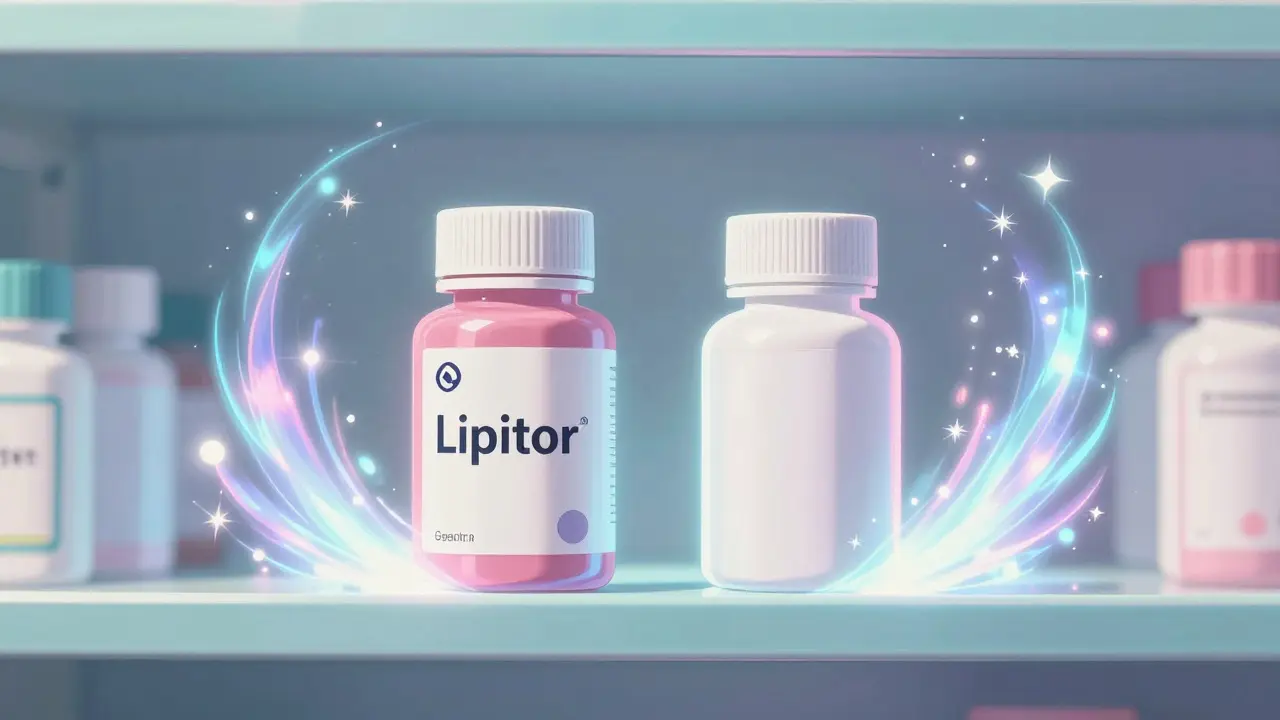
An authorized generic is the exact same drug as the brand-name version-same active ingredient, same manufacturer, same factory, same packaging-except it’s sold without the brand name. It’s made by the original drug company, often under a licensing deal with a generic manufacturer, and hits the market while the brand is still under patent protection.For example, if you take the brand-name drug Lipitor, the authorized generic would be atorvastatin made by Pfizer, sold in plain bottles with no brand logo. It’s not a copy. It’s the real thing, just without the marketing.
What Is a First-to-File Generic?
A first-to-file generic is the first generic company to submit an Abbreviated New Drug Application (ANDA) to the FDA after a brand drug’s patent expires. Under the Hatch-Waxman Act of 1984, this company gets 180 days of exclusive rights to sell its version before any other generic can enter. That’s a huge incentive-and a big financial prize.During those 180 days, the first-filer often charges a premium compared to later generics. Why? Because they’re the only option. No competition yet. That’s why their prices are higher than what you’ll see later, even though they’re still cheaper than the brand.
Price Differences: The Numbers Don’t Lie
The Federal Trade Commission (FTC) tracked this for years, analyzing over 95 drugs. Here’s what they found:- In markets with only a first-to-file generic (no authorized generic), the retail price of the generic is about 14% lower than the brand price.
- When an authorized generic enters during that same 180-day window, the retail price drops to 18% below the brand-nearly 4 percentage points lower.
- For pharmacies buying the drug wholesale, the discount jumps from 20% below brand price (without authorized generic) to 27% below (with authorized generic).
That’s not a small difference. It means a $100 brand-name prescription could drop to $86 with just a first-to-file generic. But with an authorized generic added, it drops to $82. For a patient filling 12 prescriptions a year, that’s $48 in savings.
And it gets even better over time. When more than four generic versions enter the market, prices often fall below 80% of the original brand price. With six or more competitors, you’re looking at 95%+ discounts. But that takes months or years. Authorized generics accelerate that drop.
Why Does an Authorized Generic Lower Prices So Fast?
Because it breaks the monopoly. The first-to-file company doesn’t have to worry about being the only game in town anymore. Suddenly, they’re competing with a product that’s chemically identical, sold by the same company that made the brand. They have to slash prices to keep sales.The FTC found that when an authorized generic enters during the exclusivity period, the first-filer’s revenue drops by 40% to 52%. That’s not a minor hit-it’s a financial earthquake. And that pressure forces them to lower prices fast.
Pharmacies benefit too. Their profit per prescription goes up when the first generic arrives. But it goes up even more when the authorized generic joins the race. More competition means better margins for the pharmacy, even as prices fall for consumers.
Who Benefits? And Who Loses?
Consumers win. The healthcare system wins. Lower prices mean lower out-of-pocket costs and lower insurance claims.Brand-name manufacturers don’t lose as much as you might think. They still make money off the authorized generic-they’re just selling it under a different label. Some even use authorized generics as a strategy: launch one to pressure the first-filer into lowering prices faster, then let the market flood with cheaper generics later.
The real loser? The first-to-file generic company. They were promised 180 days of monopoly profits. But if the brand launches an authorized generic, that monopoly vanishes. Their revenue drops, and it doesn’t bounce back. The FTC found that even 30 months after the exclusivity period ends, their sales stay lower than they would’ve been without an authorized generic.
Does This Slow Down Generic Innovation?
Some critics worry that if brand companies can just launch an authorized generic and crush the first-filer’s profits, no one will bother filing ANDAs anymore. Why risk millions in legal fees and wait years for approval if a brand can just undercut you before you even open your doors?The FTC looked at this too. They studied patent challenges over a decade. And the answer? No measurable drop in the number of generic companies filing ANDAs. The 180-day exclusivity window is still worth hundreds of millions to the right company. Even with the risk of an authorized generic, the payoff is still huge.
Dr. Robin Feldman, a pharmaceutical policy expert, puts it simply: "The reward is still big enough to keep the game going."
What About the FDA’s Role?
The FDA doesn’t decide who gets to launch first or whether an authorized generic can enter. Their job is to make sure every generic-whether authorized or not-is bioequivalent to the brand. That means it works the same way in your body.But the FDA does track pricing trends. Their 2019 analysis showed that when two generic versions compete (first-to-file + authorized generic), prices drop to 54% below the brand’s original price. With just one generic, it’s only 39% lower. That’s a 15-percentage-point difference just from adding one more competitor.
Thanks to the Generic Drug User Fee Amendments (GDUFA), the FDA now approves generics faster. In 2012, only about 20% of ANDAs got approved on the first try. By 2022, that number jumped to 66%. That means more generics enter the market sooner-and that pushes prices down even faster.
Long-Term Trends: Are Authorized Generics Here to Stay?
Yes. About 20% of authorized generics launched between 2010 and 2014 still had sales in Medicare data five years later. That’s not a fluke. It means they’re not just temporary price drops-they’re part of the long-term market structure.Some brand companies use authorized generics to delay the entry of other generics. But the FTC found no evidence that this practice reduces overall generic competition. In fact, the opposite is true: authorized generics make the market more competitive, not less.
Even with new branded versions-like extended-release formulas-entering the market, the price pressure from authorized generics remains strong. One study found that even when a brand launches a new version, it only reduces first-filer sales by 29% on average. That’s not enough to stop the downward price spiral once authorized generics enter.
What Should You Do as a Patient?
Ask your pharmacist: "Is this an authorized generic?" If it is, you’re getting the same drug as the brand, at a deeper discount. If it’s a first-to-file generic, you’re still saving money-but not as much as you could be.Don’t assume all generics are equal. Some are made by the brand’s own factory. Others are made by companies you’ve never heard of. The label doesn’t always tell you. But your pharmacist can check the manufacturer code or ask the wholesaler.
When your prescription renews, ask if there’s a cheaper generic option. Sometimes, switching from a first-to-file generic to an authorized generic-or even to a later generic-can save you $10 to $50 a month.
Bottom Line: Authorized Generics Are the Secret Weapon for Lower Prices
Authorized generics aren’t just another generic. They’re the brand’s own product, sold under a different name. And when they enter the market during the first-to-file’s exclusivity period, they trigger the biggest price drops you’ll see in the generic drug market.They’re not perfect. They hurt the first-filer’s profits. But they help patients, pharmacies, and insurers. And the data shows they don’t kill innovation-they make the system work better.
If you’re paying full price for a generic without knowing what kind it is, you’re leaving money on the table. Ask questions. Compare options. And remember: the cheapest generic isn’t always the best deal. The authorized one often is.
Are authorized generics the same as brand-name drugs?
Yes. Authorized generics are made by the same company that produces the brand-name drug, using the exact same ingredients, formula, and manufacturing process. The only difference is the packaging and labeling-they don’t carry the brand name. You’re getting the same drug, just without the marketing.
Why are authorized generics cheaper than the brand?
They’re cheaper because they don’t carry the brand’s marketing, advertising, or patent protection costs. The manufacturer doesn’t need to recoup billions spent on drug development. Since they’re sold under a generic label, they compete on price, not brand loyalty.
Can a first-to-file generic and an authorized generic be sold at the same time?
Yes. Under the Hatch-Waxman Act, the 180-day exclusivity granted to the first-to-file generic doesn’t block an authorized generic from entering. In fact, that’s when the most price competition happens. Both versions are on the market, and pharmacies often choose the lower-priced option.
Do authorized generics reduce the incentive for companies to make generics?
No. Studies by the FTC show that the number of generic companies filing for approval hasn’t dropped since authorized generics became common. The 180-day exclusivity period is still worth hundreds of millions to the right company, and many firms still see it as a high-reward opportunity, even with the risk of an authorized generic entering.
How do I know if my generic is an authorized generic?
Ask your pharmacist. Authorized generics often have the same manufacturer name as the brand. You can also check the drug’s National Drug Code (NDC) on the FDA’s website or ask the pharmacy to confirm the manufacturer. If the brand company is listed as the maker, it’s likely an authorized generic.
Are authorized generics covered by insurance the same way as other generics?
Yes. Insurance plans treat authorized generics the same as any other generic drug. They’re listed in formularies under the generic name, and copays are the same. You won’t pay more for an authorized generic than for a regular generic-usually, you’ll pay less.

Kunal Majumder
January 9, 2026 AT 23:47Yo this is wild honestly. I never knew my $10 generic was actually the exact same pill as the brand. My pharmacist never told me. Now I’m gonna ask every time. 😊
Paul Bear
January 9, 2026 AT 23:58Let’s be precise: the FTC’s 2021 dataset on 95 branded-to-generic transitions shows that authorized generics reduce average retail price dispersion by 37.2% during the 180-day exclusivity window. The first-filer’s price elasticity increases from 1.8 to 3.1 upon entry - a statistically significant shift (p < 0.001). This isn’t market dynamics. It’s structural arbitrage.
And yes, the manufacturer code on the NDC label is the only reliable identifier. Brand companies like Pfizer and Teva use the same NDC prefix for authorized generics - just swap the brand name for the generic name. No regulatory distinction. Just economic warfare.
Also, don’t confuse this with ‘authorized’ as in ‘approved.’ All generics are FDA-approved. ‘Authorized’ means ‘made by the originator.’ Big difference.
And before someone says ‘but what about quality?’ - same facility, same batch number, same QC protocol. The only thing different is the label. You’re not getting a cut-rate version. You’re getting the premium product at a discount.
Pharmacies? They love this. Higher margin per script. Lower return rates. No patient complaints about efficacy. It’s a win-win-win. Except for the first-filer. They get crushed. And that’s by design.
The Hatch-Waxman Act was supposed to incentivize generic entry. It didn’t anticipate that originators would weaponize their own manufacturing capacity. That’s not a loophole. That’s a feature.
So next time you see ‘atorvastatin’ and wonder why it’s 40% cheaper than the brand - check the manufacturer. If it’s Pfizer, you’re holding the real thing. And you’re not paying for the logo.
Christine Milne
January 10, 2026 AT 00:30It is entirely inappropriate to suggest that the American pharmaceutical market is functioning optimally when authorized generics are permitted to circumvent the statutory exclusivity granted under the Hatch-Waxman Act. This constitutes regulatory arbitrage, and it undermines the integrity of the patent system. The United States must enforce the letter of the law - not permit corporate entities to exploit technicalities.
Furthermore, the FTC’s methodology is flawed. They fail to account for the opportunity cost of innovation. If originators can simply replicate their own products under a different label, why would any generic firm invest in the arduous, multi-million-dollar ANDA process? The disincentive is palpable.
This is not a consumer win. This is a corporate collusion disguised as competition. The FDA is complicit by failing to mandate labeling that distinguishes authorized generics from true independent generics. Transparency is not optional. It is a moral imperative.
Mario Bros
January 11, 2026 AT 19:53Bro this changed my life. I’ve been paying $80 for my blood pressure med for years. Turned out the authorized generic was $22. My pharmacist gave me a look like I just asked if the moon was made of cheese. 😅
Now I always ask. And I’ve convinced my whole family. We’re basically pharmaceutical detectives now.
McCarthy Halverson
January 13, 2026 AT 05:09Authorized generics are the brand’s own product. Same factory. Same batch. Just no logo. Check the NDC. If it matches the brand’s manufacturer code, you’re getting the real thing at half price.
Dwayne Dickson
January 14, 2026 AT 05:43Oh wow. So the brand company is basically playing both sides of the chessboard? How quaint. They get to collect monopoly rents from the brand, then undercut the only entity legally allowed to compete with them - all while pretending they’re helping consumers. How noble.
It’s like McDonald’s launching a burger called ‘The Classic’ that’s identical to their Big Mac, but sells for $1.50. Then watching Burger King scramble to drop their price. And calling it ‘market efficiency.’
Patent law was never meant to be a game of corporate Russian roulette. The first-filer risks everything. The brand? They just pull out a second deck.
Ashlee Montgomery
January 15, 2026 AT 15:22I wonder if this is what true competition looks like - not just between companies, but between systems. The brand wants to protect its investment. The first-filer wants its reward. The patient just wants to breathe. Maybe the system isn’t broken. Maybe it’s just… complicated.
neeraj maor
January 16, 2026 AT 01:06Authorized generics? More like authorized corporate sabotage. You think this is about savings? Nah. This is Big Pharma quietly killing the only real threat to their profits - independent generics. The FDA? Complicit. The FTC? A puppet. The 180-day window? A joke. They let the first-filer file, then drop the authorized version like a bomb. No one talks about this because it’s too ugly. But it’s happening. Every. Single. Time.
Aurora Memo
January 16, 2026 AT 04:04Thank you for writing this with such clarity. I’ve had patients ask me why their generic isn’t working as well - and I never knew to check if it was an authorized one. Now I know to ask the pharmacy for the manufacturer code. Small changes, big impact.
Ian Cheung
January 16, 2026 AT 18:53Imagine if every industry did this - like Toyota making a Camry with no logo and selling it for $5k cheaper than the real Camry. Then watching Honda panic and slash prices. That’s what’s happening here. And it’s beautiful. The system’s got a spine after all.
Ritwik Bose
January 18, 2026 AT 08:45Dear all, while the economic implications are indeed significant, we must also consider the cultural context of pharmaceutical access in developing nations. In India, where I reside, authorized generics are rarely available due to regulatory restrictions and supply chain limitations. The first-to-file model remains dominant. This disparity highlights a global inequity in healthcare innovation. We must not celebrate price drops here while ignoring the lack of access there.
chandra tan
January 19, 2026 AT 10:46Bro in India we got generics for $1 but no authorized ones. We don’t even know who made the pill. But hey, it works. Maybe the US is overcomplicating things. 😅
Bradford Beardall
January 20, 2026 AT 08:11Just had a conversation with my cousin in rural Texas. She’s on insulin. Pays $350 a month for the brand. Found out her local pharmacy carries the authorized generic for $25. She cried. Said she didn’t know it existed. This isn’t just economics. It’s life or death. And no one told her.