
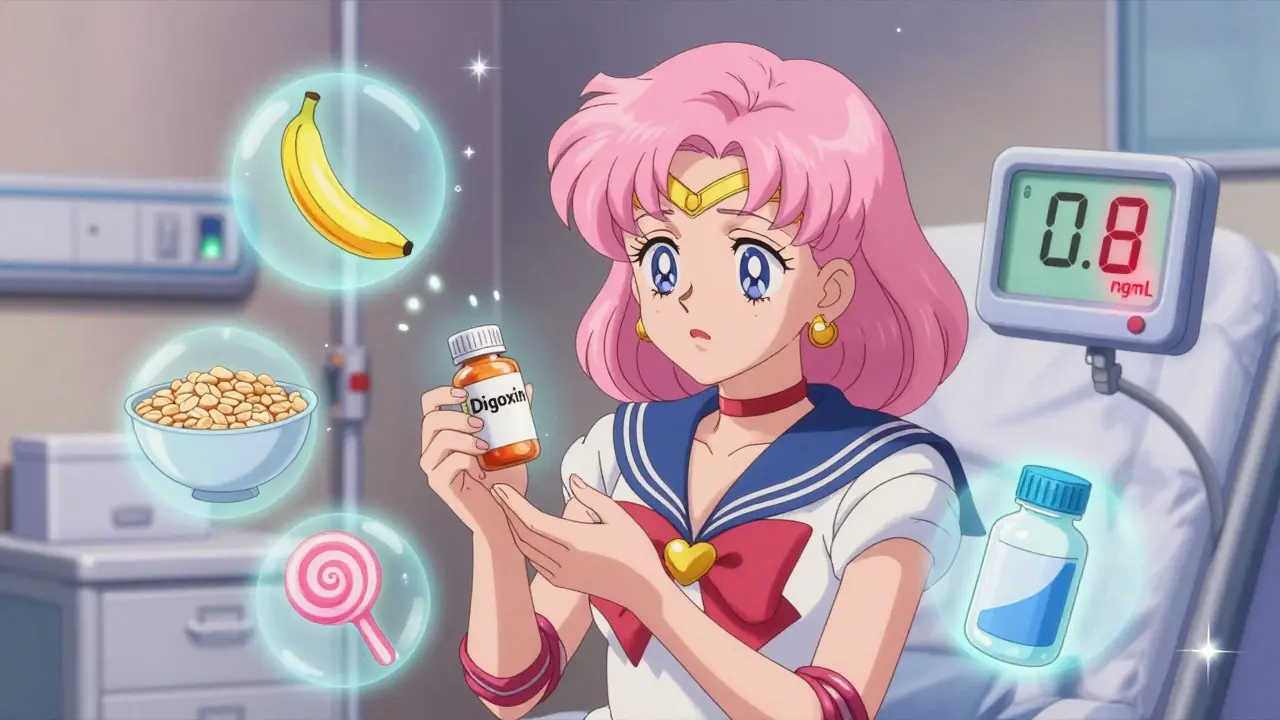
Take digoxin for heart failure or atrial fibrillation? You’re not alone. Around 12% of heart failure patients in the U.S. still use it, especially older adults. But here’s the catch: digoxin doesn’t play well with many other drugs, foods, or even supplements. A tiny mistake - like eating oatmeal too close to your pill or picking up an over-the-counter antacid - can push your levels into dangerous territory. Toxicity isn’t rare. It happens in up to 4% of people on steady doses, and sometimes even when levels look "normal."
Why Digoxin Is So Tricky
Digoxin works by boosting heart muscle strength, helping it pump better. But it’s a narrow-margin drug. The difference between a helpful dose and a toxic one is small. Optimal blood levels? Between 0.5 and 0.9 ng/mL. Anything above 2.0 ng/mL is a red flag. And here’s the scary part: you can feel awful - with nausea, blurry vision, or a racing or slow heartbeat - even if your level is still "in range." That’s because your body’s sensitivity changes. Age, kidney function, and potassium levels all shift how digoxin acts in your system.
Most people think side effects mean they’re taking too much. But often, it’s not the dose - it’s what’s interacting with it.
Top 5 Drug Interactions That Can Be Dangerous
Some medications make digoxin stick around longer in your body, raising your risk of toxicity. Others make it less effective. Here are the big ones:
- Dronedarone - Used for atrial fibrillation. When taken with digoxin, it can spike digoxin levels by over 50%. The PALLAS trial showed this combo nearly doubles the risk of sudden death. If you’re on both, your doctor should cut your digoxin dose by half right away.
- Verapamil and Diltiazem - These calcium channel blockers slow your heart rate. Together with digoxin, they can drop your pulse below 40 bpm. That’s not just slow - it’s dangerous. Patients with existing heart block are at especially high risk.
- Amiodarone - A powerful antiarrhythmic. One patient on Reddit shared how their digoxin level jumped from 0.8 to 1.9 ng/mL within two weeks after starting amiodarone. Result? Nausea, vision changes, and a 50% dose reduction.
- Erythromycin and Tetracycline - Antibiotics you might get for a sinus infection. They change gut bacteria that normally break down digoxin. That means more digoxin gets absorbed. Levels can rise up to 40%.
- Quinidine - Another heart rhythm drug. It can double your digoxin levels by blocking kidney clearance. This combo is rarely used now, but if you’re on it, monitor closely.
Even common drugs like carvedilol (a beta-blocker) can raise digoxin levels by 16%. Your doctor should check your digoxin level within a week of starting any new heart medication.
What You Eat (and Don’t Eat) Matters
Food isn’t just fuel - it can block or boost your meds. Digoxin is absorbed in the gut, and certain things get in the way.
- High-fiber foods - Oatmeal, bran, whole grains. A 2018 study found they reduce digoxin absorption by 20-25%. One patient on Reddit switched from taking digoxin with breakfast to two hours before - and their levels stabilized.
- Dairy products - Milk and yogurt can interfere. Don’t take digoxin with your morning glass of milk.
- Black licorice - Yes, really. Glycyrrhizin in licorice lowers potassium. Low potassium + digoxin = high risk of dangerous heart rhythms. Avoid it completely.
- Psyllium fiber supplements - Found in Metamucil and similar products. If taken within two hours of digoxin, they can slash absorption by 30-40%.
Bottom line: Take digoxin on an empty stomach, at the same time every day, and wait at least two hours before eating high-fiber meals or taking fiber supplements.
Over-the-Counter Traps
You wouldn’t think antacids could mess with your heart medicine - but they do. Antacids with aluminum or magnesium (like Maalox, Mylanta, or Tums) can reduce digoxin absorption by up to 30%. A 2021 Mayo Clinic study found that 22% of digoxin-related ER visits were tied to OTC meds.
Don’t reach for these without talking to your pharmacist. Use acid reducers like famotidine or omeprazole instead - they don’t interfere. And if you must use an antacid, take it at least four hours after your digoxin.

Herbs and Supplements: Hidden Risks
Just because something’s "natural" doesn’t mean it’s safe with digoxin.
- St. John’s wort - This popular herbal antidepressant speeds up how your body clears digoxin. Levels can drop by 25%, making your heart medicine less effective.
- Hawthorn - Used for heart support. But it can prolong the QT interval - the same way digoxin does. Together, they raise the risk of torsades de pointes, a life-threatening arrhythmia.
- Psyllium - Already mentioned, but worth repeating. If you take it for constipation, time it carefully.
Always tell your doctor or pharmacist about every supplement you take - even if you think it’s harmless.
Electrolytes: Potassium Is Your Ally
Low potassium (hypokalemia) is one of the biggest triggers for digoxin toxicity. Even mild drops - below 3.5 mmol/L - can turn a safe dose into a toxic one. Diuretics like furosemide (Lasix) or hydrochlorothiazide are common causes. Steroids can make it worse.
Monitor your potassium monthly. If you’re on a diuretic, your doctor may recommend a potassium supplement or switch you to a potassium-sparing diuretic like spironolactone. Bananas, oranges, and spinach help, but they won’t fix a big drop. Blood tests are your best tool.
Who’s at Highest Risk?
Not everyone is equally vulnerable. You’re at higher risk if you:
- Are over 75 years old
- Weigh less than 60 kg (132 lbs)
- Have kidney problems (creatinine clearance under 50 mL/min)
- Have a history of heart block or sick sinus syndrome
- Take multiple interacting drugs
People over 80 are nearly three times more likely to have digoxin toxicity than younger patients. Kidney trouble is the strongest predictor - odds are over four times higher.
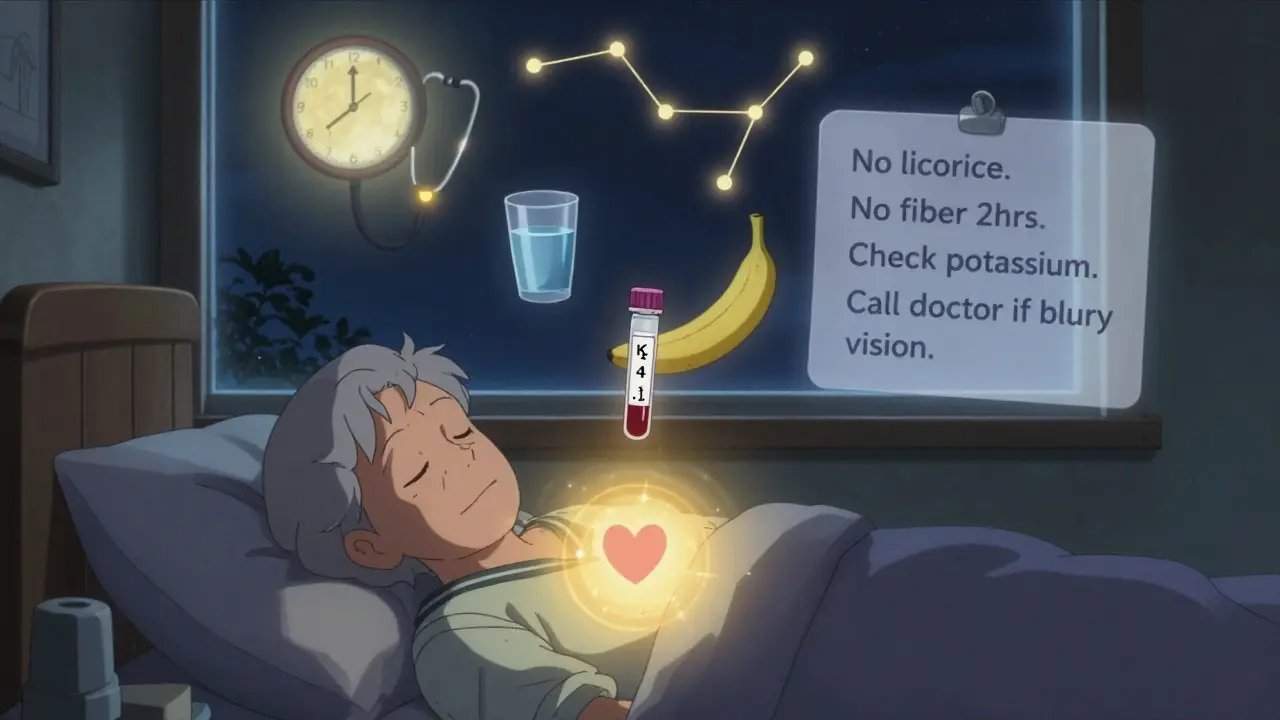
What to Do: A Simple Monitoring Plan
You don’t need to be scared - just informed. Here’s what works:
- Get your digoxin level checked - Every 3-6 months if stable. Weekly if you start a new drug or change your dose.
- Check potassium monthly - Especially if you’re on diuretics.
- Take digoxin at the same time daily - Preferably on an empty stomach, two hours before or after meals.
- Avoid black licorice and fiber supplements - Unless timed at least four hours apart.
- Keep a med list - Include every pill, herb, and OTC drug. Bring it to every appointment.
- Know the warning signs - Nausea, vomiting, loss of appetite, blurry yellow-green vision, confusion, or a slow or irregular heartbeat. Call your doctor immediately if you notice these.
The American College of Cardiology now uses a simple risk score to guide monitoring. If you’re over 75, have low potassium, poor kidney function, or take verapamil - you’re in the high-risk group. That means more frequent checks.
The Bottom Line
Digoxin isn’t going away. It’s cheap - often $4-6 a month - and still helps people who haven’t responded to newer, pricier drugs. But it demands respect. A single interaction can turn a life-saving medicine into a life-threatening one. The key isn’t avoiding digoxin - it’s managing it wisely.
Stay on top of your meds. Talk to your pharmacist before taking anything new. Get your blood tested. And don’t ignore those subtle symptoms. Your heart is counting on you to pay attention.
Can I take digoxin with my morning oatmeal?
No - not right away. Oatmeal and other high-fiber foods can reduce digoxin absorption by 20-25%. Wait at least two hours after taking digoxin before eating oatmeal, bran, or other fiber-rich meals. Some patients switch to taking digoxin at bedtime to avoid this issue entirely.
What should I do if I miss a dose of digoxin?
If you miss a dose and remember within 12 hours, take it as soon as you can. If it’s been more than 12 hours, skip the missed dose and take your next one at the regular time. Never double up. Digoxin builds up in your system, and taking too much too soon can lead to toxicity.
Is digoxin safe if I have kidney disease?
It can be, but with caution. Digoxin is cleared mostly by the kidneys. If your creatinine clearance is below 50 mL/min, your dose likely needs to be lowered. Below 15 mL/min, many European guidelines recommend avoiding digoxin entirely. Your doctor should check your kidney function every 3-6 months and adjust your dose accordingly.
Can I drink alcohol while taking digoxin?
Moderate alcohol (one drink per day) is usually okay, but heavy drinking can worsen heart rhythm problems and lower potassium - both of which increase digoxin toxicity risk. If you have heart failure, your doctor may advise you to avoid alcohol altogether. Always check with them.
How do I know if digoxin is working?
You may notice less shortness of breath, less swelling in your legs, and more energy. But the only way to know for sure is through blood tests. Your doctor will check your digoxin level and kidney function to make sure you’re in the safe range. Symptoms alone aren’t reliable - you can feel fine and still be toxic.
Are there newer alternatives to digoxin?
Yes - drugs like sacubitril/valsartan (Entresto), SGLT2 inhibitors (Farxiga, Jardiance), and vericiguat are now preferred for heart failure. But digoxin still has a role, especially for patients with persistent symptoms despite these newer drugs, or for those who can’t afford them. It’s not outdated - it’s just used more selectively now.
What’s Next?
If you’re on digoxin, schedule a med review with your pharmacist or doctor. Bring your full list - prescriptions, OTCs, vitamins, and herbs. Ask about your last digoxin level and potassium. If you haven’t had a blood test in over six months, request one. And if you’re thinking of starting a new supplement, stop - and ask first.
Digoxin isn’t the easiest drug to manage. But with careful attention, it can still help you live better. You don’t need to be an expert - just informed and proactive. Your heart will thank you.

Kelly Beck
January 5, 2026 AT 16:28Wow this is SO important!! 🙌 I’ve been on digoxin for 3 years and never knew oatmeal could mess with it-my levels were all over the place until I switched to taking it at bedtime. My cardiologist was shocked I hadn’t been told this. If you’re on this med, please, please, please talk to your pharmacist. It’s not just about the pill-it’s about your whole routine. You’re not being paranoid, you’re being smart. I’m so glad this post exists. 💙
Beth Templeton
January 7, 2026 AT 03:14Black licorice bad. Oatmeal bad. Supplements bad. Just stop taking everything.
Ryan Barr
January 7, 2026 AT 13:3712% of HF patients? That’s outdated. Guidelines moved on 5 years ago. This reads like a 2012 blog post.
Wesley Pereira
January 8, 2026 AT 09:01Y’all are losing your minds over a $5 pill. I’ve been on digoxin since 2008, take it with coffee and pancakes, and my ejection fraction is 52%. You’re all scared of ghosts. The real danger is overmedicalizing everything. Chill. 😎
Katie Schoen
January 9, 2026 AT 09:47Okay but can we talk about how wild it is that a drug this old is still in use? Like, we have drones delivering pizza but we’re still trusting a plant extract from foxglove to keep grandma alive? 🤯 But honestly? If it works and you’re monitored? Go for it. Just don’t ignore the signs. I’ve seen people ignore blurry vision and think it’s ‘just aging.’ Spoiler: it’s not.
Isaac Jules
January 10, 2026 AT 06:59Who wrote this? A pharmacist with a vendetta? Every single OTC med is ‘dangerous’? I take Tums with my digoxin and I’ve never been hospitalized. You’re scaring people for clicks. Stop it.
Amy Le
January 10, 2026 AT 16:11Americans are so dependent on pills. In India, we use yoga, turmeric, and fasting to regulate heart rhythm. This is pharmaceutical propaganda. Digoxin is a relic. Why not try real medicine?
Molly McLane
January 11, 2026 AT 10:23Thank you for writing this with so much care. I’m a nurse and I’ve seen too many patients end up in the ER because they took a new antibiotic and didn’t think it mattered. I always tell my patients: ‘Your meds are like a band of siblings-change one, and the whole system gets messy.’ Please, if you’re on digoxin, make a med list. Write it down. Keep it in your wallet. Show it to every provider-even the dentist. You’re not being annoying. You’re saving your life.
Pavan Vora
January 13, 2026 AT 03:51From India, I just want to say: we use digoxin here too, especially in rural areas where newer drugs are unaffordable. But we also use ajwain seeds, garlic, and hibiscus tea-many patients combine them without telling doctors. I’ve seen potassium drop dangerously low. Please, if you’re using herbs, tell your doctor. We’re not enemies-we’re partners.
Tiffany Adjei - Opong
January 13, 2026 AT 10:04Wow, so now even oatmeal is a threat? What’s next? Breathing is contraindicated? This post is a fear-mongering masterpiece. If you’re scared of your meds, don’t take them. But don’t scare others into panic with cherry-picked anecdotes and ‘Reddit says’ logic.
Stuart Shield
January 14, 2026 AT 03:17I used to think digoxin was just some ancient relic-until my mum’s levels spiked after she started taking a new antihistamine. She didn’t even know it was a drug. We thought it was just ‘allergy stuff.’ She ended up in the hospital with a heart rate of 38. I’m not exaggerating-it felt like watching a clock tick backward. This post? It’s not fear. It’s a lifeline. Thank you for writing it.
Melanie Clark
January 14, 2026 AT 23:37Of course the system is rigged. Digoxin is cheap because Big Pharma wants you dependent on it. They know you won’t question it because it’s been around since the 1700s. They don’t want you to know about the real alternatives-like magnesium IVs and vagal maneuvers. But no, you’re told to take a pill and shut up. They don’t want you to know you can regulate your rhythm naturally. The FDA is complicit. Your potassium test? A distraction. The real danger is the system.
Dana Termini
January 15, 2026 AT 15:25I appreciate the effort here. I’ve been on digoxin for 8 years and my levels are stable. But I still check my potassium monthly, avoid licorice, and take it on an empty stomach. I don’t need fear-I need clarity. This post gives me both. Thank you.
Melanie Clark
January 17, 2026 AT 07:15And don’t get me started on how they make you pay for blood tests. $200 for a digoxin level? That’s not healthcare-that’s extortion. You’re being priced out of safety. They want you to die quietly so they can sell you the next drug.