
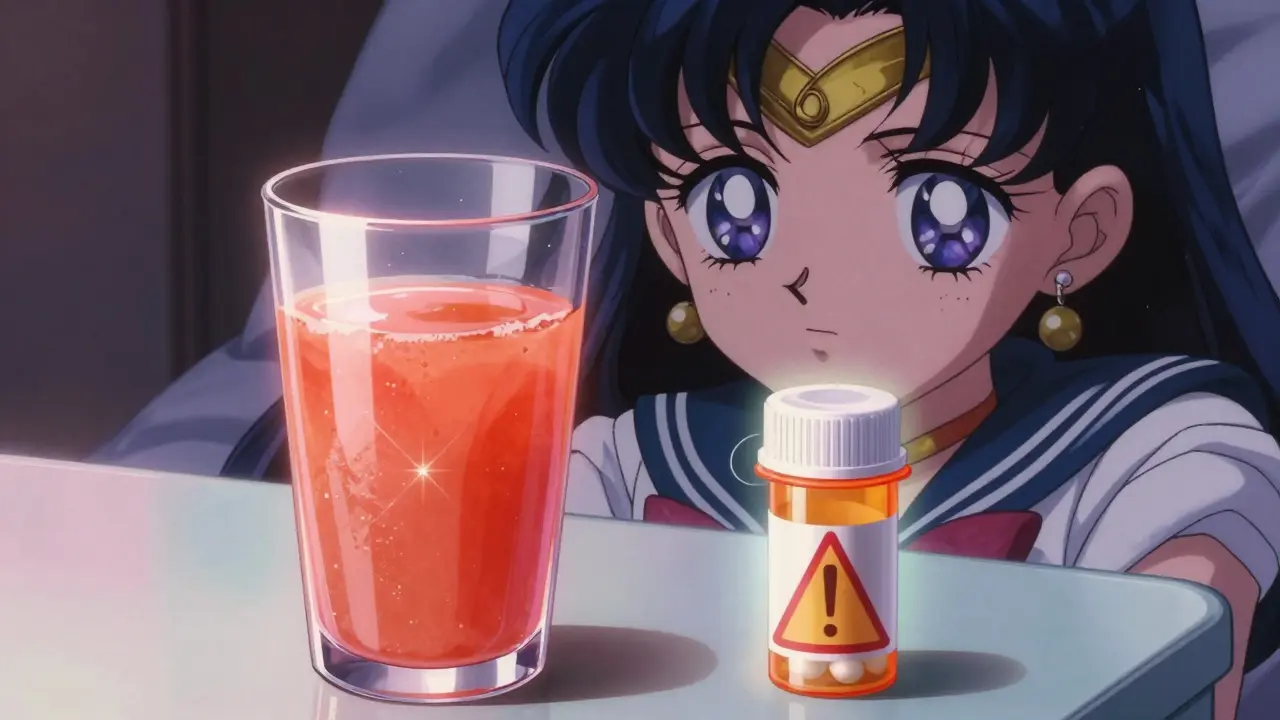
You might have seen a small warning label on your prescription bottle telling you to avoid grapefruit juice. At first, it seems strange-why would a healthy piece of fruit interfere with a lab-made medication? It isn't just a suggestion; for some people, a single glass of juice can push a drug's concentration in the blood to dangerous, even life-threatening, levels. This happens because grapefruit doesn't just change how you feel; it fundamentally alters how your body processes chemistry.
Understanding grapefruit juice interactions isn't about avoiding fruit for the sake of it, but about understanding a biological "traffic jam" in your gut. When this interaction happens, your body loses its ability to break down certain drugs, leading to an accidental overdose even if you take the correct dose. This guide explains the science behind the risk, which medications are the most dangerous to mix, and how to stay safe.
The Science: How Grapefruit "Hacks" Your Metabolism
To understand why this happens, we have to look at CYP3A4 is a critical enzyme found primarily in the lining of the small intestine and the liver that breaks down about half of all prescribed medications. Think of CYP3A4 as a security guard at the entrance of your bloodstream. Its job is to intercept a portion of the medication before it ever reaches your heart or brain, ensuring that only a controlled amount enters your system.
Grapefruit contains natural compounds called Furanocoumarins is a group of organic chemical compounds, specifically bergamottin, found in citrus fruits that inhibit the activity of metabolic enzymes. When you drink grapefruit juice, these furanocoumarins essentially "knock out" the CYP3A4 enzymes. Unlike some interactions that wear off in an hour, this is an irreversible process. The enzyme is destroyed, and your body must synthesize entirely new enzymes to replace them.
When the "security guards" are gone, the medication passes through the intestinal wall completely unchecked. In some cases, this can increase the amount of drug entering your bloodstream by up to 8-fold. If you're taking a drug for high blood pressure, for example, this could cause your pressure to drop so low that you faint or experience a cardiovascular crisis.
Which Medications Are Most At Risk?
Not every drug is affected. The risk depends on whether the medication relies on the CYP3A4 enzyme for its breakdown. Some of the most common high-risk categories include:
- Statins (Cholesterol meds): Simvastatin is a lipid-lowering medication that shows a 330% increase in plasma concentration when paired with grapefruit juice. This can lead to muscle breakdown (rhabdomyolysis) and kidney damage.
- Calcium Channel Blockers (Blood pressure): Felodipine is a medication used to treat hypertension that can see a 300-800% increase in exposure, potentially causing severe hypotension.
- Benzodiazepines (Anxiety/Sleep): Midazolam and triazolam are highly sensitive, which can lead to excessive sedation or prolonged sleep.
- Immunosuppressants: Cyclosporine, used after organ transplants, can reach toxic levels, risking organ failure.
| Drug Name | Interaction Risk | Mechanism | Safer Alternative |
|---|---|---|---|
| Simvastatin | High (Contraindicated) | CYP3A4 Inhibition | Pravastatin |
| Felodipine | High | CYP3A4 Inhibition | Amlodipine (Lower risk) |
| Atorvastatin | Moderate to High | CYP3A4 Inhibition | Rosuvastatin |
| Pravastatin | None/Low | Different Pathway | N/A |

The Timing Trap: Why a "Gap" Doesn't Always Work
A common misconception is that you can just wait a few hours after drinking juice before taking your pill. This doesn't work for CYP3A4-mediated interactions. Because the furanocoumarins permanently disable the enzymes, the effect lasts until your body grows new ones. Research shows that complete enzyme recovery can take up to 72 hours.
If you drink a glass of grapefruit juice on Monday, the "security guards" in your gut are gone for Tuesday and Wednesday. Taking your medication on Tuesday morning-even if you haven't had juice for 12 hours-will still result in higher-than-intended drug levels in your blood. For this reason, pharmacists recommend a total ban on grapefruit products for the duration of your treatment.
Hidden Sources and Alternative Citrus
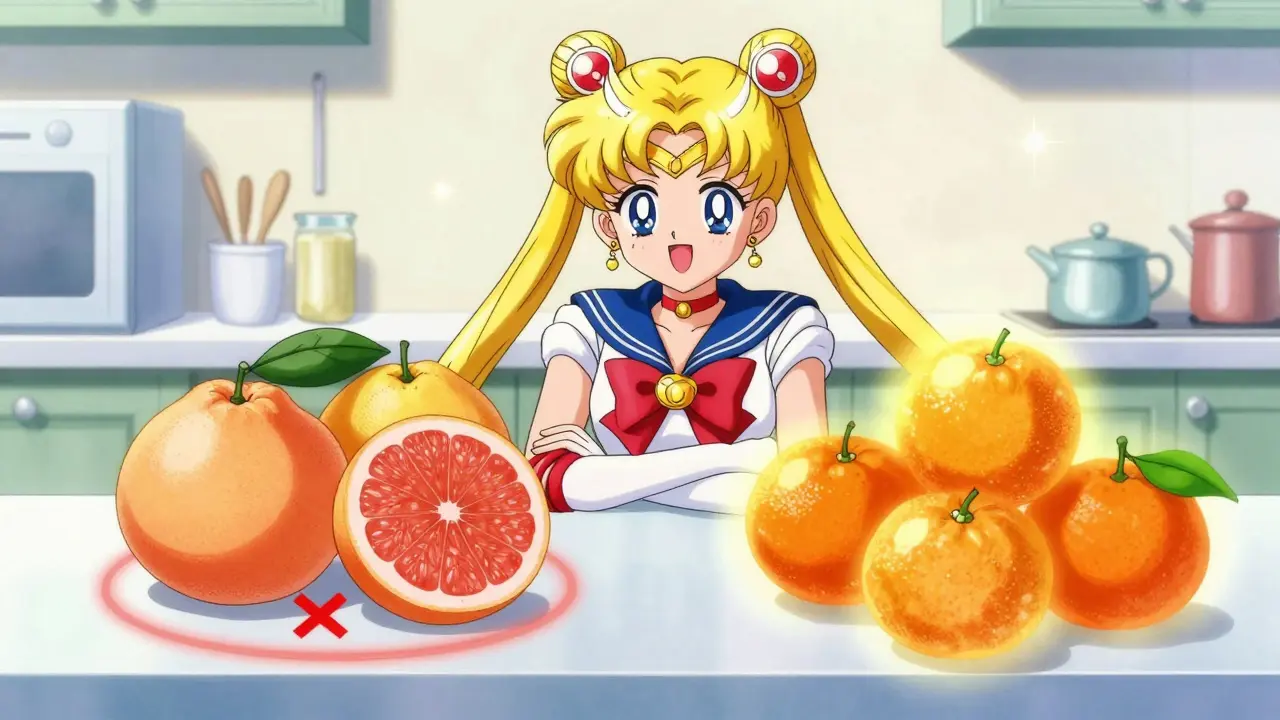
It isn't just fresh juice you need to worry about. Frozen concentrates and even some flavored waters containing grapefruit extracts can trigger the same reaction. You should also be wary of Pomelos is the large citrus ancestor of the grapefruit that contains similar furanocoumarin concentrations and Seville oranges, which are often used in marmalades. These fruits contain similar chemical triggers that disable your enzymes.
The good news? Regular sweet oranges, tangerines, and clementines are generally safe. They don't contain the specific furanocoumarins that attack the CYP3A4 enzyme, so you can keep them in your diet without worrying about your medication levels spiking.
Practical Steps for Patient Safety
Managing your health when you're on multiple medications (polypharmacy) requires a bit of diligence. If you are over 65 or taking five or more medications, the risk of an accidental interaction increases significantly. Here is a checklist to keep you safe:
- Read the Inserts: Check the "Drug Facts" or prescription guide for mentions of citrus or grapefruit.
- Ask Your Pharmacist: Not all pharmacists catch every interaction. Specifically ask, "Does this drug interact with grapefruit juice?"
- Review Your Diet: Check your morning smoothies or pre-made juices for grapefruit ingredients.
- Switch Medications: If you love grapefruit, talk to your doctor about switching to a "non-CYP3A4" version of your drug (e.g., switching from Simvastatin to Rosuvastatin).
Can I eat just a small amount of grapefruit?
No. As little as 200mL (about one glass) of juice or a single whole grapefruit is enough to cause a clinically significant interaction. Because everyone's enzyme levels differ, a "small amount" for one person might be a dangerous amount for another.
Does pink grapefruit differ from white grapefruit?
Yes, but both are risky. White grapefruit typically contains 20-50% higher concentrations of furanocoumarins than pink varieties, meaning the interaction is often stronger with white grapefruit, but pink grapefruit still poses a significant risk.
How long should I wait after stopping grapefruit to take my meds?
You should generally wait about 72 hours (3 days) after your last consumption of grapefruit products before starting a medication that is known to interact. This allows your body enough time to synthesize new CYP3A4 enzymes.
Do all cholesterol medications have this problem?
No. Only those metabolized by CYP3A4, like simvastatin and lovastatin, are high-risk. Medications like pravastatin and rosuvastatin use different metabolic pathways and do not have significant interactions with grapefruit.
What are the signs of a grapefruit-drug interaction?
Symptoms depend on the drug. For blood pressure meds, you might feel dizzy or faint. For statins, you might experience unexplained muscle pain or weakness. For sedatives, you may feel excessively sleepy or "foggy" for longer than usual.

Betty Kawira
April 27, 2026 AT 23:01Exactly. Most people think it's just a quick spike, but because those furanocoumarins actually wreck the enzyme itself, your body has to rebuild the whole protein from scratch. That's why the window is so long. Just a pro tip: always check your 'natural' supplement blends too, because some contain grapefruit extract that can trigger the same mess with your meds.
Justin Crice
April 28, 2026 AT 12:47The pharmacokinetic profile of these interactions is fascinating, particularly the irreversible inhibition of the CYP3A4 isoenzyme. It essentially creates a state of pseudo-genetic deficiency in the intestinal mucosa, significantly altering the first-pass metabolism and increasing the systemic bioavailability of the substrate.
Amber McCallum
April 30, 2026 AT 00:17This is just proof that we trust chemicals too much. Your body knows what it wants, and if it wants grapefruit, you should just listen to your soul instead of a pill bottle.
Darrin Oneto
May 1, 2026 AT 20:12man that is some straight up wizardry in the gut. like your stomach just decides to go on strike because of some juice. absolute chaos lol
Jonathan Hall
May 2, 2026 AT 00:21While I generally believe in maintaining a peaceful discourse, it is frankly offensive that some people think they can just ignore medical warnings and then act surprised when their blood pressure craters, especially when the science is laid out in such a clear manner that even a child could grasp the danger of these furanocoumarins, yet we still have people treating their health like a casual experiment in a high school lab which is just reckless and honestly quite dangerous for everyone involved in the healthcare system.
Thomas Jorquez
May 3, 2026 AT 16:45It is quite remarkable how nature works, though the misspelling of some terms in the original text does not detract from the utility of the warnin. I appreciate the clarity regarding the safer citrus alternatives.
Jean Robert
May 5, 2026 AT 11:47It can feel really overwhelming to manage all these different rules when you're just trying to get healthy, but I truly believe that taking it one step at a time and keeping a little notebook of your triggers can make a world of difference in your daily confidence. Just remember that you're not alone in this journey and it's perfectly okay to feel confused by the science because we're all just learning how to take better care of ourselves as we go along in life, and with a bit of patience and some good communication with your doctor, you'll find a routine that works perfectly for your unique body and lifestyle.
Michael Yoste
May 7, 2026 AT 11:17I'm just so glad I'm not the only one who didn't know this! I've probably been risking it for years, but hey, at least now I can tell everyone I know about it so they can be scared too!