

When your doctor or pharmacist gives you advice about your medications, it’s not just a quick chat-it’s a critical part of your care. But unless you write it down, that advice can vanish by the time you get home, forget the dosage, or need to explain it to another provider. Medication documentation isn’t just for clinicians; it’s a tool you can use to protect your health, avoid errors, and make sure everyone treating you is on the same page.
Why Writing It Down Matters
Every year, about 7,000 people in the U.S. die from medication errors. Many of these happen because information got lost in translation-between appointments, pharmacies, or even within the same provider’s office. If you don’t have a clear record of what was said, you might take the wrong dose, mix drugs that shouldn’t be combined, or miss warnings about side effects. The good news? Simple, consistent documentation cuts those risks dramatically. Studies show that when patients keep accurate medication logs, adverse events drop by up to 30%. That’s not just a number-it’s fewer hospital visits, less confusion, and more control over your health.What to Document: The Essentials
Don’t just jot down “take pill twice a day.” Be specific. Here’s what you need to capture every time you get new advice:- Medication name-both brand and generic, if given. (Example: “Lisinopril (Zestril)”)
- Dose-how much? (Example: “10 mg”)
- Frequency-when and how often? (Example: “Once daily, in the morning”)
- Route-how do you take it? (Oral, injection, patch? Don’t assume.)
- Duration-is this a 30-day supply? Until further notice? End date?
- Refills-how many are allowed? When can you call for more?
- Purpose-why are you taking this? (Example: “For blood pressure”)
- Side effects to watch for-what’s normal? What’s an emergency?
- Food or drug interactions-“Don’t take with grapefruit,” “Avoid alcohol,” etc.
- What to do if you miss a dose-skip it? Double up? Call the office?
- Provider’s name and contact-who gave you this advice? Save their number.
Even small details matter. If your pharmacist says, “Take this with food to avoid an upset stomach,” write it. If your doctor says, “If your headache gets worse after 3 days, call back,” don’t rely on memory.
How to Record It: Tools That Work
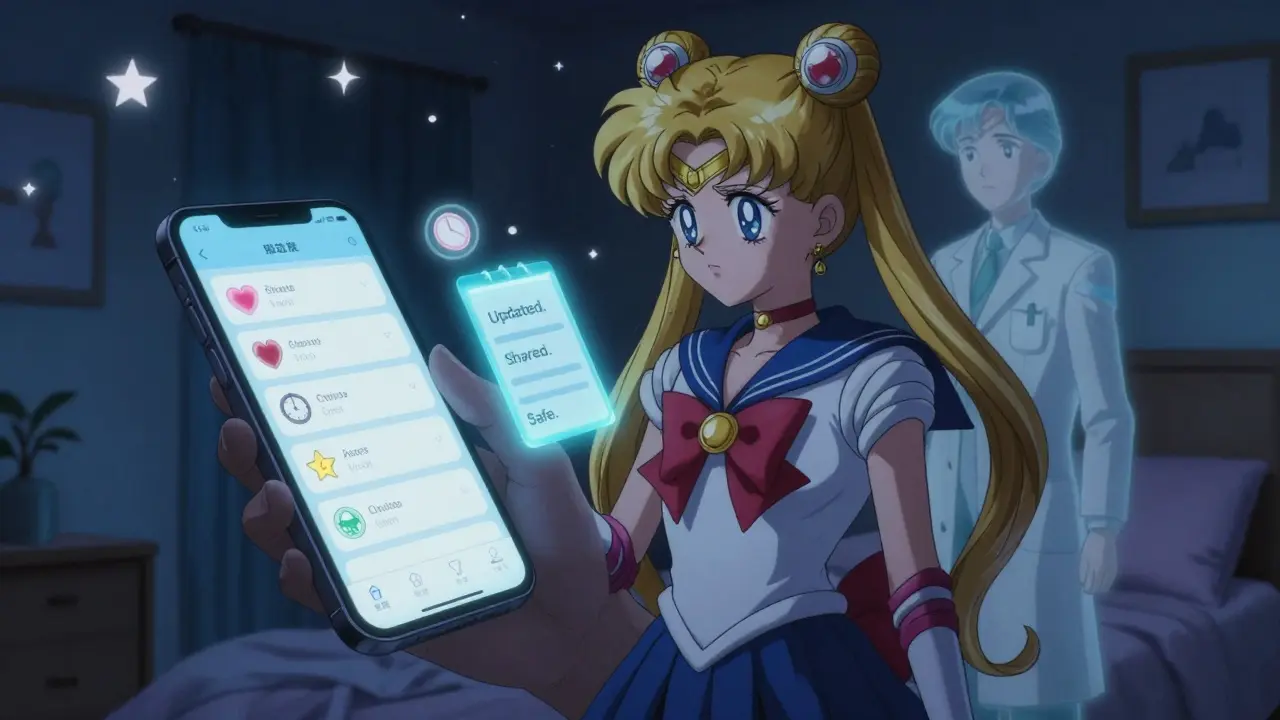
You don’t need fancy software. But you do need something reliable.- Smartphone notes app-Simple, searchable, and always with you. Label entries clearly: “Dr. Chen - Feb 1, 2026 - Metoprolol.”
- Printed medication log-Many pharmacies give you a free one. Fill it out during the visit. Keep it in your wallet or purse.
- Electronic Health Record (EHR) portal-If your provider uses one (most do), log in after your visit. Check if the medication list matches what was discussed. If it doesn’t, message them right away.
- Medication apps-Apps like Medisafe or MyTherapy let you set reminders and track adherence. They can even generate printable reports to share with providers.
Pro tip: Don’t rely on sticky notes. They get lost. Don’t just trust your phone’s calendar-it won’t show you why you’re taking the drug. Your log should answer: What? Why? When? How? And what if something goes wrong?
Documenting Conversations That Happen Outside the Office
Advice doesn’t always come during an appointment. You might get a call from the nurse’s office saying your prescription was changed. Or your pharmacist calls to warn you about a new interaction. Document those too.- Date and time of the call
- Name of the person you spoke with
- What was said-verbatim if possible
- Any action you were told to take
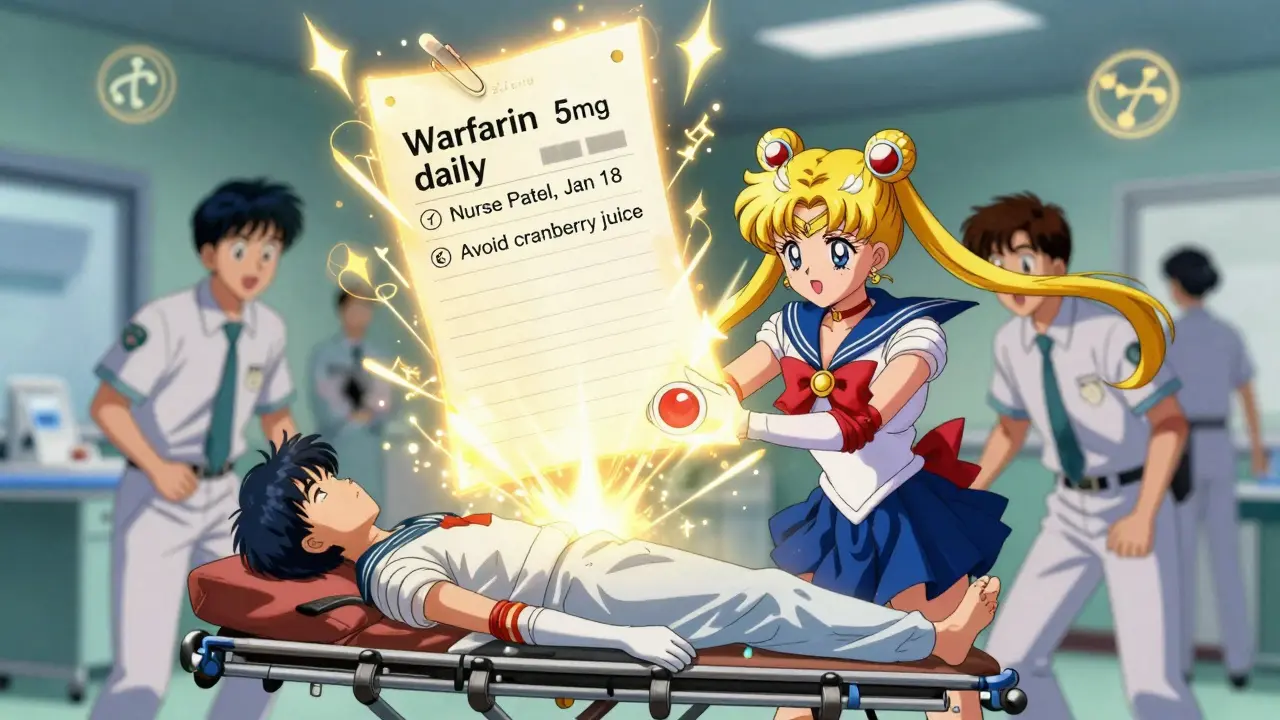
Example: “Jan 18, 2026, 3:15 PM-Called from Mercy Pharmacy. Nurse Patel confirmed that my new prescription for warfarin replaces the old rivaroxaban. Dose: 5 mg daily. INR target: 2.0-3.0. Avoid cranberry juice. Follow-up blood test in 7 days.”
This matters because if you end up in the ER and can’t speak, the staff needs to know what changed-and when.
What to Do When You Disagree or Refuse
Sometimes, you say no. Maybe you don’t want to take a certain drug. Maybe you can’t afford it. Maybe you tried it before and had a bad reaction. Document that too.Write: “Patient declined metformin due to GI side effects experienced in 2023. Alternative: Diet and exercise plan discussed. Will re-evaluate in 4 weeks.”
This isn’t about being difficult. It’s about honesty-and protection. If you later have a problem, and your record shows you were warned and chose differently, it keeps your care on track and legally sound.
Keeping It Safe and Organized
Your medication log isn’t just for you. It’s for family members, caregivers, and any provider who steps in.- Store it in one place-digital or physical.
- Update it immediately after every visit or call.
- Share a copy with your primary care provider at least once a year.
- If you have a caregiver, give them a printed version.
- Keep backups. If you use a phone app, enable cloud sync.
Don’t wait for a crisis to organize this. Do it now. If you’re hospitalized or have an accident, first responders will ask: “What medications are you taking?” If you can’t answer, they’ll guess. And guessing kills.
The Legal Side: Why This Isn’t Optional
Medical records are legal documents. If something goes wrong, courts look at what was written-not what someone remembers. The American Medical Association and the Joint Commission both require that all medication advice be documented clearly, dated, and signed. In dental, pharmacy, and primary care settings, failure to document properly can lead to malpractice claims. In fact, 38% of medication-related lawsuits involve incomplete or missing documentation. Your notes aren’t just helpful-they’re your shield.What’s Changing in 2026
New rules are rolling out. By 2026, most prescriptions will come with a standardized one-page patient medication info sheet (PMI), approved by the FDA. It will list key details in plain language: what the drug does, how to take it, what to avoid, and when to call your doctor. But even with this, you still need to document what your provider says about that sheet. Did they explain the side effects differently? Did they change the timing? Add a warning? Write it down. Also, Medicare and Medicaid now require providers to document your current meds at every visit. If they don’t, they lose payment. That means they’re more likely to ask you: “Can you show me your list?” Be ready.Final Checklist: Your Medication Documentation Kit
Before your next appointment, make sure you have:- A current, written list of all medications-including supplements and OTC drugs
- A method to record new advice (app, notebook, EHR portal)
- A way to update it immediately after each interaction
- A printed copy to share with new providers
- A backup (cloud, email, or copy with a trusted person)
Don’t wait until you forget a dose or end up in the ER. Start today. One page of clear notes could save your life-or at least keep you out of the hospital.
What if I don’t understand what my provider says about my medication?
Ask them to explain it again. Use the teach-back method: “So, just to make sure I got this right-you’re saying I take this pill once a day with food because it can upset my stomach, and I should call if I feel dizzy or have swelling in my feet?” If they agree, write that down. If they correct you, update your note. Never pretend you understand just to move on.
Should I document advice from my pharmacist too?
Yes. Pharmacists are medication experts. If they tell you to take your antibiotic with water and not juice, or warn you that your blood pressure med interacts with your fish oil, write it. Many pharmacies now give you a printed counseling summary-keep that in your log. If they call you with a change, note the date, time, name, and what was said.
How long should I keep my medication records?
Keep them for at least 7 years, and longer if you have chronic conditions. Some states require providers to keep records for 10 years. You should too. Past medication history can explain current symptoms, allergies, or reactions. If you switch providers, your old records help them avoid dangerous mistakes.
Can I use voice memos instead of writing?
Voice memos are better than nothing, but they’re not ideal. You can’t quickly scan them. If you’re in an emergency and need to tell a nurse what you’re taking, you can’t play a 3-minute recording. Write it down. Use keywords. Make it scannable. If you use voice memos, transcribe them into a note within 24 hours.
What if my provider won’t let me take notes during the visit?
That’s unusual-and not professional. Providers are expected to support patient self-management. If they seem annoyed, say: “I want to make sure I get this right so I don’t make a mistake with my meds.” Most will respect that. If they refuse, consider finding a new provider. Your health is too important to rely on memory alone.

Robin Van Emous
January 27, 2026 AT 05:43I used to think I could remember everything my doctor said, until I missed a dose and ended up in the ER with a panic attack over a side effect I forgot was possible. Now I keep a Google Doc labeled 'Med Log - DO NOT DELETE.' It’s saved me twice already.
rasna saha
January 28, 2026 AT 02:23This is so helpful! I’m from India and we don’t always get clear instructions from doctors here. I started writing everything down after my mom had a bad reaction to a new pill. Now I print mine out and carry it in my purse. Simple, but life-changing.
Skye Kooyman
January 28, 2026 AT 06:53Just started using Medisafe. It reminds me to take my pills and auto-generates a PDF I can email to my doc. No more sticky notes falling off the fridge.
James Nicoll
January 30, 2026 AT 03:01So let me get this straight-our entire healthcare system is built on the assumption that patients are forgetful, overworked, and illiterate, so we just... hope for the best? And now you’re telling me the solution is to write things down? Wow. Groundbreaking. I’ll get right on that. 🙃
Peter Sharplin
January 31, 2026 AT 14:41As a nurse for 18 years, I’ve seen too many patients come in with lists scribbled on napkins or voice memos they can’t play. The ones who keep clean, updated logs? They’re the ones who avoid hospitalizations. It’s not rocket science-it’s basic self-advocacy. Start with one med. Add one line per visit. You’ll thank yourself later.
shivam utkresth
February 2, 2026 AT 04:00Bro, I used to think this was extra, but after my uncle got admitted for a drug interaction he didn’t even know existed (he took turmeric with warfarin-yes, really), I went full OCD on my meds log. Now I’ve got color-coded tabs, QR codes linking to FDA sheets, and a spreadsheet with interaction risk scores. I’m basically a walking pharmacy now. 🧪💊
John Wippler
February 2, 2026 AT 09:46Look, I’m not a doctor, but I know this: when you’re drowning in meds, your brain doesn’t work right. That’s why your log isn’t just a list-it’s your anchor. Write it down like your life depends on it. Because it does. Every time you update it, you’re saying: ‘I matter.’ And you do.
Kipper Pickens
February 2, 2026 AT 22:56Per FDA 21 CFR Part 11 and HIPAA-compliant documentation standards, patient-generated health data (PGHD) must be timestamped, immutable, and accessible to authorized providers during care transitions. Your note-taking isn’t anecdotal-it’s clinical data. Treat it like a regulated document.
Aurelie L.
February 3, 2026 AT 21:01My husband’s doctor refused to let him write during the visit. So I walked in with a clipboard. They didn’t like it. But they didn’t stop me either. Now I have 17 pages of notes. And a restraining order from the front desk.
Faisal Mohamed
February 5, 2026 AT 03:20Bro, I use voice memos. 🎙️ But I transcribe them with AI. Then I upload to Notion with tags: #meds #warning #pharmacist. Life’s too short for sticky notes. 🧠✨
SWAPNIL SIDAM
February 6, 2026 AT 21:10I used to think this was for rich Americans. Then my cousin died because no one knew he was on blood thinners. Now I carry a laminated card in my wallet. Everyone should. No excuses.