

Imagine standing at the security checkpoint or boarding gate, sweating because you can’t find your heart medication. Or worse, arriving at a port in the Caribbean only to have customs seize your ADHD pills because they weren’t in the original bottle. It’s a nightmare scenario that happens far too often. Packing medications for long trips isn’t just about tossing a few bottles into a bag; it’s a strategic process involving legal compliance, physical protection, and emergency planning. Whether you are driving across state lines or sailing international waters, getting this wrong can mean denied entry, lost drugs, or worse-missing a critical dose.
The Golden Rule: Carry-On Only
Let’s start with the most critical rule that applies to almost all forms of travel: never check your prescription drugs. The Federal Aviation Administration (FAA) and major cruise lines like Royal Caribbean International explicitly advise keeping all essential medications in your carry-on luggage. Why? Because checked bags get lost. According to SITA’s 2022 Baggage Report, there is a 0.02% annual lost luggage rate. That might sound small until you realize that if your insulin or blood pressure meds are in a bag that ends up in Dubai instead of Miami, you are stranded without life-saving treatment.
Cruise lines enforce this strictly. Royal Caribbean’s updated 2024 policy states guests must transport medications in carry-ons to minimize diversion or loss. This protects you from two things: theft and temperature extremes. Cargo holds can freeze or overheat, potentially ruining sensitive biologics or liquid formulations. Keep your meds with you, always.
Original Containers Are Non-Negotiable
You might think transferring pills to a cheap plastic case saves space. For short domestic flights, maybe. But for cruises and long road trips crossing borders, this is a dangerous gamble. The U.S. Customs and Border Protection mandates that prescription medications display the name matching the traveler's passport. If your pills are in an unlabeled container, customs agents have no way to verify they belong to you or that they are legal prescriptions.
Reddit user u/TravelMedNurse, a verified travel nurse, shared that 90% of medication issues they encounter stem from passengers using unlabeled containers. In 37% of those cases, travelers were denied entry at ports. Stick to the original pharmacy labels. They provide the drug name, dosage, prescribing doctor, and your name. This single piece of paper is your proof of legality. If you need to repack for organization, use approved systems like Daily Pill Cards or Unit Dose Boxes, but keep the original containers nearby as backup verification.
| Requirement | Long Road Trips | Cruises & International Flights |
|---|---|---|
| Container Type | Original preferred, but pill organizers often accepted within US borders | Original pharmacy containers mandatory for customs verification |
| Documentation | Copy of prescription recommended | Doctor’s letter + digital copy required for controlled substances |
| Quantity Buffer | 1 extra day’s supply | Minimum 3 extra days’ supply for itinerary changes |
| Controlled Substances | Vary by state laws (e.g., marijuana restrictions) | Strict declaration required; some ports ban Schedule II drugs entirely |
Calculate Your Supply: The Buffer Rule
Running out of meds mid-trip is stressful. Special Journeys, an expert travel resource, recommends a specific buffer strategy. For bus trips, pack one extra day’s meds. For flights or cruises, pack at least two extra days. However, Royal Caribbean advises a minimum of three extra days to account for itinerary changes, weather delays, or missed connections. OAG Aviation’s 2023 report shows that 23% of international flights experience delays. If your flight is delayed and you’re stuck in an airport hotel, do you have enough meds?
Do the math before you leave. If your trip is 10 days, pack 13 to 14 days’ worth. This buffer also covers unexpected extensions. If you fall ill and need to stay in a destination longer than planned, having that extra stock buys you time to locate a local pharmacy or contact your insurance provider.
Navigating Legal Gray Areas: Controlled Substances
This is where things get tricky. What is legal in your home state might be illegal abroad or even in the next state over. The American Automobile Association (AAA) reports that 67% of members face medication-related issues during cross-state travel due to varying state laws. Medical marijuana, for instance, is approved in 38 states but remains illegal in 13 others. Driving from Colorado to Utah with medical cannabis in your system or possession can lead to serious legal trouble.
For cruises, the stakes are higher. Norwegian Cruise Line requires passengers to declare controlled substances 30 days before sailing. Carnival Cruise Line mandates physician documentation for any medication containing codeine or other Schedule II substances. Dr. Michael Thompson, former medical director for Royal Caribbean, noted that stimulants and psychotropic medications may be restricted in 65% of Caribbean destinations. Always check the specific laws of every port you will visit. The International Association for Medical Assistance to Travellers (IAMAT) provides detailed guides on these restrictions.
Organization Systems That Work
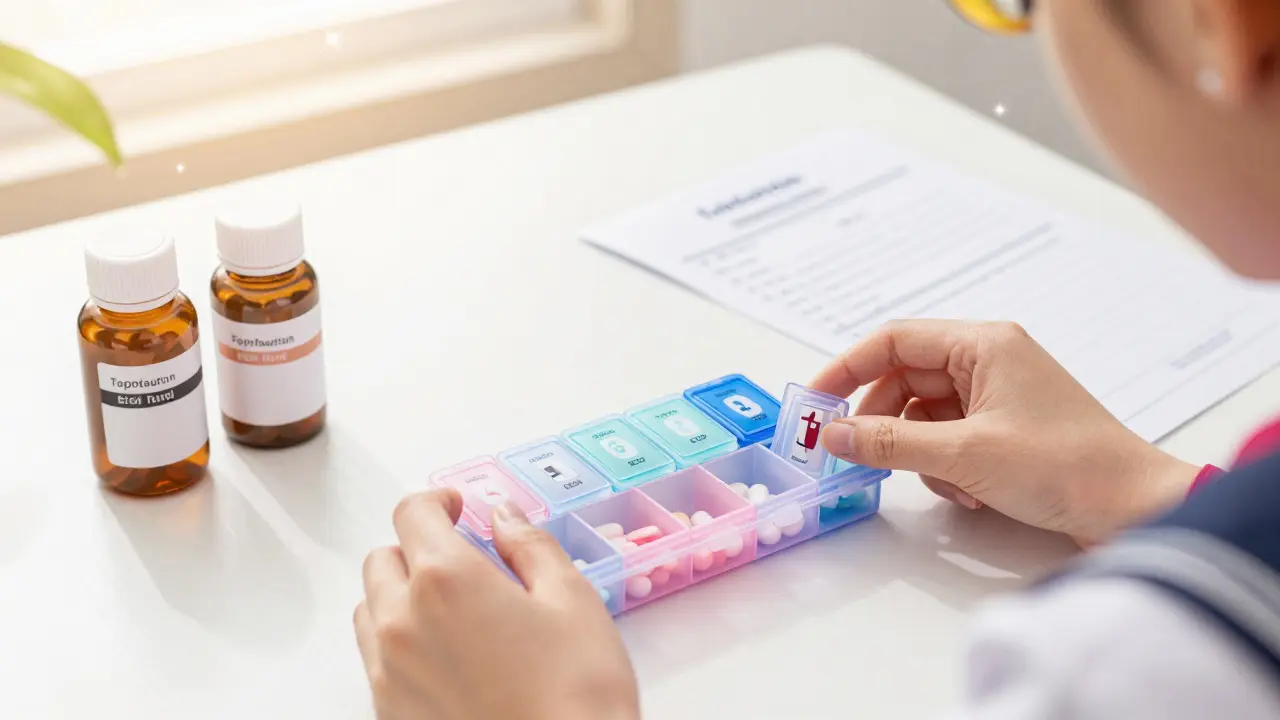
Chaos in your bag leads to errors. When you are tired, jet-lagged, or seasick, you don’t want to be hunting for the right pill. Special Journeys identifies five accepted packing systems:
- Daily Pill Cards/Blister Cards: One pill per bubble, clearly labeled by day and time.
- Unit Dose Boxes: Compartmentalized boxes for morning, noon, and night doses.
- Pill Minders: Must be taped shut with clear time labeling to prevent accidental opening.
- Pill Envelopes: Labeled with your name, date, time, and exact pill count.
- Color-Coded Ziplock Bags: As recommended by Cruise Critic, separating med types by color reduces administration errors by 100% according to user reports.
Regardless of the system, label everything. The Centers for Disease Control and Prevention (CDC) recommends creating a medication list with the drug name, generic name, dosage, and frequency. Keep this list in both physical and digital formats. Twelve percent of travelers experience communication barriers with foreign medical providers; a clear list bridges that gap instantly.

Temperature Control for Sensitive Meds
Not all medications are stable at room temperature. Insulin, certain antibiotics, and biologic drugs require refrigeration. The FDA notes that 41% of biologic medications are sensitive to heat. On a road trip, invest in a high-quality cooler with ice packs. Avoid direct contact between ice and the medication to prevent freezing. For cruises, contact the ship’s medical center upon boarding. Most vessels offer limited refrigeration services for passengers requiring cold-chain storage, though you should confirm availability when booking.
New market innovations include UV-protective medication cases that maintain temperature control for up to 72 hours. Major pharmacies like CVS and Walgreens now offer free travel repackaging services that include these protective features. Ask your pharmacist about them when picking up your final scripts before departure.
Documentation: Your Paper Trail
Your prescription bottle is good, but a doctor’s letter is better. Smartraveller, the Australian government resource, advises carrying a copy of your script or a letter from your doctor. This letter should include your diagnosis, the necessity of the medication, and confirmation that it is prescribed to you. This is crucial for navigating destination country regulations where 18% of common medications may be restricted, according to the World Health Organization’s 2022 report.
Create a digital record as well. The CDC’s April 2024 Travelers' Health Update introduced a standardized Medication Travel Checklist featuring QR codes linking to destination-specific regulations. Save a photo of your prescriptions and doctor’s letter in your cloud storage and email it to yourself. If your phone dies or gets stolen, you still have access to this information via a computer or kiosk.
Emergency Preparedness and Insurance
Packing correctly doesn’t replace the need for comprehensive travel medical insurance. Dr. Jane Chen, a board-certified travel medicine specialist, emphasizes that carrying your own meds does not cover emergencies. Twenty-eight percent of cruise ship medical emergencies require evacuation, costing an average of $48,000. Standard health insurance often does not cover medical evacuations or care abroad. Ensure your policy covers pre-existing conditions and medication replacement costs.
Finally, know what to do if something goes wrong. Identify the nearest hospital or clinic at each stop on your road trip or port of call. Save the contact number for IAMAT or similar medical assistance organizations in your phone. Being prepared means more than just having the pills; it means having a plan to handle the unexpected.
Can I put my medication in checked luggage?
No. You should never pack essential prescription medications in checked luggage. Checked bags can be lost, delayed, or exposed to extreme temperatures that may ruin the medication. The FAA and major cruise lines recommend keeping all meds in your carry-on bag to ensure immediate access and safety.
Do I need to keep medications in their original bottles?
Yes, especially for cruises and international travel. Customs officials require original pharmacy labels to verify that the medication is prescribed to you and matches the name on your passport. Unlabeled containers can lead to confiscation or denial of entry.
How many extra days of medication should I pack?
Pack at least three extra days’ worth of medication for cruises and international flights to account for delays, lost luggage, or itinerary changes. For domestic road trips, one to two extra days is typically sufficient.
Are there restrictions on bringing ADHD medication on a cruise?
Yes. Many cruise lines and port countries classify ADHD medications as controlled substances. You may need to declare them 30 days in advance and carry a doctor’s letter verifying the prescription. Check the specific policies of your cruise line and the laws of each port you will visit.
What documents should I carry with my medications?
Carry a letter from your doctor detailing your diagnosis, the necessity of the medication, and confirmation that it is prescribed to you. Also, keep a list of your medications with generic names, dosages, and frequencies. Store copies digitally and physically.
