

Opioid-Related Depression Risk Assessment
Over the past 2 weeks, how often have you been bothered by the following problems?
1. Little interest or pleasure in doing things
2. Feeling down, depressed, or hopeless
3. Trouble falling or staying asleep
4. Feeling tired or having little energy
5. Poor appetite or overeating
6. Feeling bad about yourself or like a failure
7. Trouble concentrating
8. Moving or speaking slowly
9. Thoughts of death or hurting yourself
When you’re in chronic pain, opioids can feel like a lifeline. But for many people, that relief comes with a hidden cost: a slow, quiet shift in mood. You might not notice it at first - just a lack of interest in things you used to enjoy, feeling drained even on good days, or crying over small things. These aren’t just "bad days." They’re signs that opioids might be changing your brain chemistry in ways that deepen depression.
It’s Not Just Pain - It’s Your Brain
Opioids work by binding to receptors in your brain that control pain, but they also mess with the same systems that regulate mood. The endogenous opioid system - your body’s natural pain and pleasure network - doesn’t just turn off pain signals. It helps you feel reward, motivation, and even calm. When you take opioids regularly, your brain starts to rely on them to keep this system running. Over time, it produces less of its own natural opioids. That’s when things start to slip.Studies show that people using opioids long-term are far more likely to develop depression. One large study tracking over 34,000 adults found that those taking opioids weekly or daily were almost twice as likely to develop depression compared to those using them rarely. Another study of burn patients showed a direct link: the more opioids someone received over time, the higher their depression scores became. It wasn’t just the pain making them feel low - the drugs themselves were contributing.
And here’s the twist: depression can also make pain feel worse. People with depression report higher pain levels, need more medication, and are more likely to keep using opioids long after they should. It’s a cycle - pain leads to opioids, opioids lead to depression, depression makes pain feel worse, and the cycle keeps spinning.
How Common Is This?
You might think depression in opioid users is rare, but it’s not. Between 30% and 54% of people with chronic pain also have major depressive disorder. In studies of people prescribed opioids for non-cancer pain, depression rates range from 13% to 32%. And here’s the scary part: doctors miss about half of these cases. A patient might say they’re "just tired" or "stressed," but the real issue could be clinical depression.It’s not just about how you feel emotionally. Depression changes how you act. You skip appointments. You stop taking meds correctly. You isolate yourself. These behaviors make pain harder to manage and increase the risk of overdose. The National Institute on Drug Abuse says people with major depression are 2.5 times more likely to develop an opioid use disorder than those without depression.
Why Do Some People Get It and Others Don’t?
Not everyone who takes opioids becomes depressed. But certain factors raise the risk:- Dose matters. Taking more than 50 mg of morphine equivalent per day triples your risk of depression compared to not using opioids at all.
- Duration matters. Depression symptoms often show up within the first 3 months of long-term use.
- History matters. If you’ve had depression before, you’re far more likely to relapse while on opioids.
- Age and gender play roles. Older adults and women are more likely to develop opioid-related depression, though it affects all groups.
There’s also a genetic component. A 2020 study using DNA data from over 100,000 people found that people genetically predisposed to using prescription opioids were also more likely to develop depression - even if they never actually took the drugs. That suggests some brains are wired to react poorly to opioid exposure.

What Does Depression Look Like on Opioids?
Depression from opioids doesn’t always look like classic sadness. Often, it shows up as:- Loss of pleasure in hobbies, sex, or socializing (anhedonia)
- Feeling emotionally numb or detached
- Constant fatigue, even after sleeping
- Difficulty concentrating or making decisions
- Increased irritability or anger
- Sleep problems - either too much or too little
Some people describe it as "being in a fog." You can go through the motions, but nothing feels real. You might not even realize you’re depressed because you assume it’s just the pain or the meds making you slow.
Monitoring Mood Isn’t Optional - It’s Essential
The CDC says doctors should check for depression before starting opioids and regularly after. But only about 40% of primary care providers actually do it. That’s dangerous.There are simple, proven tools to catch depression early:
- PHQ-9: A 9-question survey that scores depression severity. It takes less than 5 minutes.
- BDI (Beck Depression Inventory): More detailed, used in research and clinics.
- Simple check-ins: "Have you felt like giving up lately?" or "Do you still enjoy things you used to?"
Experts recommend screening at the start of opioid therapy, then every 3 months - or monthly during the first 6 months if you’re high-risk. If your score goes up, it’s not just a "bad week." It’s a signal to adjust your treatment.
Can Opioids Actually Help Depression?
It sounds contradictory, but yes - in some cases, they can. Buprenorphine, a type of opioid used for addiction treatment, has shown antidepressant effects in studies. In one trial, patients with opioid use disorder and depression saw their depression scores drop from severe to mild after 3 months on buprenorphine. Another small study found that even low doses (1-2 mg/day) improved depression in people who hadn’t responded to standard antidepressants.But here’s the catch: these are controlled, low-dose, medically supervised uses. This isn’t the same as taking oxycodone for back pain. The antidepressant effect seems tied to how buprenorphine interacts with brain receptors differently than other opioids. It’s not a blanket solution, and the FDA hasn’t approved it for depression. Still, it’s a clue that not all opioids are the same - and that targeting the opioid system might one day lead to better depression treatments.
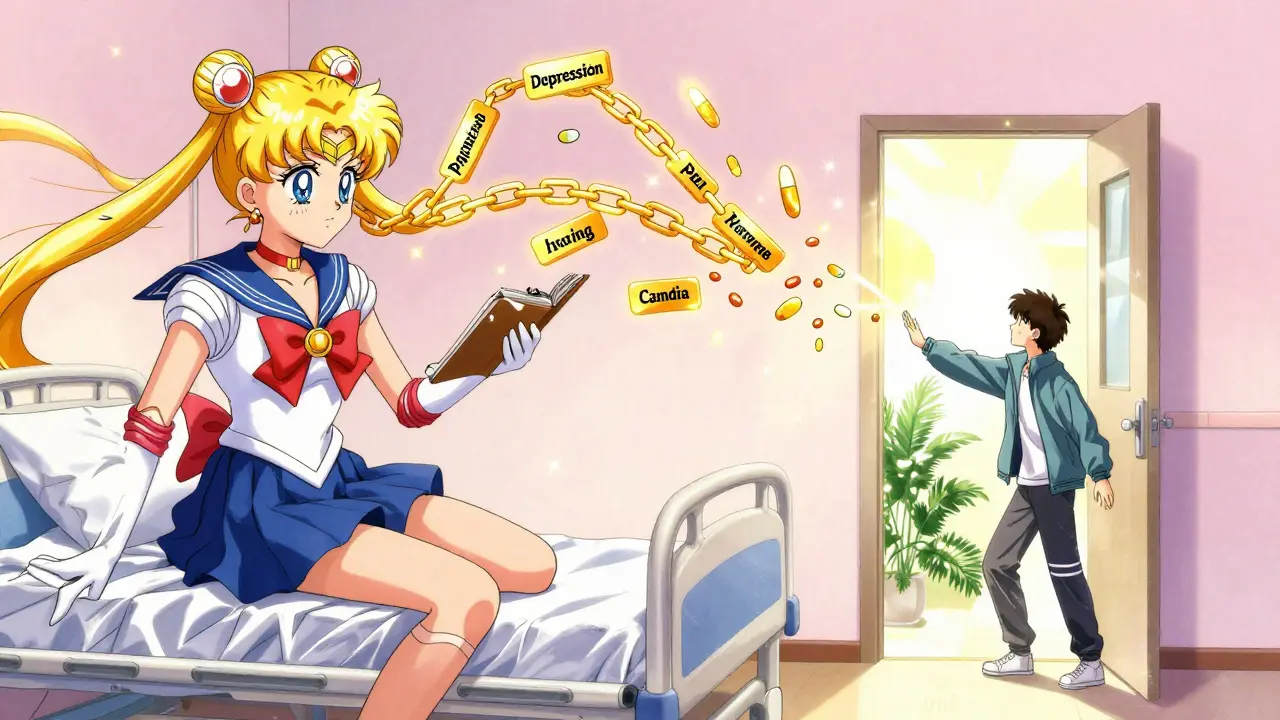
What Should You Do If You’re on Opioids and Feeling Down?
If you’re taking opioids and notice mood changes:- Don’t ignore it. Mood changes aren’t normal side effects - they’re warning signs.
- Track your mood. Keep a simple journal: rate your mood 1-10 each day. Note sleep, energy, and interest in activities.
- Ask for the PHQ-9. Tell your doctor: "I’ve been feeling off. Can we screen for depression?"
- Don’t stop cold. Quitting opioids suddenly can make depression worse. Work with your provider on a safe plan.
- Ask about alternatives. Could physical therapy, cognitive behavioral therapy, or non-opioid pain meds help? Studies show treating depression can reduce opioid needs by up to 32%.
The Bigger Picture: Breaking the Cycle
The best way out of the opioid-depression trap isn’t just cutting the drug - it’s treating both problems at once. Pain clinics that combine pain management with mental health care see better outcomes. Patients get lower opioid doses, fewer hospital visits, and improved quality of life.Researchers are now using brain scans to see exactly how long-term opioid use changes the brain’s reward and emotion centers. One NIH-funded project is tracking 5,000 chronic pain patients over the next two years to map how mood shifts as opioid use changes. The goal? To find early warning signs before depression takes hold.
For now, the message is clear: opioids aren’t just painkillers. They’re mood-altering drugs. And if you’re using them long-term, your mental health needs equal attention to your physical pain.
What’s Next?
If you’re on opioids and feel like you’re losing yourself - the joy, the drive, the connection to others - you’re not alone. And you’re not weak. This is a known medical risk, not a personal failure. Talk to your doctor. Ask for a depression screen. Bring someone with you if it feels overwhelming. There are safer paths forward. And healing doesn’t mean giving up on pain relief - it means finding relief that doesn’t cost your mind.Can opioids cause depression even if I’m taking them as prescribed?
Yes. Even when taken exactly as directed, long-term opioid use can alter brain chemistry and increase depression risk. Studies show that people using opioids for chronic pain have depression rates two to three times higher than the general population. The risk rises with higher doses and longer use - regardless of whether the use is "prescribed" or "misused."
How do I know if my low mood is from opioids or just my pain?
Pain can make you feel down, but opioid-related depression often includes emotional numbness, loss of interest in things you used to enjoy, and fatigue that doesn’t improve with rest. If your mood worsens after starting or increasing opioids - even if your pain improves - that’s a red flag. A simple PHQ-9 screening can help tell the difference.
Is buprenorphine a good treatment for depression in people on opioids?
Buprenorphine has shown antidepressant effects in people with opioid use disorder and depression, especially at moderate doses (8-24 mg/day). Some studies show significant mood improvement within weeks. But it’s not FDA-approved for depression, so it’s only used off-label in this context. It’s not a first-line treatment for depression alone, but for those already on opioids, it can be a dual-purpose tool under medical supervision.
Should I stop taking opioids if I feel depressed?
Never stop opioids suddenly. Doing so can trigger severe withdrawal, worsen depression, and increase overdose risk later. Instead, talk to your provider. Together, you can create a plan to slowly reduce your dose while adding mental health support - like therapy or non-opioid pain treatments - to manage both conditions safely.
Are there non-opioid ways to treat chronic pain that also help depression?
Yes. Cognitive behavioral therapy (CBT) for pain has been shown to reduce both pain intensity and depressive symptoms. Exercise, even light walking, boosts natural endorphins and improves mood. Acupuncture, mindfulness, and certain antidepressants (like SNRIs) can also help with both pain and depression. In one major study, treating depression with CBT cut opioid use by 32% in chronic pain patients.
How often should my doctor check my mood if I’m on long-term opioids?
Experts recommend screening for depression at the start of opioid therapy, then every 3 months. For high-risk patients - those with past depression, high doses, or other mental health conditions - monthly checks during the first 6 months are advised. Many providers don’t do this routinely, so ask for it. Your mood matters as much as your pain level.

Cara C
December 20, 2025 AT 17:15I’ve been on opioids for back pain for over two years, and I didn’t realize how numb I’d gotten until my sister called me out for not laughing at my own jokes anymore. It wasn’t just tiredness-it was like my emotions got turned down to 10%. I started tracking my mood like the article said, and my PHQ-9 score jumped from 4 to 16 in three months. I talked to my doc, we cut my dose, and I started CBT. It’s not magic, but I’m sleeping better and actually wanted to go to a concert last weekend. You’re not broken if this happens. Your brain just got hijacked-and it can be rewired.
Michael Ochieng
December 22, 2025 AT 13:56Yo, this hits different. I’m Nigerian-American and my dad’s on oxycodone after a work injury. He’s always been this loud, joke-telling guy-now he just stares at the TV. I asked him if he’s depressed and he said, ‘Nah, just old.’ But I saw him cry once when he thought I wasn’t looking. This article? It’s the first thing that made sense. I’m printing it out and handing it to him with a cup of tea. He won’t admit he needs help, but maybe he’ll let someone else say it for him.
Jerry Peterson
December 23, 2025 AT 07:12As someone who’s been through chronic pain and opioid tapering, I’ll say this: the emotional crash is worse than the physical withdrawal. You think you’re just ‘sad,’ but it’s your brain screaming for the chemical it used to get on demand. I didn’t realize I’d lost my sense of humor until I watched a stand-up special and couldn’t even smirk. Therapy helped, but so did just… walking. Outside. Without my phone. Weird how simple stuff like sunlight and silence can start to heal what pills broke.
Meina Taiwo
December 24, 2025 AT 06:19Depression from opioids is real. Screen early. Don’t wait.
Adrian Thompson
December 25, 2025 AT 08:04LMAO so now the government wants us to believe Big Pharma’s opioid crisis is just ‘brain chemistry’? Nah. They’re just trying to make you feel guilty for taking painkillers so they can push you onto SSRIs and surveillance meds. You think your doc actually cares? They get paid per script. This whole thing’s a profit scheme wrapped in psychology jargon. You want real relief? Get off the grid. Stop trusting the system. And for god’s sake, stop letting them label your pain as ‘mental.’
Southern NH Pagan Pride
December 26, 2025 AT 08:14Okay but have you heard about the 2017 DARPA project that embedded mood-tracking microchips in opioid prescriptions? They call it ‘NeuroSentry’-it’s not in the manual, but I found the patent. They’re using your opioid use data to predict depression risk… and then selling it to insurance companies. That’s why they push PHQ-9 so hard-it’s not to help you, it’s to flag you as ‘high risk’ so they can deny coverage later. I’m not paranoid, I just read the fine print. Your mood isn’t broken-it’s being monitored.
Orlando Marquez Jr
December 27, 2025 AT 21:32It is of considerable clinical significance that the neurobiological interplay between the endogenous opioid system and the monoaminergic pathways underpinning mood regulation has been robustly documented in longitudinal cohort studies. The phenomenon of opioid-induced anhedonia, particularly in the context of chronic non-cancer pain management, represents a well-characterized iatrogenic risk factor requiring systematic screening protocols. The data supporting the temporal correlation between escalating opioid dosage and depressive symptomatology is both statistically and clinically compelling. As such, the integration of standardized mood assessments-such as the PHQ-9-into routine opioid prescribing workflows constitutes an evidence-based imperative, not merely a recommendation.
Jackie Be
December 28, 2025 AT 11:21I was on 80mg of oxycodone for 3 years and I thought I was just tired… then one day I looked in the mirror and didn’t recognize myself. I didn’t care about my kid’s art show. I didn’t care about my dog. I didn’t care about ANYTHING. I thought I was broken. I wasn’t. I was medicated. I tapered with my doctor and started yoga and now I cry at sunsets again. Not because I’m sad. Because I’m alive. You’re not weak for needing help. You’re brave for asking for it. Please. Just ask. I did. And I got my joy back.