
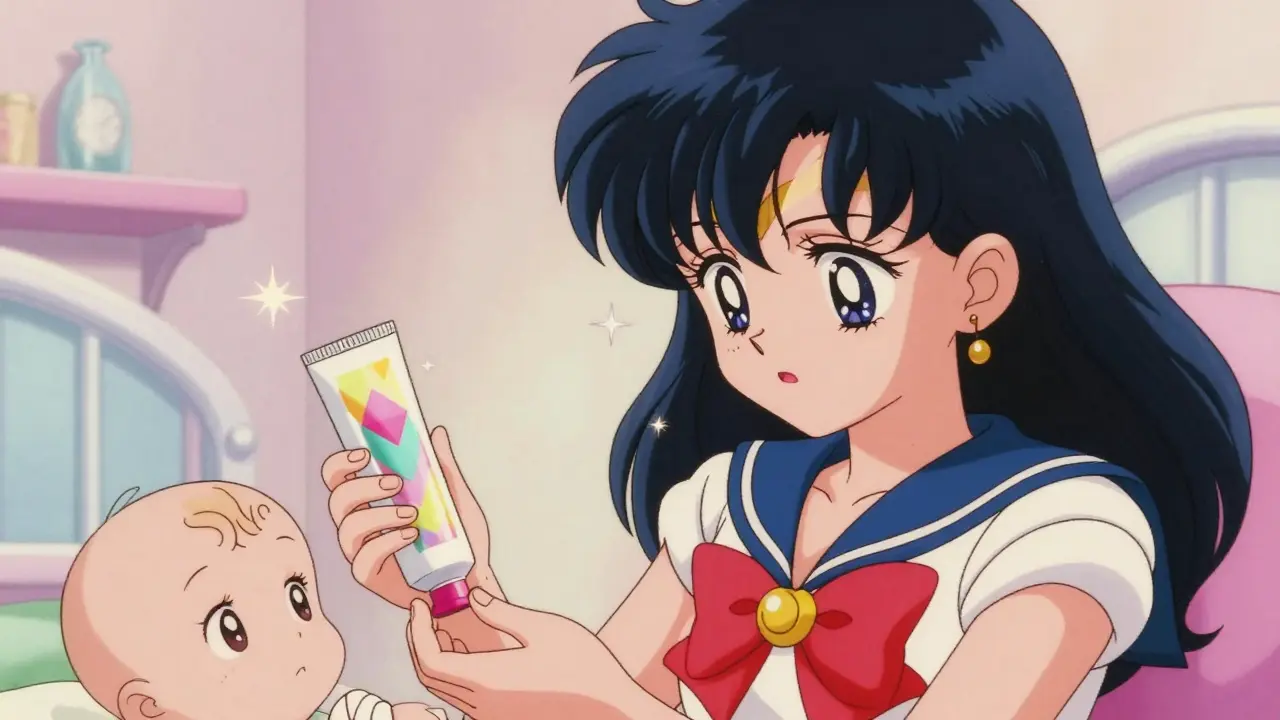
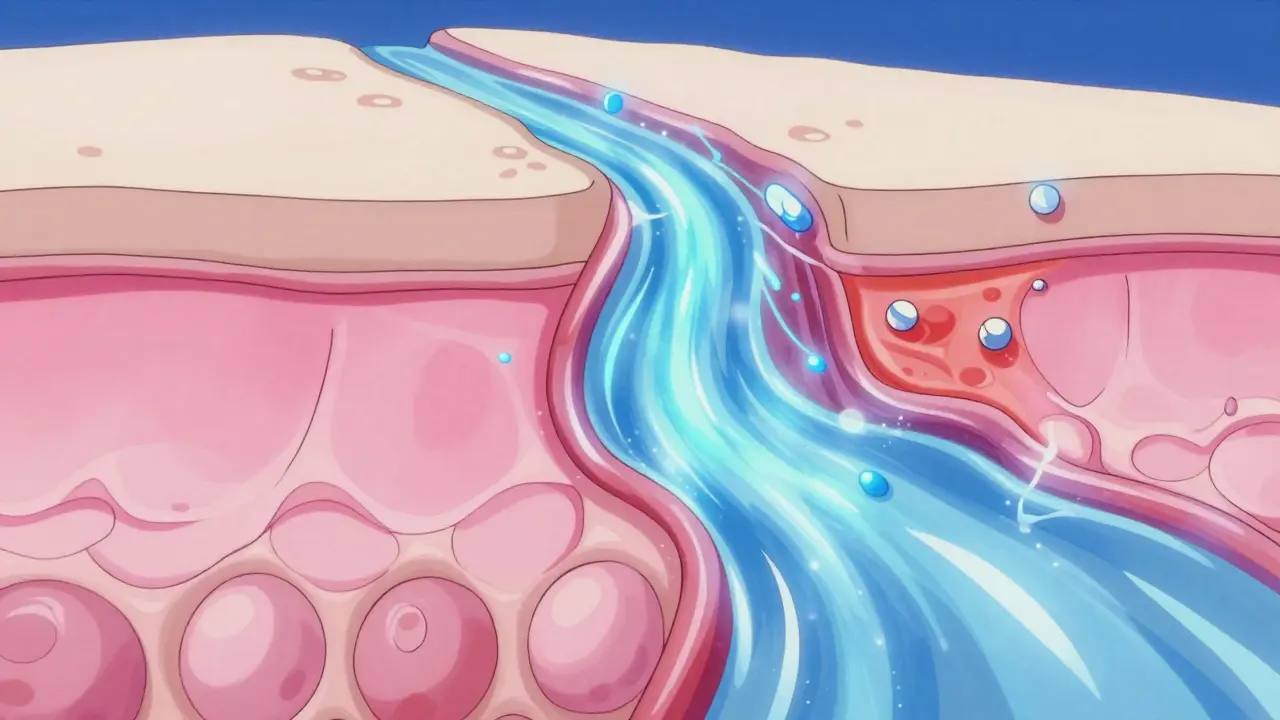
Imagine you just squeezed a tube of soothing cream onto your toddler’s rash. It smells like mint or lavender, something pleasant. Your little one reaches for the tube, fascinated by the colorful label. In that split second, the line between helpful medicine and dangerous poison vanishes. This is the reality many parents face with topical medications are pharmaceutical products applied to the skin for local or systemic effects, but they carry unique risks for kids. Children’s skin is not just small adult skin; it is fundamentally different. It absorbs chemicals up to five times faster than an adult’s skin because the outer layer, known as the stratum corneum, is thinner and more permeable. For infants under one year old, this barrier is still immature, making them incredibly vulnerable to systemic absorption-the process where medication enters the bloodstream through the skin rather than staying on the surface.
The stakes are high. The American Academy of Pediatrics (AAP) reports that errors involving these creams and ointments lead to roughly 6,500 emergency department visits annually for children under five in the United States. Most of these incidents are preventable. They happen when we assume a product labeled "natural" or "for sensitive skin" is harmless, or when we leave a container within reach after use. Understanding how these medicines work, what to avoid, and how to apply them correctly can turn a potential crisis into a safe, effective treatment.
Why Kids Are More Vulnerable to Skin Absorption
To understand the risk, you have to look at the biology. A child has a higher surface-area-to-body-weight ratio compared to an adult. Think about it: if you cover a large dog and a small puppy with the same amount of oil, the puppy is far more affected relative to its size. The same logic applies to medication. When you apply a potent steroid or anesthetic to a child, their smaller body mass means even a tiny amount absorbed can reach toxic levels in the blood.
Inflammation makes this worse. If your child has eczema, psoriasis, or a burn, the skin barrier is broken. Studies show that lidocaine absorption jumps from 3% on intact skin to 60% on damaged skin. That is a massive difference. Applying a strong numbing agent to raw, inflamed skin isn’t just painful; it can send a shockwave of medication straight into the circulatory system. This is why dermatologists warn against using strong treatments on broken skin without strict medical supervision.
| Skin Condition | Absorption Rate (Lidocaine) | Risk Level |
|---|---|---|
| Intact Skin | ~3% | Low |
| Inflamed/Eczematous Skin | 10-20% | Moderate |
| Damaged/Broken Skin | Up to 60% | High |
| Occluded Skin (covered with wrap) | 300-500% increase | Very High |
The Danger of Occlusion: Why Covering Matters
One of the most common mistakes parents make is covering a medicated area with plastic wrap, Tegaderm, or tight clothing to "help it soak in." In medical terms, this is called occlusion. While doctors sometimes prescribe this for specific conditions under close watch, doing it at home is risky. Occlusion increases absorption by 300% to 500%. For a child with atopic dermatitis, whose skin already absorbs 10 to 15 times more medication than normal, wrapping a steroid cream in plastic is like turning a whisper into a scream.
This practice can lead to hypothalamic-pituitary-adrenal (HPA) axis suppression. Simply put, your body stops producing its own natural cortisol because it thinks there is plenty coming from the cream. This can cause growth delays, weight gain, and other serious hormonal issues. Dr. Charles Andres from the Mayo Clinic warns that applying a thick layer of hydrocortisone to 20% of an infant’s body can suppress the HPA axis as effectively as taking oral prednisone. That is a powerful drug usually reserved for severe internal inflammation. You do not want to achieve that effect accidentally through a tube of cream.
Benzocaine and the Teething Trap
If you have a baby teething, you might be tempted to grab a gel containing benzocaine. Stop. The U.S. Food and Drug Administration (FDA) specifically prohibits benzocaine-containing teething products for children under two years old. Why? Because benzocaine can cause a rare but life-threatening condition called methemoglobinemia. This condition reduces the oxygen-carrying capacity of red blood cells. Symptoms include pale or blue-colored skin, drowsiness, and rapid breathing. Oxygen saturation can drop to 70-80% within 30 minutes of application. Since 2006, there have been over 400 documented cases of this in children linked to benzocaine gels.
Infants are particularly susceptible because their enzyme systems are not fully developed to process certain anesthetics. The risk is 400 times higher in infants compared to older children. Instead of chemical gels, stick to non-pharmacological alternatives. Chilled (not frozen) rubber teethers provide counter-pressure and numbness without entering the bloodstream. It is a simple swap that eliminates a deadly risk.
Corticosteroids: Potency and Duration
Topical corticosteroids are the most prescribed skin medications for children, used for everything from mild rashes to severe eczema. However, they come in different strengths, classified from Class I (most potent) to Class VII (least potent). Using a Class I steroid for a mild diaper rash is like using a sledgehammer to crack a nut. The collateral damage is too great.
Dr. Nanette Silverberg from Columbia University emphasizes the principle of "lowest effective potency for shortest duration." For facial lesions or sensitive areas like the groin, low-potency steroids (Class VI-VII) or non-steroidal options like calcineurin inhibitors (tacrolimus or pimecrolimus) are preferred. These alternatives have significantly lower systemic absorption-up to 72% less than potent steroids-and do not thin the skin. While they carry black box warnings about theoretical cancer risks, 15 years of post-marketing surveillance has shown zero confirmed cases of malignancy directly attributable to these drugs. The benefit-risk profile favors them for long-term management in young children.
Potent steroids should never be used in children under two years old unless explicitly directed by a specialist. Even then, the duration must be limited. Long-term use of high-potency steroids can lead to permanent skin changes, including striae (stretch marks) and telangiectasia (visible blood vessels).
Lidocaine: Numbing with Caution
Lidocaine is widely used for procedural pain, such as before vaccinations or IV insertions. It is generally safe for full-term newborns and older, but only if dosed correctly. The standard rule is no more than 3 applications within 24 hours, with a maximum total dose of 1.2 grams. For children under three years, the limit is strictly 24mg per kilogram of body weight. Exceeding this can lead to seizures, as plasma levels above 5μg/mL become toxic to the nervous system.
Always check the concentration. Over-the-counter lidocaine creams often contain 4%, which is appropriate for minor burns or insect bites when used sparingly. However, prescription-strength patches or gels may be much stronger. Never use leftover prescription lidocaine on a child without consulting their doctor. The World Health Organization recommends against routine use in children under 12 months due to case reports of toxicity, so always verify age restrictions on the label.

Proper Application Techniques: The Fingertip Unit
How much cream is enough? Most parents guess, squeezing out a "pea-sized" amount. This is imprecise and often leads to under-dosing or overdosing. The medical standard is the Fingertip Unit (FTU). An FTU is the amount of cream squeezed from a standard 5mm diameter tube from the tip of the index finger to the first crease. This equals approximately 0.5 grams of medication.
One FTU covers an area equivalent to two adult palm sizes. For a child, adjust accordingly. A general guideline is that a 10kg child should not receive more than 2 grams of topical corticosteroid per day, treating no more than 10% of their body surface area at one time. Apply a thin layer-just enough to coat the skin. Rubbing it in until it disappears completely can actually increase absorption unnecessarily. Leave a slight sheen. This ensures coverage without excessive depth.
Storage and Child-Resistant Packaging
Prevention starts with storage. The Consumer Product Safety Commission (CPSC) mandates child-resistant packaging for topical anesthetics containing more than 0.5 mg of lidocaine or dibucaine. This regulation was born from tragedy, following 10 reported deaths of young children who ingested these products. Despite this, 78% of pediatric topical medication exposures occur when products are left accessible after parental use. The majority of ingestions happen within the home, often during the application process itself.
Make it a habit: cap it immediately. Do not set the tube down on the counter while you wash your hands. Keep all medications in a locked cabinet or high shelf, out of sight and reach. Regularly check expiration dates, as degraded ingredients can irritate sensitive skin. If a child does ingest any topical medication, call Poison Control (1-800-222-1222 in the US) or seek emergency care immediately. Symptoms of toxicity include drowsiness, confusion, or difficulty breathing.
When to See a Doctor
Not every rash needs medication. Many childhood skin issues resolve with moisturizers and time. Consult a pediatrician or dermatologist if:
- The rash spreads rapidly or becomes painful.
- You see signs of infection, such as pus, yellow crusting, or warmth.
- Over-the-counter hydrocortisone (1%) shows no improvement after 7 days.
- Your child develops fever alongside the skin issue.
A professional can diagnose the underlying cause and prescribe the correct strength and type of medication. Self-treating chronic conditions like eczema with strong steroids found online or shared by friends can lead to irreversible skin damage. Prescription sharing is a significant risk factor, documented in 19% of households. What worked for your cousin’s teenager may be dangerous for your toddler.
Is hydrocortisone safe for babies?
Low-potency hydrocortisone (1%) is generally safe for short-term use in infants, but it should be used sparingly and only on small areas. Avoid using it on the face, groin, or broken skin without medical advice. Never use it for more than 7 days continuously.
What should I do if my child eats a topical cream?
Call Poison Control immediately. Do not induce vomiting unless instructed. Note the name of the product and the approximate amount ingested. Watch for symptoms like drowsiness, blue lips, or slow breathing, which require emergency hospital care.
Can I use adult eczema cream on my child?
No. Adult formulations often contain higher potencies of steroids or active ingredients not approved for pediatric use. Always use products specifically labeled for children or those prescribed by a pediatric dermatologist.
How do I know if a steroid is too strong?
If the skin thins, becomes translucent, or develops stretch marks, the steroid is likely too strong or used for too long. Also, if the rash worsens or spreads despite treatment, stop use and consult a doctor. Stronger is not always better.
Are natural remedies safer than medicinal creams?
Not necessarily. "Natural" does not mean safe. Essential oils and herbal extracts can cause allergic reactions or contact dermatitis, especially on sensitive child skin. Always patch-test new products and consult a healthcare provider before using unverified remedies.
