
Medication Heartburn Risk Checker
Is your heartburn caused by medications?
This tool helps you determine if your medications might be causing your heartburn. Based on data from the NIH, Cleveland Clinic, and American Gastroenterological Association.
Many people assume that heartburn and upset stomach are just from spicy food or stress. But if you’re taking prescription or over-the-counter meds, your pills might be the real culprit. About 1 in 5 cases of chronic heartburn aren’t tied to diet at all-they’re caused by the very drugs meant to help you. This isn’t rare. It happens daily in homes across America, and most people don’t realize why.
Which Medications Cause Heartburn and Upset Stomach?
Not all drugs affect the stomach the same way. Some irritate the lining. Others relax the muscle that keeps acid from rising. Here are the most common offenders:
- NSAIDs like ibuprofen and aspirin: These are the #1 cause. They block protective chemicals in your stomach lining, leaving it vulnerable. Up to 30% of regular users get heartburn from them.
- Tetracycline antibiotics (especially doxycycline): These pills can get stuck in your esophagus and burn the tissue. If you take them lying down or with too little water, you’re at high risk.
- Calcium channel blockers like nifedipine and amlodipine: Used for high blood pressure, they relax the lower esophageal sphincter (LES), letting acid splash up.
- Theophylline: An asthma drug that weakens the LES by 30-50%, making reflux almost inevitable for some users.
- Metformin: The most common diabetes pill. Around 25% of new users get nausea, bloating, or heartburn-usually within the first few weeks.
- Bisphosphonates like alendronate: Used for osteoporosis. These pills can cause serious esophageal ulcers if not taken correctly.
- Potassium chloride and quinidine: Less common, but still known to irritate the GI tract in 15-20% of users.
What’s surprising? You don’t need to be on these drugs long to feel the effects. Some people get heartburn after just one dose.
Why Do Pills Hurt Your Stomach?
It’s not magic. It’s chemistry and physics.
Some drugs, like NSAIDs, directly damage the stomach lining by reducing prostaglandins-natural compounds that protect your gut from acid. Without them, your stomach gets raw and inflamed.
Others, like calcium channel blockers, don’t touch your stomach at all. Instead, they relax the LES-the valve between your esophagus and stomach. When it’s loose, acid flows backward. That’s heartburn.
Then there’s the mechanical problem: pills. If you swallow a tablet with just a sip of water, it can stick in your esophagus. Antibiotics like doxycycline are especially rough. They’re acidic and stick like glue. If the pill sits there for even 10 minutes, it can burn through tissue. This is called pill-induced esophagitis, and it’s more common than most doctors admit.
Metformin? It irritates the gut lining and slows digestion, causing gas, bloating, and reflux. But here’s the good news: for most people, it fades after 2-4 weeks.
How to Prevent It Without Stopping Your Meds
Stopping your medication because of heartburn is risky. Many of these drugs are essential. Instead, use proven, simple fixes.
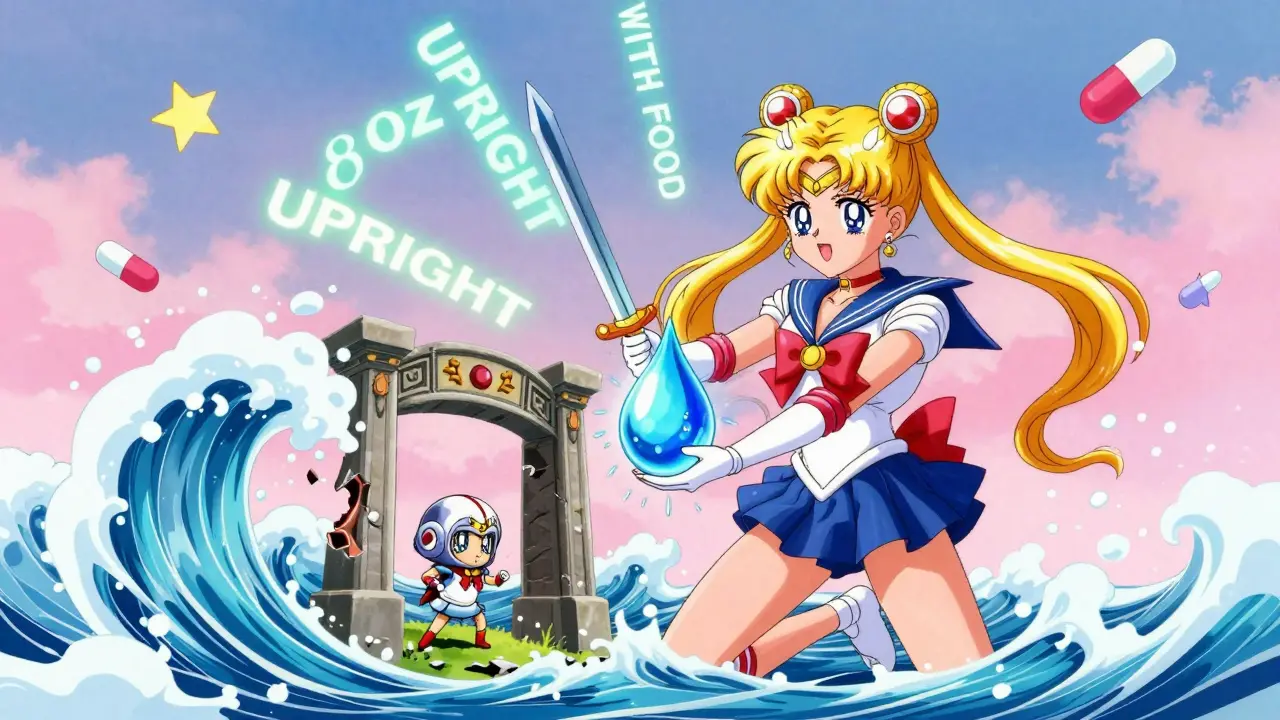
- Take meds with a full glass of water (8 oz): This is the single most effective step for antibiotics and bisphosphonates. Water helps the pill slide down fast. Studies show this cuts esophagitis risk by 60-70%.
- Stay upright for 30-60 minutes after taking pills: No lying down. No napping. No slouching on the couch. Gravity keeps the pill moving and acid down. This prevents 80-90% of pill-related esophageal injuries.
- Take NSAIDs with food: Eating before or with ibuprofen or aspirin reduces stomach irritation by 40-50%. But don’t do this with antibiotics or bisphosphonates-food interferes with absorption.
- Use antacids or PPIs strategically: If you’re on NSAIDs long-term, talk to your doctor about taking omeprazole or another proton pump inhibitor. Studies show this cuts ulcer risk by 70-80%. For occasional heartburn, an antacid taken 30 minutes before your pill can help.
- Check your pill position: Don’t take pills right before bed. If you’re on doxycycline or alendronate, take them first thing in the morning with water, then wait an hour before eating or lying down.
These aren’t guesses. They’re clinical standards backed by the NIH, Cleveland Clinic, and the American Gastroenterological Association.
When to Worry: Red Flags
Not all heartburn is the same. Some symptoms mean you need help now.
- Chest pain that feels like pressure or tightness (could be mistaken for heart issues)
- Difficulty swallowing or feeling like food gets stuck
- Bloody vomit or black, tarry stools (signs of internal bleeding)
- Unexplained weight loss while on these meds
If you have any of these, call your doctor. Left untreated, chronic drug-induced irritation can lead to esophageal strictures (narrowing) or even Barrett’s esophagus-a condition that increases cancer risk.
What’s New in Treatment
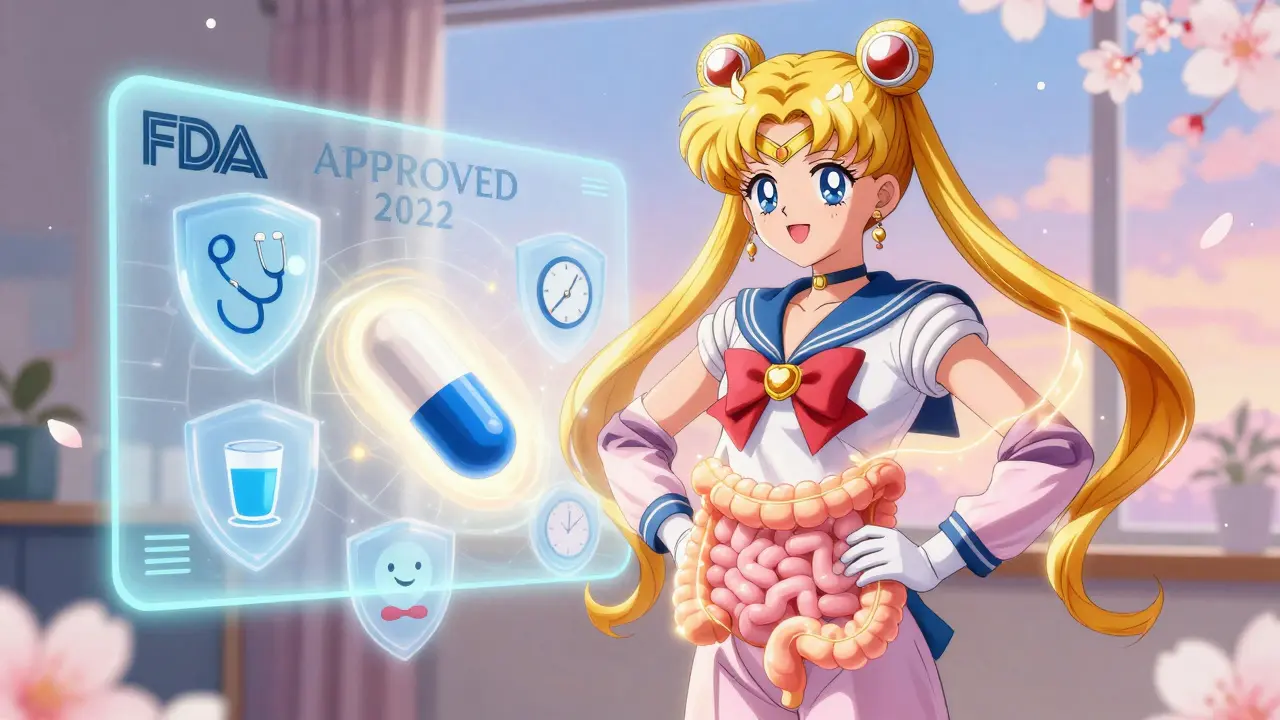
Pharma companies are listening. In 2022, the FDA approved a new delayed-release version of doxycycline that dissolves in the intestine instead of the esophagus. It cuts esophagitis risk by nearly half.
New NSAID formulations with protective coatings are now in use. In trials, they caused 30-35% fewer stomach issues than regular versions.
Hospitals and clinics are starting to use electronic alerts. If your chart shows you’re on both a calcium blocker and an NSAID, your doctor’s system now flags you as high-risk for reflux. This helps prevent problems before they start.
Future options? Genetic tests to find people who metabolize NSAIDs poorly (about 1 in 5 Caucasians). And experimental patches or under-the-tongue versions of pills that skip the stomach entirely.
Don’t Quit Your Meds-Fix the Problem
It’s easy to blame your diet. Or stress. Or bad luck. But if you’ve been taking pills and suddenly feel burning in your chest or stomach, the answer might be simpler than you think.
You don’t need to stop your medication. You don’t need to live with discomfort. You just need to change how you take it.
A full glass of water. Staying upright. Taking NSAIDs with food. These aren’t fancy tricks. They’re basic, proven actions that work for millions.
And if your doctor dismisses your symptoms as "just heartburn," ask: "Could this be from my medication?" Most won’t think of it unless you do.
Medications save lives. But they can also hurt you-if you don’t know how to use them safely. Knowledge isn’t just power. It’s protection.
Can I take ibuprofen with food to prevent heartburn?
Yes. Taking ibuprofen or other NSAIDs with food reduces stomach irritation by 40-50%. Food acts as a buffer, lowering acid exposure. But avoid taking NSAIDs with antacids unless directed by your doctor-they can interfere with absorption. Always follow your pharmacist’s advice.
Why does doxycycline cause esophagitis?
Doxycycline is acidic and sticky. If swallowed with too little water or taken right before lying down, it can cling to the esophagus. The drug then slowly leaks acid into the tissue, causing burns or ulcers. Taking it with 8 oz of water and staying upright for 60 minutes prevents this in nearly all cases.
Is metformin-induced heartburn permanent?
No. About 60-70% of people who get nausea, bloating, or heartburn from metformin find symptoms fade within 2-4 weeks of continued use. Starting with a low dose and increasing slowly helps. Taking it with meals also reduces side effects. If symptoms persist beyond a month, talk to your doctor about switching formulations.
Can I use OTC heartburn medicine while on antibiotics?
Generally, yes-but timing matters. Antacids like Tums or Maalox are safe to use with most antibiotics, but avoid taking them within 2 hours of doxycycline or ciprofloxacin-they can block absorption. PPIs like omeprazole are fine for long-term use if you’re on NSAIDs, but not usually needed for short antibiotic courses. Always check with your pharmacist.
Should I stop my blood pressure pill if it gives me heartburn?
No. Calcium channel blockers like amlodipine are vital for controlling blood pressure. Stopping them suddenly can cause dangerous spikes. Instead, ask your doctor about switching to a beta blocker, which causes heartburn in only 5-10% of users. Or try lifestyle fixes: elevate your head while sleeping, avoid large meals, and don’t lie down for 3 hours after eating.
Are there alternatives to bisphosphonates for osteoporosis?
Yes. Alternatives include denosumab (Prolia), teriparatide (Forteo), or raloxifene. These don’t cause esophageal irritation. However, they’re more expensive and require injections or have different side effects. Talk to your doctor about your risk factors-some patients benefit more from lifestyle changes like weight-bearing exercise and vitamin D supplementation.

phyllis bourassa
March 7, 2026 AT 03:51Oh my god, I knew my ibuprofen was the culprit but no one ever told me it was THIS bad. I’ve been taking it with a sip of water before bed for YEARS. No wonder I felt like my chest was on fire every morning. I switched to taking it with a full glass of food and now I’m basically a new person. Also, I started sleeping on a wedge pillow. Don’t judge me. I look like a burrito but my esophagus is finally chill.
Adebayo Muhammad
March 7, 2026 AT 20:44Let us not forget the metaphysical dimension: the pill is not merely a chemical entity-it is a symbol of modernity’s alienation from the body. We ingest substances designed to fix one system, and in doing so, we fracture another. The stomach, that ancient temple of digestion, is now a battleground for pharmaceutical hegemony. The solution? Not more drugs. Not more water. But a return to ancestral wisdom: chew your pills. Yes. Chew them. Let the saliva, the sacred elixir of Gaia, do its work before descent.
Bridget Verwey
March 8, 2026 AT 08:35Y’all are still taking doxycycline with a sip of water?? 😭 I had to go to the ER because I thought ‘I’m tired, I’ll just lie down’ after my pill. Turns out, my esophagus had a little meltdown. Now I take it like I’m in a damn TED Talk: upright, 8oz water, 60 min wait, no snacks, no couch. And I still have to remind my 72-year-old mom. She says ‘I’ve taken it for 20 years!’ Yeah. And now you’ve got a scar on your throat. Worth it? No. Just no.
Andrew Poulin
March 8, 2026 AT 23:30Weston Potgieter
March 8, 2026 AT 23:45So you’re telling me the reason I feel like I swallowed a lit match is because I didn’t chug a whole gallon of water before my 2am doxycycline? Yeah. I also ate a burrito and then rolled over. Classic. I’m not even mad. I’m impressed. My body’s like a toddler with a chemistry set. Also-why is metformin so mean? I thought it was supposed to help me live longer. Instead I’m just a walking gas station.
Vikas Verma
March 10, 2026 AT 03:38It is imperative to recognize the pharmacokinetic dynamics at play here. The bioavailability of oral agents is directly correlated with gastric transit time and esophageal clearance efficiency. Adherence to hydration protocols and post-ingestion posture significantly reduces the incidence of mucosal injury. Furthermore, co-administration of protective agents such as PPIs in high-risk cohorts demonstrates statistically significant reduction in adverse GI events. Recommend structured patient education protocols be implemented at point-of-prescription.
Sean Callahan
March 10, 2026 AT 20:06i took my amlodipine with a glass of wine and then napped and now i think my heart is trying to escape my chest. also my stomach is a volcano. i dont know if its the pill or the pinot but either way im done. also i just typed this on my phone and i think i spelled heartburn wrong. again.
Ferdinand Aton
March 11, 2026 AT 05:38Wait… so you’re saying I don’t need to stop my meds? That’s not what the internet told me. I read a guy on a forum who said he went keto and his heartburn vanished. Also, he said his thyroid healed. I’m not saying you’re wrong. I’m just saying… what if the real answer is… no pills at all?
William Minks
March 12, 2026 AT 22:36THIS. THIS RIGHT HERE. 🙌 I’ve been on metformin for 3 years. First month? Pure hell. But I followed the water + food + upright rule. Now? Barely a burp. I even started taking mine right after dinner. Game. Changer. 🙏 Also, if you’re on calcium blockers-try sleeping with your head up. My pillow is now a mountain. Worth it. Thanks for this post. You saved my esophagus. 💪