
You pick up your prescription. The pharmacist hands you a bottle with a white sticker full of tiny text. You nod, walk out, and head home. But later that evening, you stare at the label again. What does "qHS" mean? Do you take this with food or instead of food? Are you supposed to take it every four hours, or just twice a day?
If you have ever felt confused by a prescription label, you are not alone. In fact, nearly half of all patients misunderstand at least one instruction on their medication labels. This isn't just an inconvenience; it is a serious safety issue. Confusion over these labels leads to hundreds of thousands of hospital admissions every year in the United States alone.
The good news? Most of these mistakes happen because the labels are written in medical jargon or use confusing symbols. By learning how to spot these red flags and asking the right questions, you can protect yourself and your family from dangerous medication errors.
Why Prescription Labels Are So Hard to Understand
For decades, pharmacies used a shorthand language called Latin abbreviations. Doctors would write "BID" (bis in die) for twice a day, or "QD" (quaque die) for once a day. These codes made sense to pharmacists, but they were often gibberish to patients. Even worse, similar-looking abbreviations could lead to deadly mistakes. For example, "QD" (once daily) looks very similar to "QOD" (every other day). A simple misread could mean taking a powerful drug twice as often as prescribed.
Research shows that standard pharmacy labels often require a high school reading level or higher to understand fully. That means if you stopped your education before college, there is a high chance you might miss critical details. Studies have found that 46% of adults misunderstood at least one part of their prescription label. Among people with lower literacy levels, that number jumps to 71%.
It is not just about reading skills, though. Visual design plays a huge role too. Many labels use small fonts, low-contrast colors, or cluttered layouts. If you are older than 65, your eyesight might make those tiny letters impossible to read without glasses. And if English is not your first language, translated labels can sometimes be inconsistent or use terms that don't match what you hear in everyday conversation.
The Most Common Mistakes Patients Make
Let's look at the specific phrases that cause the most trouble. Knowing these will help you double-check your own instructions.
- "Twice Daily" vs. "Every Two Hours": Some patients see "twice daily" and think it means every two hours. It doesn't. It usually means once in the morning and once in the evening, roughly 12 hours apart.
- "Take With Food" vs. "Take Instead of Food": This is a classic mix-up. "With food" means eat something first, then take the pill. It does not mean skip your meal and take the pill as a replacement.
- "Once Daily" vs. "Once": If a label says "Take 1 tablet once," some people take it one time and stop. "Once daily" means you keep taking it every single day until the bottle is empty or your doctor says otherwise.
- Latin Abbreviations: Seeing "PO" (by mouth), "PRN" (as needed), or "AC" (before meals) can be baffling. While many pharmacies are moving away from these, they still appear on some labels.
A real-world example highlights the danger. One patient saw "q6h" on their antibiotic label. They calculated that 24 divided by 6 equals 4, so they took the medicine four times a day. However, the instruction was meant for a specific timeframe during waking hours, not around the clock. The result? Severe stomach bleeding and an emergency room visit.
How to Decode Your Prescription Label Safely
You don't need a pharmacy degree to understand your meds. Here is a step-by-step guide to checking your label before you leave the counter.
- Check the Drug Name: Make sure the name on the bottle matches what your doctor told you. Sometimes generic names sound different from brand names.
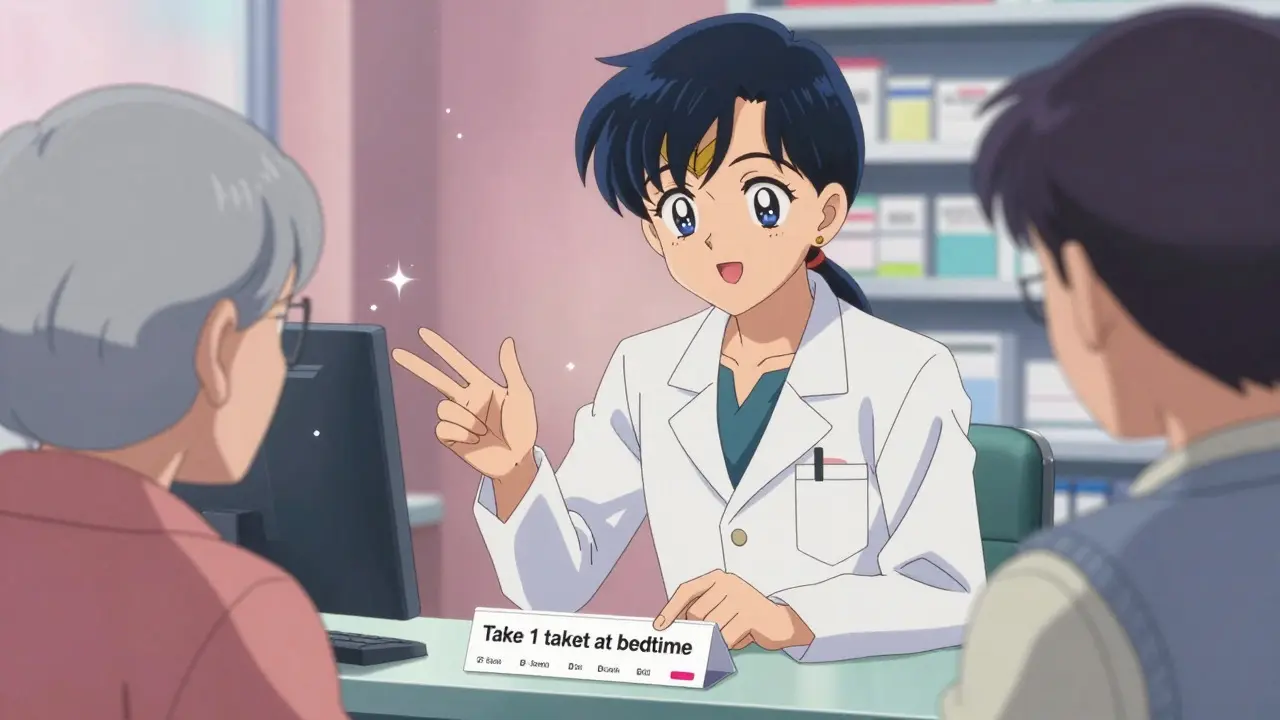
- Look for Plain Language: Modern standards encourage phrases like "Take 1 tablet by mouth at bedtime" instead of "ii tab PO qHS." If you see Latin codes, ask for clarification immediately.
- Verify the Frequency: Does it say "daily," "weekly," or "as needed"? Mark these times on your phone calendar or a physical planner.
- Read the Warnings: Auxiliary warnings like "May cause drowsiness" or "Avoid alcohol" are crucial. Ignore them at your own risk.
- Use the Teach-Back Method: Before leaving, repeat the instructions back to the pharmacist. Say, "So I should take one pill in the morning with breakfast, correct?" If they correct you, great! You just avoided a mistake.
| Instruction Type | Standard (Confusing) | Optimized (Clear) |
|---|---|---|
| Dosage | "ii tab PO qHS" | "Take 2 tablets by mouth at bedtime" |
| Frequency | "BID" | "Take 2 times each day - morning and evening" |
| Condition | "AC" | "Take before eating" |
| As Needed | "PRN pain" | "Take only when you have pain" |
Tools and Tricks for Better Compliance
If you struggle with reading small print or remembering complex schedules, technology and simple tools can help.
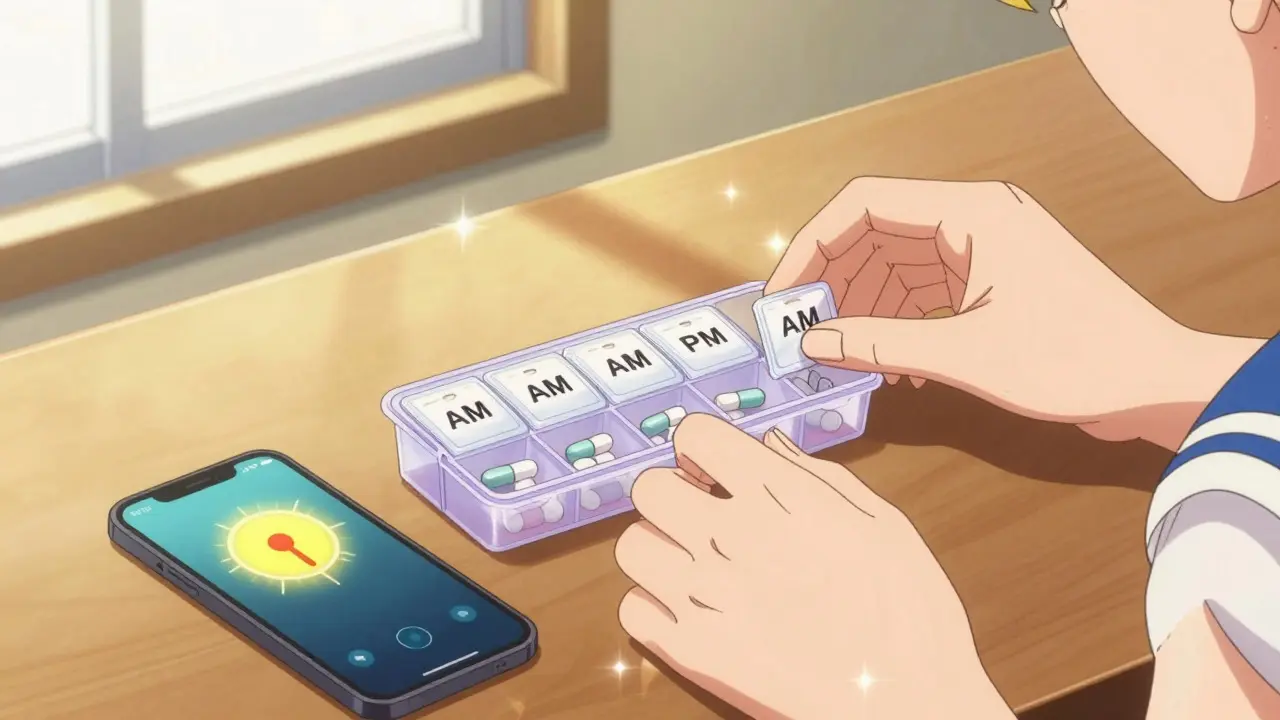
Pill Organizers: About 78% of patients who use pill organizers report fewer missed doses. Buying a weekly box with compartments for AM and PM can take the guesswork out of timing. Fill it once a week, preferably with a friend or family member watching, to ensure accuracy.
Smartphone Reminders: Set alarms for each dose. Label the alarm with the drug name. Apps like GoodRx's "Label Lens" can even scan your label and simplify the instructions using AI, achieving high accuracy rates in recent studies.
Large Print Labels: Most major chains like CVS, Walgreens, and Walmart offer large-print labels upon request. Don't be shy-ask for them. It costs nothing and saves frustration.
Voice-Enabled Assistance: Newer technologies, such as voice-enabled labels from Amazon Pharmacy, allow seniors to hear instructions aloud. If you have visual impairments, ask your pharmacist if audio options are available.
When to Call the Pharmacist
Never assume you know what a label means. If anything feels off, call the pharmacy. Pharmacists are trained to explain medications in plain language. They are also required to counsel you on new prescriptions, though many rush through this step due to time pressures. Take control of the conversation.
Ask these specific questions:
- "What time of day should I take this?"
- "Does this interact with my other medicines?"
- "What side effects should I watch for?"
- "Can you write the instructions in larger font?"
Remember, a clear label is your first line of defense against medication errors. By staying alert and asking questions, you turn a confusing piece of paper into a reliable tool for your health.
What does "qHS" mean on a prescription label?
"qHS" is a Latin abbreviation meaning "quaque hora somni," which translates to "every hour of sleep" or simply "at bedtime." However, because this code is confusing, modern standards prefer the phrase "at bedtime" or "before sleep." If you see qHS, take the medication once a night before going to bed.
How can I avoid misunderstanding "take with food"?
"Take with food" means you should eat a meal or snack before swallowing the pill. It helps prevent stomach upset or improves absorption. It does NOT mean you can skip your meal. If you are unsure, ask your pharmacist if a light snack is enough or if you need a full meal.
Are pharmacy labels standardized across the US?
Not entirely. While the USP Chapter <17> standards recommend clear, plain-language labels, adoption varies. Major chains like CVS and Walgreens have largely adopted these standards, but independent pharmacies may still use older formats with Latin abbreviations. Always verify the instructions regardless of where you fill your prescription.
What is the "Teach-Back" method?
The Teach-Back method is a communication technique where you repeat the instructions back to the pharmacist in your own words. For example, "So I take one pill in the morning and one at night." This confirms you understood correctly and allows the pharmacist to correct any misconceptions immediately.
Why do some labels have QR codes now?
Newer labeling standards, updated in 2023, include QR codes that link to pictogram instructions or video explanations. Scanning these codes can provide visual aids, especially helpful for non-native speakers or those with low literacy. Pilot programs show this reduces errors significantly.
