

Most parents think they are safe as long as they keep the medicine cabinet high up on a shelf. But here is the hard truth: that strategy is failing. According to data from Hassenfeld Children's Hospital at NYU Langone Health, more than 90 percent of accidental poisonings occur in the home, often while a parent or caregiver is right there in the room. The danger isn't just about leaving pills on the counter; it is about how easily a curious toddler can climb, reach, and ingest something deadly.
The stakes are incredibly high. A study published by the National Center for Biotechnology Information (NCBI) found that medicines account for over half of all childhood poisonings. In children aged one to five, analgesics like acetaminophen (Tylenol) and ibuprofen (Motrin, Advil) are the most common culprits. These aren't obscure chemicals; they are everyday items we use for fevers and headaches. Because they are so common, we often get complacent. But for a small body, even a standard adult dose can be fatal.
Why "Up and Away" Is No Longer Enough
You might have heard the old advice: "Up and away." Store things high up and out of sight. It sounds logical, but it ignores how toddlers move. By the time your child is 18 months old, they are not just crawling; they are pulling themselves up on furniture. They treat toilets, chairs, and counters as ladders. If you store medications on a top shelf, you are essentially inviting them to climb.
NYU Langone Health’s 2023 guidelines emphasize that elevation alone is insufficient. You need physical barriers. The gold standard is a locked cabinet with automatic-locking safety latches. These latches engage when the door closes, making it difficult for a child to open without specific knowledge or tools. However, even these aren't foolproof. Persistent children can figure them out. That is why the location matters just as much as the lock. Nationwide Children’s Hospital recommends storing medications in cabinets with magnetic locks placed at least 54 inches above the floor. This height is beyond the typical reach of a toddler, even if they manage to open the latch.
Consider this practical step: get down on your hands and knees. Look around your house from your child’s eye level. What do you see? Can you spot the corner of a medicine bottle peeking out from behind a plant? Can you see a purse sitting on a low table? This simple exercise reveals hazards that are invisible from standing height.
The Myth of Child-Resistant Containers
Almost every prescription and many over-the-counter drugs come in child-resistant packaging. You know the ones-they require you to push down and turn simultaneously. Parents often assume these bottles are safe. They are not. UCSF Benioff Children’s Hospital explicitly states that child-resistant containers are not childproof. They are designed to delay access, not prevent it entirely.
If a child has enough time and motivation, they can defeat these mechanisms. More importantly, these containers rely on the user keeping them closed properly. If the cap is left loose or the bottle is stored in an accessible place, the resistance mechanism becomes irrelevant. Never rely on the bottle itself as your primary defense. Always store these bottles inside a locked container or a secure cabinet.
Another critical rule: never transfer medications into non-original containers. Nationwide Children’s Hospital reports that 25 percent of poisoning incidents involve medications moved to pill organizers, spice jars, or other generic containers. When you move medicine, you lose the label, the dosage instructions, and the child-resistant features. Keep everything in its original packaging.
Danger Zones Beyond the Medicine Cabinet
We tend to focus on the bathroom or kitchen, but medications hide everywhere. Purses, diaper bags, coat pockets, and bedside tables are major risk areas. Nemours KidsHealth documents that 30 percent of medication exposures happen because visitors-often grandparents-leave their belongings within a child’s reach. Grandparents may bring their own blood pressure meds, heart pills, or pain relievers. These are often more potent and dangerous than children’s medications.
Households with visiting grandparents have a 35 percent higher incidence of medication exposures, according to UCSF Benioff Children’s Hospital. Why? Because adults relax their vigilance around family members. We trust our parents and don’t check their purses. Make it a habit to ask guests to store their medications immediately upon arrival. Don’t wait until you see them digging through their bag later.
Also, watch out for liquid nicotine from e-cigarettes. This is a silent killer. As little as 0.5 mL of liquid nicotine can be fatal to a toddler. The AAP warns that this substance must be stored in locked containers with child-resistant packaging, separate from other medications. It looks like harmless juice or syrup, which makes it especially attractive to young children.
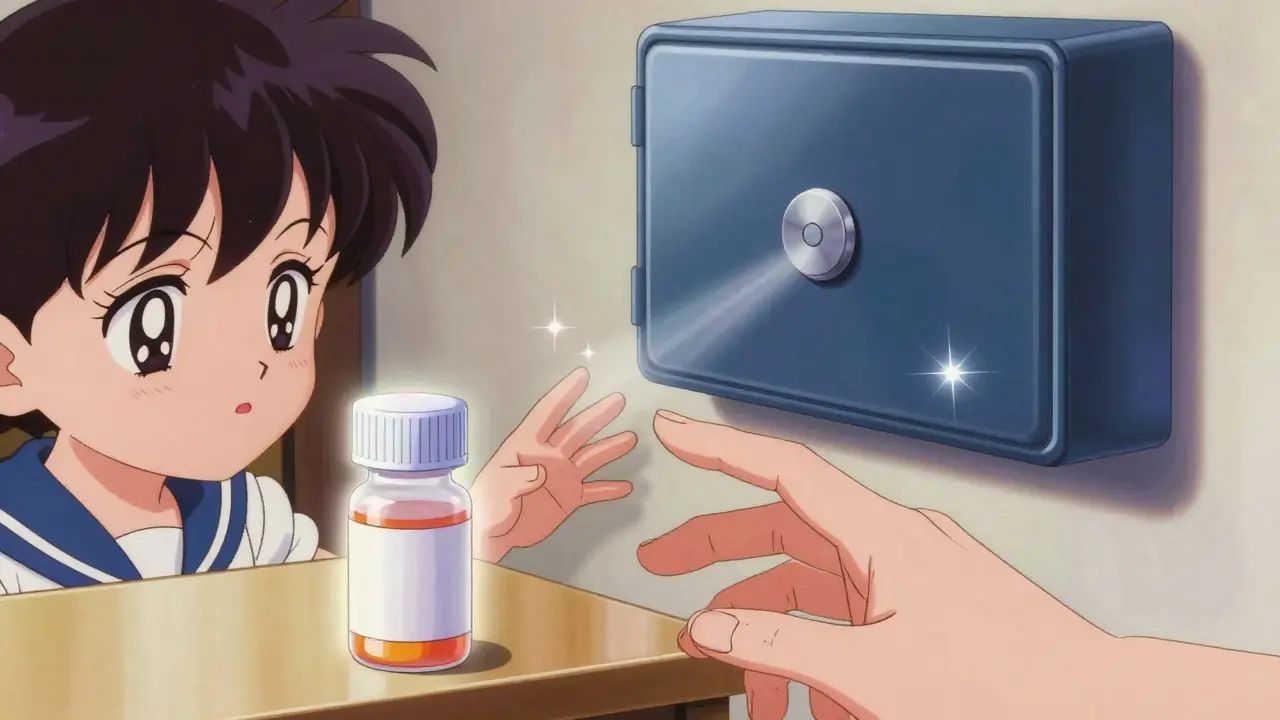
The Language Trap: Never Call Medicine Candy
This seems obvious, yet it happens constantly. Calling medicine "candy" or "treats" is one of the biggest mistakes parents make. The American Academy of Pediatrics (AAP) notes that referring to medicine as candy increases the likelihood of self-administration by 3.2 times. To a toddler, candy means something sweet and fun. If you tell them their fever reducer is candy, they will seek it out when you aren't looking.
Use clear, neutral language. Say, "This is medicine. It helps your tummy feel better. Only Mommy/Daddy gives you medicine." Reinforce that medicine is not food and not a toy. This distinction helps build a mental barrier against curiosity-driven ingestion.
Dosing Errors and Measurement Tools
Accidental poisoning isn't always about a child stealing medicine. Sometimes, it’s about giving the wrong amount. Poison Control’s 2023 data shows that medication errors account for 68 percent of dosing mistakes. And guess what tool is used in 42 percent of those errors? Kitchen spoons.
Kitchen teaspoons vary wildly in size. One teaspoon might hold 4 milliliters, another 7. For a medication where the dose is measured in precise milliliters, this variation is dangerous. Always use the measuring device that comes with the medication. If it doesn’t come with one, buy a proper oral syringe or dosing cup with exact milliliter markings. Throw away the kitchen spoons for medicine purposes.
Furthermore, distraction is a huge factor. UCSF Benioff Children’s Hospital documents that 40 percent of poisoning incidents occur when parents are actively using a harmful product and become distracted. Maybe you are answering a phone call, helping with homework, or cooking dinner. Never leave a medication unattended during use. If you need to step away, put the medicine back in its secure storage first.
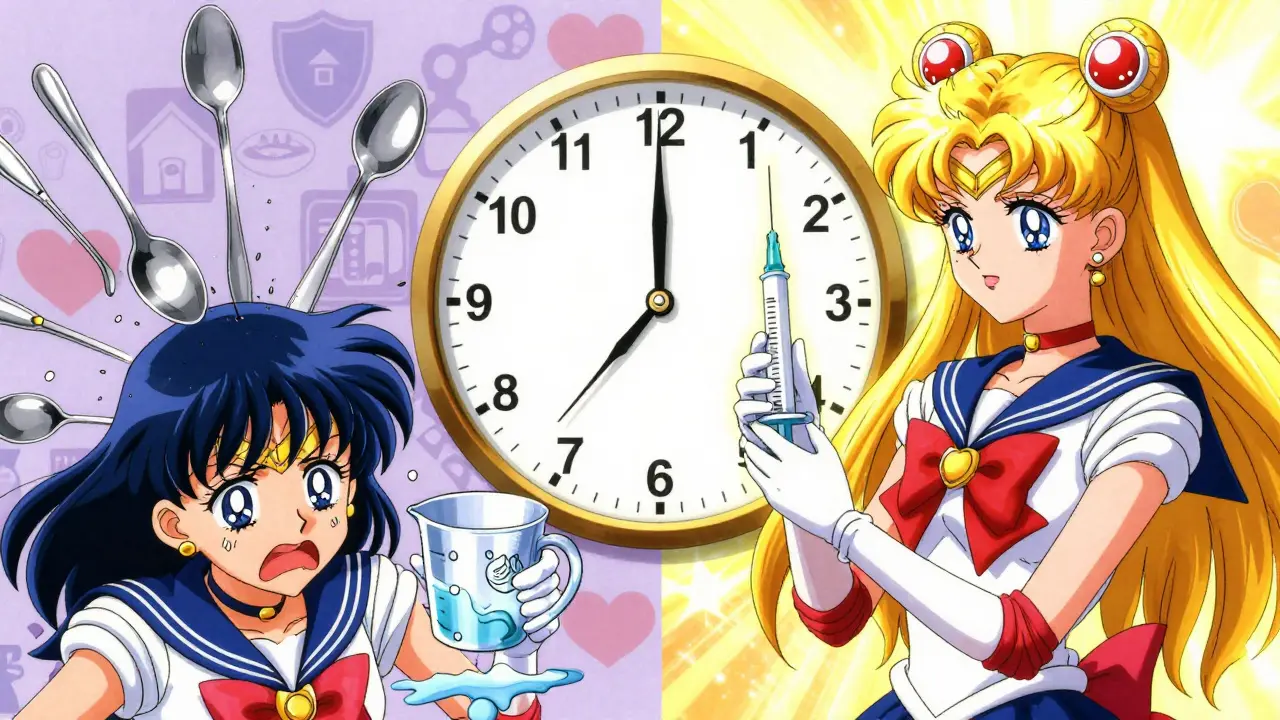
Emergency Preparedness: Speed Saves Lives
Despite your best efforts, accidents can happen. Preparation is key. The Rural Health Information Hub mandates that the Poison Help number, 1-800-222-1222, be posted visibly in every home with children. Data shows that homes with visible postings reduce emergency response time by 47 percent. In a panic, you don’t want to be searching for a number. Tape it next to the stove, on the fridge, and near the landline if you have one.
Immediate consultation improves outcomes significantly. Poison Control’s annual report indicates that calling within 5 minutes of exposure improves outcomes by 89 percent compared to delayed reporting. Do not wait for symptoms to appear. Call immediately. Have the medication container ready so you can provide the exact name and strength to the specialist.
Additionally, consider taking CPR and age-appropriate Heimlich maneuver training. The Children’s Safety Network notes that 12 percent of severe poisoning cases require immediate life-saving interventions before medical help arrives. Knowing how to respond can bridge the gap between exposure and professional care.
| Method | Effectiveness | Risk Factor | Recommendation |
|---|---|---|---|
| High Shelf (Unlocked) | Low | Climbing furniture | Avoid as sole method |
| Child-Resistant Bottle | Medium | Persistent children, loose caps | Use only inside locked cabinet |
| Automatic-Latch Cabinet | High | Mechanical failure | Best practice for daily meds |
| Magnetic Lock Box | Very High | Key loss | Ideal for high-risk meds (e.g., opioids) |
Understanding the Risks: Who Is Most Vulnerable?
While any child can be at risk, certain demographics face higher dangers. Children aged 1 to 5 years account for 67 percent of all accidental medication poisonings. This is the peak period of exploration and mobility. Rural households also experience 22 percent higher rates of severe incidents due to longer emergency response times. If you live in a rural area, having a robust first-aid kit and immediate access to Poison Control via phone or online is even more critical.
Interestingly, the timing of incidents challenges common assumptions. Poison Control’s 2023 demographic breakdown revealed that 58 percent of medication poisoning incidents occur between 12 PM and 6 PM. This is likely when parents are busiest with chores, meals, and activities, leading to higher distraction levels. Be extra vigilant during these afternoon hours.
Is it safe to leave medicine on the nightstand?
No. Nightstands are frequently below the 4-foot mark and are often accessible to toddlers who can pull themselves up on beds. Additionally, visitors often leave medications on nightstands. Store all medications in a locked cabinet, even if you take them at bedtime.
What should I do if my child swallows a pill?
Call Poison Control immediately at 1-800-222-1222 or use the webPOISONCONTROL online tool. Do not wait for symptoms. Have the medication container ready to provide details on the drug name, strength, and approximate time of ingestion.
Are child-proof caps really effective?
They provide a delay but are not foolproof. Children can learn to open them, especially if they are persistent. They should never be relied upon as the only safety measure. Always store child-resistant containers inside a locked cabinet or box.

Mollie Louise
May 18, 2026 AT 04:54Oh my gosh, this is such a crucial read for all of us parents out there! 😱 I used to think that just putting the bottles high up on the shelf was enough because that's what everyone told me back in the day but wow, looking at it now makes so much sense why we need actual locks and not just elevation because toddlers are literally little acrobats who can climb anything they want if they set their minds to it 🧗♀️ It really scares me to think about how complacent I was with those child-resistant caps thinking they were foolproof when in reality they are just a delay mechanism that a determined two-year-old can figure out given enough time and motivation which is terrifying honestly 💔 We have to be better than that and take these safety measures seriously before something tragic happens to our little ones because once it's too late nothing else matters anymore so please share this with everyone you know!
Christina Moran
May 19, 2026 AT 15:43i never knew that calling meds candy actually increases the chance of them eating it by like three times thats crazy right? i mean obviously its bad but the stat is wild. also the part about grandparents leaving stuff in purses is so true my nana always has her pills in her bag and she leaves it on the coffee table while shes here visiting. im gonna start asking her to put them away immediately lol
mardy duffy
May 21, 2026 AT 12:46boring
Desirea Gaona
May 23, 2026 AT 08:07It is imperative that we adhere to these guidelines with utmost diligence, as the safety of our children is of paramount importance. The distinction between child-resistant and child-proof containers is often misunderstood, leading to false security among caregivers. One must ensure that all medications are stored in locked cabinets, preferably with magnetic locks, to mitigate the risk of accidental ingestion. Furthermore, the practice of referring to medication as 'candy' is not only misleading but potentially dangerous, as it encourages curiosity and self-administration. We must educate ourselves and others on these critical safety measures to prevent unnecessary tragedies.
Yuvraj Singh
May 24, 2026 AT 22:12This is a very well-researched guide and I appreciate the detailed breakdown of storage methods. As someone who works in healthcare, I can confirm that the statistics regarding kitchen spoons are accurate; many dosing errors stem from using uncalibrated utensils. I would add that digital pill dispensers with alarms can also be helpful for older children or teens who need reminders, though they still require supervision. The point about liquid nicotine is particularly important as many parents underestimate its toxicity compared to traditional cigarettes.
Dana Ellington
May 24, 2026 AT 22:22OMG thank you for this!! I was literally just talking to my sister about how scared i am of my toddler finding the ibuprofen because he figured out how to open the cabinet door already 😭 i didnt even realize that the child proof cap isnt enough until now. im going to buy one of those magnetic lock boxes today no way im waiting any longer. also the tip about getting down on your hands and knees is genius i cant believe i never thought of doing that myself. lets keep our babies safe everyone!!! ❤️
victoria catharinaa
May 26, 2026 AT 07:20you people are making a big deal out of nothing. my kid never touched the medicine even though i left it on the counter. stop being so paranoid and let kids be kids. if they get sick then call the doctor. this whole article is just fear mongering to sell more locks.
Glen Speck
May 26, 2026 AT 23:14its interesting how we trust technology to solve problems that are really about human behavior. the locks are good but the real issue is distraction. we are always on our phones or cooking or helping with homework and that split second is all it takes. maybe we should focus more on mindfulness rather than just buying gadgets. but yeah the magnetic locks are a good idea if you forget where you put the key
Sam Mackellar
May 28, 2026 AT 07:45I concur with the previous sentiments regarding the necessity of robust security measures. The data presented herein is compelling and underscores the inadequacy of traditional storage methods. It is my firm belief that every household should implement a standardized protocol for medication storage, including regular audits of accessible areas. The mention of rural households facing higher risks due to response times is a critical point that warrants further policy discussion.
Danny S
May 30, 2026 AT 03:45:( the government wants you to be afraid so you buy their approved locks. did you notice how they never mention natural remedies? probably because they cant patent them. big pharma loves this stuff. keep your meds hidden and your mind open. :)
Jeremiah Cassandra
May 30, 2026 AT 20:21Fascinating. So the secret to keeping toddlers alive is apparently spending hundreds of pounds on magnetic locks and pretending your house isn't a minefield of potential hazards. 🙄 I suppose I'll just sit here and laugh while you all install safes for your paracetamol. At least the NHS doesn't charge for the panic. 😂
charles robert
May 31, 2026 AT 20:35The irony is palpable here. We create these elaborate systems of control, these physical barriers and psychological deterrents, yet we remain fundamentally vulnerable to the chaos of existence. The child does not care for your logic or your locks; the child is pure id, driven by instinct and curiosity. In trying to secure the medicine, we reveal our own anxiety, our fear of loss, our inability to accept the inherent danger of life itself. It is a tragedy in miniature, played out in the bathroom cabinet. 🎭