

Imagine sitting in your living room, struggling to hear the TV clearly, and instead of driving an hour to a clinic, you simply tap an app on your phone. Within minutes, a specialist adjusts your hearing aids remotely, and suddenly, the dialogue is crisp again. This isn't science fiction; it is teleaudiology, defined as the delivery of audiology services via telecommunication technologies. For millions of people, especially those in rural areas or with mobility issues, this shift from brick-and-mortar clinics to digital consultations has transformed how we manage hearing health.
But does remote care actually work? Can you get accurate hearing tests without being in a soundproof booth? And what exactly can-and cannot-be done over the internet? Let’s break down how teleaudiology functions, who benefits most, and where traditional visits are still non-negotiable.
How Teleaudiology Works: Synchronous vs. Asynchronous Care
Teleaudiology isn’t just one thing. It operates through two main models, each serving different needs. Understanding the difference helps you choose the right approach for your situation.
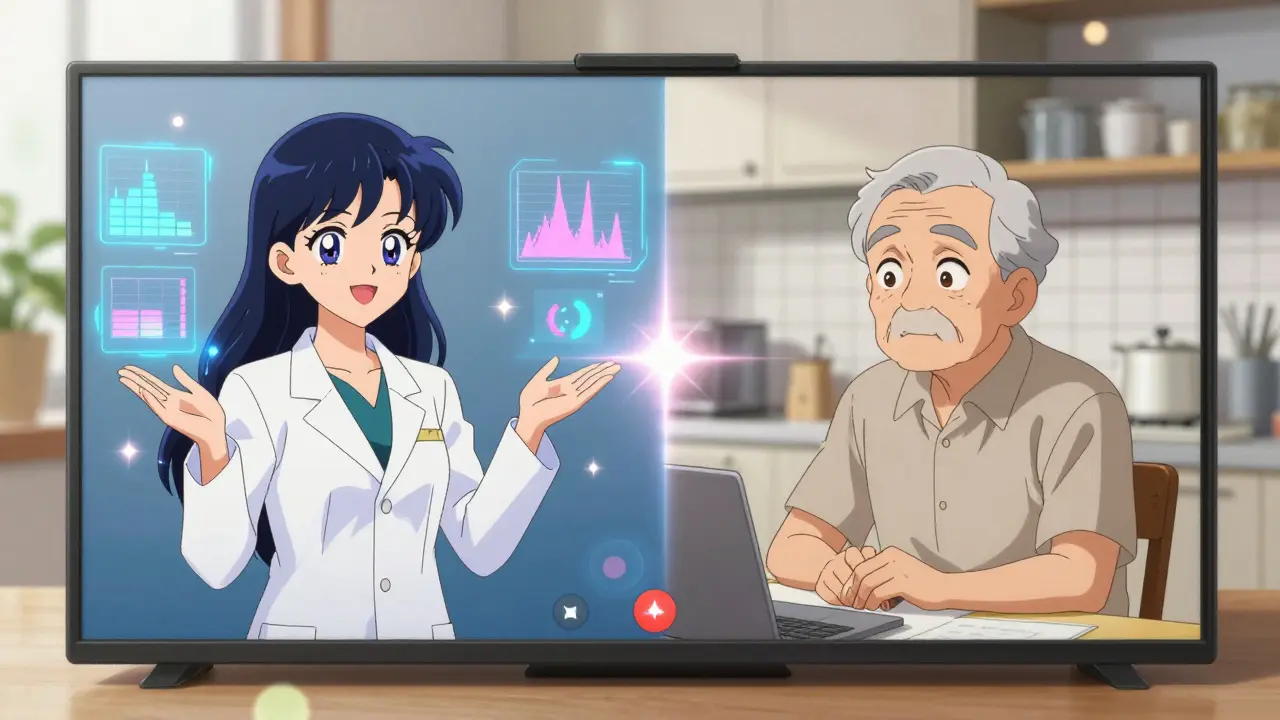
Synchronous teleaudiology is real-time video interaction. Think of it like a Zoom call with your audiologist. You see them, they see you, and they can guide you through tests instantly. Some advanced setups, like hear.com's Clinic-in-a-Box, even include specialized hardware that lets the doctor control testing equipment from their office while you sit at home. This method is ideal for initial consultations, complex adjustments, or when you need immediate feedback.
Asynchronous teleaudiology, often called store-and-forward, doesn’t require you and the provider to be online at the same time. You might complete a hearing test via a mobile app, take photos of your ear canal, or fill out a questionnaire. The data is securely sent to your audiologist, who reviews it later and sends back recommendations or prescription changes via email or a secure portal. This works well for routine follow-ups, progress checks, or minor tweaks to your device settings.
The technical barrier to entry is lower than you might think. You generally need a smartphone or computer with a stable broadband connection (at least 5 Mbps upload/download) and compatible Bluetooth-enabled hearing aids. Research shows that 82% of users aged 65 and older can successfully navigate these systems after just a little guidance. If you can send a text message or join a video call, you’re likely ready for teleaudiology.
What Can Be Done Remotely?
One of the biggest questions patients ask is whether remote care is comprehensive enough. The answer depends on the service.
- Hearing Aid Adjustments: This is the sweet spot for teleaudiology. Providers can remotely program devices to reduce feedback, adjust volume levels, or optimize settings for specific environments like restaurants or family gatherings. Studies show patient satisfaction scores average 4.6 out of 5.0 for remote adjustments, higher than the 4.2 out of 5.0 for in-person visits, largely because the convenience factor is huge.
- Remote Hearing Tests: When conducted in a quiet home environment, remote pure-tone audiometry achieves 92-95% accuracy compared to traditional clinic tests. However, if your home is noisy, accuracy can drop to 78-85%. Proper protocol matters here.
- Counseling and Follow-ups: Discussing tinnitus management, communication strategies, or device maintenance is highly effective remotely. The personal connection remains strong, and the removal of travel stress often leads to more open conversations.
However, there are hard limits. An audiologist cannot perform an otoscopy (looking inside your ear) remotely. They cannot remove earwax blockages or treat infections. If you suspect physical issues in the ear canal, a traditional visit is mandatory.
Teleaudiology vs. In-Person Visits: A Practical Comparison
To help you decide which route makes sense, let’s look at the key differences side-by-side.
| Feature | Teleaudiology | In-Person Visit |
|---|---|---|
| Average Cost per Visit | $120 - $150 | $140 - $180 |
| Travel Time & Cost | Near zero (saves ~$87 avg.) | Varies; often 1-3 hours round trip |
| Diagnostic Accuracy (Pure-Tone) | 92-95% (in quiet homes) | 95-98% (controlled booth) |
| Physical Exam Capability | No (cannot check earwax/infection) | Yes (otoscopy included) |
| Real-World Adjustment Context | High (adjusts in your actual home) | Low (clinic environment only) |
| Best For | Follow-ups, tweaks, counseling | Initial diagnosis, medical issues |
Notice the cost difference? Teleaudiology visits typically run 15-20% cheaper than in-person appointments. More importantly, consider the hidden costs of travel. For rural patients, who previously faced trips exceeding 50 miles to reach a clinic, teleaudiology cuts average travel time from 2.3 hours to nearly zero. That’s not just money saved; it’s time reclaimed.
Who Benefits Most from Remote Hearing Care?
While anyone can use teleaudiology, certain groups see disproportionate benefits.
Rural Residents: Access is the primary driver here. Data indicates that 78% of rural patients have improved access to care through teleaudiology. If you live far from a specialist, this technology bridges the gap effectively.
Individuals with Mobility Issues: For seniors or those recovering from surgery, leaving the house can be physically demanding or painful. One user shared that saving three-hour round trips for minor adjustments was "life-changing" after hip surgery. Eliminating physical barriers reduces stress and increases adherence to care plans.
Busy Professionals: Fitting a 30-minute appointment into a lunch break is easier than dedicating half a day to drive, wait, and return. The efficiency of asynchronous care fits neatly into tight schedules.
However, teleaudiology isn’t a silver bullet for everyone. Those with low digital literacy may struggle initially, though 76% become proficient after a single 30-minute tutorial. Additionally, individuals requiring frequent medical interventions (like chronic ear infections) will find remote options limiting.
Getting Started: What You Need to Know
If you’re considering making the switch, preparation is key. Here’s how to set yourself up for success.
- Check Compatibility: Ensure your hearing aids support Bluetooth connectivity and remote programming. Major manufacturers like Phonak, ReSound, Oticon, and Starkey offer dedicated apps (e.g., myPhonak, ReSound Smart) that facilitate these connections.
- Prepare Your Environment: Noise is the enemy of accurate remote testing. Choose a quiet room, close windows, turn off fans or TVs, and consider using wired headphones if available to isolate audio signals.
- Test Your Tech: Before your appointment, verify your internet speed. If Wi-Fi is unstable, switch to cellular data. Update your smartphone OS and the manufacturer’s app to the latest version to avoid pairing glitches, which occur in 33% of first-time sessions.
- Schedule Wisely: Book your first session during a time when you can focus. Have your hearing aids charged and nearby. If you’re unsure about the process, many providers offer a brief pre-session tutorial.
Support quality varies. Manufacturer-backed platforms often provide 24/7 technical support with average response times under 10 minutes, while independent practices may operate on business hours. Knowing who to call if things go wrong is part of the setup.

Limitations and Risks to Consider
It’s crucial to maintain realistic expectations. Teleaudiology excels at management and fine-tuning but falls short in comprehensive diagnostics.
The inability to perform otoscopy creates a 12-15% risk of missing medically significant conditions, such as fluid buildup or tumors, that would be caught during an in-person exam. Dr. Charles Berlin, a leading expert in the field, has cautioned that remote-only care should never replace annual physical exams for high-risk patients.
Regulatory hurdles also exist. As of mid-2024, licensure requirements vary by state, restricting cross-state practice in 28 U.S. states. Medicare reimbursement for tele-audiology is limited to 18 states, which can affect out-of-pocket costs depending on your location and insurance plan.
Furthermore, ambient noise in homes affects 37% of remote tests, potentially skewing results. If your remote test suggests a sudden change in hearing, always verify with an in-person clinic to rule out environmental interference.
The Future of Hearing Health
The trajectory is clear: teleaudiology is becoming standard, not optional. The global tele-audiology market grew from $1.2 billion in 2019 to an estimated $4.7 billion in 2023. Analysts predict it will account for 55-60% of all hearing aid follow-up appointments by 2027.
Technological advancements are accelerating this shift. AI-powered tools, like Widex’s recent launch, automatically detect listening environments during remote sessions, reducing the manual input needed from both patient and provider. The FDA’s expansion of guidelines for Over-the-Counter (OTC) hearing aids further broadens access, potentially reaching 40 million additional consumers.
For now, the hybrid model reigns supreme. Use teleaudiology for the routine-the tweaks, the check-ins, the quick fixes. Reserve in-person visits for the critical-the initial diagnosis, the physical exams, the complex medical issues. By leveraging both, you get the best of both worlds: convenience without compromising care.
Is teleaudiology covered by insurance?
Coverage varies significantly by provider and location. While Medicare covers tele-audiology services in 18 states, private insurance policies differ. Many major hearing aid manufacturers include remote support in their warranty packages, but standalone tele-audiology visits may incur out-of-pocket costs ranging from $120 to $150. Always check with your insurer before scheduling.
Can I get a new hearing aid prescription remotely?
Generally, no. Initial comprehensive diagnostic evaluations usually require at least one in-person visit to ensure accurate baseline measurements and to rule out medical issues. However, some regions allow remote prescribing for OTC hearing aids following validated remote hearing tests. Consult your local regulations and provider.
What if my hearing aid stops working during a remote session?
Technical glitches happen. If your device disconnects, try restarting the Bluetooth connection or rebooting the hearing aid. If the issue persists, the audiologist can often troubleshoot software errors remotely. However, hardware failures (like battery door issues or internal damage) require physical inspection and repair.
Is teleaudiology secure and private?
Yes, reputable tele-audiology platforms use HIPAA-compliant encryption for video calls and data transmission. Patient portals are secured with multi-factor authentication. Ensure you are using official apps from certified providers to protect your personal health information.
Do I need special equipment for remote hearing tests?
For basic tests, you usually only need your smartphone and hearing aids. Some advanced services may require a headset or specialized adapter, but most modern Bluetooth-enabled hearing aids connect directly to mobile devices. Your provider will specify any necessary equipment before your appointment.
