
Dust Mite Cleaning: How to Reduce Allergens and Improve Indoor Air Quality
When you think of allergens in your home, you might picture pollen or pet dander—but the biggest trigger for many people is something you can’t see: dust mite cleaning, the process of reducing populations of microscopic arthropods that live in household dust and feed on shed skin cells. Also known as house dust mites, these tiny creatures thrive in warm, humid places like mattresses, pillows, and carpets. They don’t bite or spread disease, but their waste particles are a major cause of allergic reactions, asthma flare-ups, and chronic nasal congestion. If you or someone in your home suffers from allergies, dust mite cleaning isn’t optional—it’s a daily health habit.
Most people try to clean their way out of dust mite problems, but not all methods work. Vacuuming with a standard cleaner? It often just kicks allergens back into the air. Washing bedding weekly in hot water? That’s one of the few things that actually helps. Dust mites die at temperatures above 130°F, so washing sheets, pillowcases, and blankets in hot water every week cuts their numbers fast. You don’t need special detergents—just heat and regular laundry cycles. Covering mattresses and pillows with allergen-proof covers is another proven move. These aren’t fancy or expensive; they’re simple zippered encasements that trap mites and their waste inside, where they can’t reach you.
Humidity control is just as important as cleaning. Dust mites need moisture to survive. If your home stays above 50% humidity, they’ll keep multiplying. Use a dehumidifier in basements or damp rooms, run exhaust fans in bathrooms, and avoid drying clothes indoors. Air conditioners help too—they cool the air and pull out moisture. Carpets and heavy drapes? They’re dust mite hotels. Hardwood, tile, or vinyl floors are better. If you keep rugs, choose low-pile ones and vacuum them weekly with a HEPA-filter vacuum. And yes, that means vacuuming your mattress too—once a month is enough if you’re using covers.
Some products claim to kill dust mites with sprays, UV lights, or special filters. Most of these don’t deliver real results. The EPA and American Academy of Allergy, Asthma & Immunology agree: focus on heat, encasements, and humidity. You don’t need to sterilize your home. Just make the places you spend the most time—your bed and bedroom—unfriendly to mites. That’s where the biggest payoff happens.
People with asthma or severe allergies often see improvement within weeks of starting consistent dust mite cleaning. It’s not a cure, but it reduces the need for medication and helps you breathe easier at night. And it’s not just for kids—adults suffer too. If you wake up with a stuffy nose, itchy eyes, or coughing every morning, dust mites could be the culprit. The fix isn’t complicated. It’s simple, repeatable, and backed by real science.
Below, you’ll find real advice from pharmacists, allergists, and patients who’ve lived with these triggers. You’ll see what works, what doesn’t, and how to make dust mite cleaning part of your routine without turning your home into a lab.
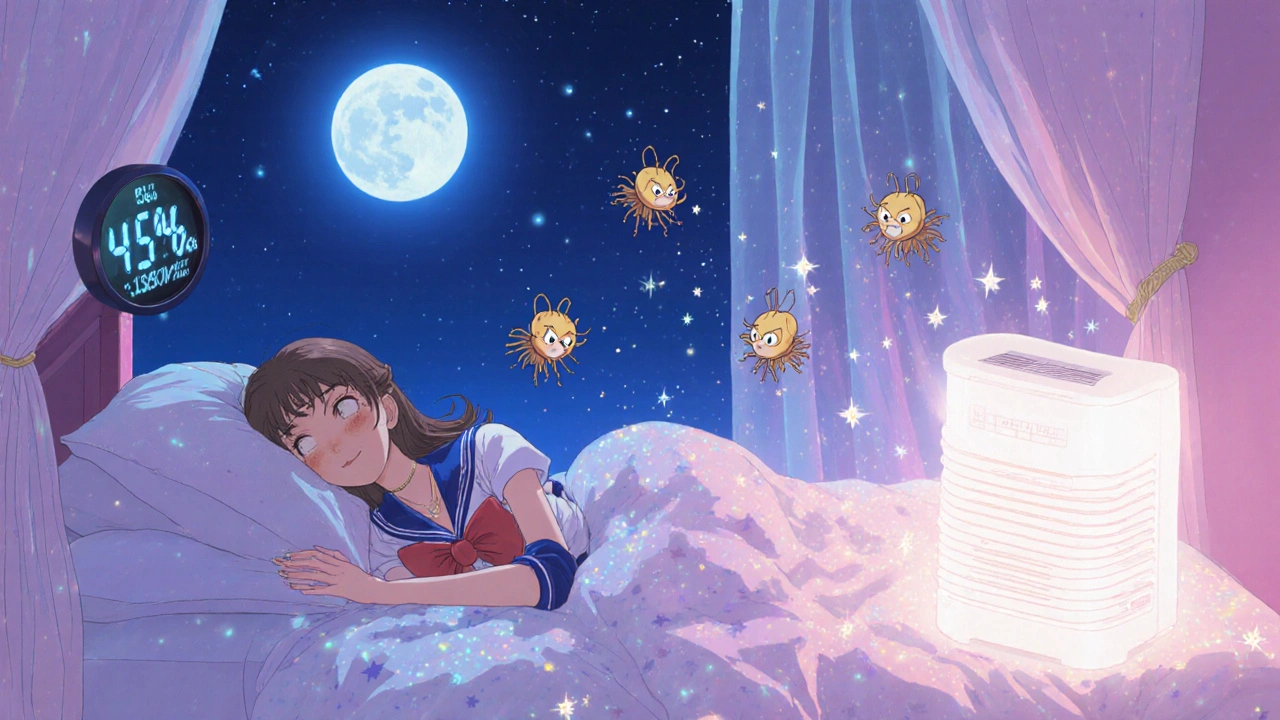
Dust Mite Control: Bedding, Humidity, and Cleaning Tips for Allergy Relief
by philip onyeaka Nov 20 2025 12 Respiratory HealthLearn how to control dust mites in your bedroom with proven methods: humidity control below 50%, hot water washing of bedding, allergen-proof encasements, and smart cleaning. Reduce allergy symptoms naturally and permanently.
READ MORE